


The outcome of Taiwan’s presidential and legislative elections would not raise the risk of a Chinese invasion of Taiwan, former US National Security Council China director Ryan Hass said on Wednesday.
Although Beijing would have preferred a candidate other than Vice President William Lai (賴清德) of the Democratic Progressive Party (DPP) to have won, that fact alone “does not raise the risk of war,” Hass said in a commentary published by the Washington-based Brookings Institution.
Hass is director of the think tank’s John L. Thornton China Center and is its Chen-Fu and Cecilia Yen Koo Chair in Taiwan Studies.

Photo: AFP
Chinese President Xi Jinping (習近平) does not need to gain control of Taiwan in the near term, he just cannot afford to permanently “lose” Taiwan on his watch, Hass said.
Xi needs to continue to be able to call unification with Taiwan a “historical inevitability,” just like every People’s Republic of China leader before him, he said.
That a majority of Taiwanese want the “status quo” to continue also provides a “soothing set of facts” for Xi, he said.
Meanwhile, former American Institute in Taiwan (AIT) chairman and managing director Richard Bush said that Taiwan’s political system is more fragmented and complicated than it has been since 2008.
The Taiwan People’s Party winning eight seats in the legislature would give it significant bargaining power with the Chinese Nationalist Party (KMT) and the DPP, Bush said.
However, Taiwan’s politicians have experience working out legislative compromises and no party would get everything it wants, “but society gets the policies it needs,” he said.
“Those bargaining skills will now be at a premium,” he said.
Patricia Kim, a research fellow at the Brookings Center for East Asia Policy Studies, said that Lai affirmed his responsibility to protect cross-strait peace and stability, while indicating an openness to dialogue with China “under the principles of dignity and parity.”
“The ball is now in Beijing’s court,” Kim said, adding that China has to show the world that while it will not give up its claims and goals, it too can act “judiciously and pragmatically” in its pursuit of peace and stability.
Adam Liff, a nonresident senior fellow at the Center for East Asia Policy Studies, said that the successor to Minister of Foreign Affairs Joseph Wu (吳釗燮) would have their work cut out.
US policymakers have to pay close attention to Taiwan’s legislative bargaining, including on defense-related spending and other matters of particular concern to Washington, as well as the expansion of Taiwan’s international support and Beijing’s pressure on the nation’s diplomatic allies, Liff said.
Former US acting assistant secretary of state for East Asian and Pacific affairs Susan Thornton said that Taiwanese are “not so divided.”
“They all want to live in basic security and tranquility, they want to enjoy their hard-earned freedoms and they want their government to improve their livelihoods, especially for the next generations, and to be accountable,” Thornton said.
“Taiwanese people want their government to find a way to get along with their ‘mainland neighbors’ to the extent that they can keep the status quo of separate rule with economic and cultural exchanges,” she said.

POLAM KOPITIAM CASE: Of the two people still in hospital, one has undergone a liver transplant and is improving, while the other is being evaluated for a liver transplant A fourth person has died from bongkrek acid poisoning linked to the Polam Kopitiam (寶林茶室) restaurant in Taipei’s Far Eastern Sogo Xinyi A13 Department Store, the Ministry of Health and Welfare said yesterday, as two other people remain seriously ill in hospital. The first death was reported on March 24. The man had been 39 years old and had eaten at the restaurant on March 22. As more cases of suspected food poisoning involving people who had eaten at the restaurant were reported by hospitals on March 26, the ministry and the Taipei Department of Health launched an investigation. The Food and
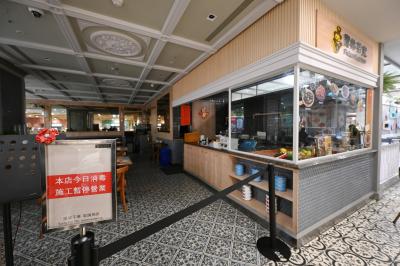
A fourth person has died in a food poisoning outbreak linked to the Xinyi (信義) branch of Malaysian restaurant chain Polam Kopitiam (寶林茶室) in Taipei, Deputy Minister of Health and Welfare Victor Wang (王必勝) said on Monday. It was the second fatality in three days, after another was announced on Saturday. The 40-year-old woman experienced multiple organ failure in the early hours on Monday, and the family decided not to undergo emergency resuscitation, Wang said. She initially showed signs of improvement after seeking medical treatment for nausea, vomiting and diarrhea, but her condition worsened due to an infection, he said. Two others who

The long-awaited Taichung aquarium is expected to open next year after more than a decade of development. The building in Cingshui District (清水) is to feature a large ocean aquarium on the first floor, coral display area on the second floor, a jellyfish tank and Dajia River (大甲溪) basin display on the third, a river estuary display and restaurant on the fourth, and a cafe and garden on the fifth. As it is near Wuci Fishing Port (梧棲漁港), many are expecting the opening of the aquarium to bring more tourism to the harbor. Speaking at the city council on Monday, Taichung City Councilor

Taiwanese should be mindful when visiting China, as Beijing in July is likely to tighten the implementation of policies on national security following the introduction of two regulations, a researcher said on Saturday. China on Friday unveiled the regulations governing the law enforcement and judicial activities of national security agencies. They would help crack down on “illegal” and “criminal” activities that Beijing considers to be endangering national security, according to reports by China’s state media. The definition of what constitutes a national security threat in China is vague, Taiwan Thinktank researcher Wu Se-chih (吳瑟致) said. The two procedural regulations are to provide Chinese


 RSS
RSS