


President-elect William Lai (賴清德) yesterday announced that he has left the New Tide faction of the Democratic Progressive Party (DPP) out of respect for the presidential office.
“I have respect for the office of the president, and want to govern the nation objectively, without partisanship,” Lai said at a regular midweek meeting of the DPP Central Standing Committee.
He also called for more unity within the party.

Photo: CNA
New Tide chief executive officer and former DPP legislator Tuan Yi-kang (段宜康) confirmed that Lai’s departure from the faction had been discussed during campaigning, with all sides agreeing it was important for a president to be seen as representing the whole nation.
“The president’s office is a symbol of unity within the party... So it would be better for the country if Lai were not a member of the faction while in office,” Tuan said.
As some people have mischaracterized and smeared the faction, Lai leaving would be better, so it does not become a burden for him, he said.
New Tide member DPP Legislator Kuo Kuo-wen (郭國文) said the faction supports the decision, saying that as president, people should not narrowly identify him with one party faction.
DPP Legislator Wang Ting-yu (王定宇), convener of the party’s Taiwan Forward faction, also approved of the move.
“It is a positive development to stabilize the political situation. Lai must govern for all people in Taiwan,” Wang said, adding that he hopes the decision would promote cooperation with opposition parties.
DPP Legislator Tsai Yi-yu (蔡易餘) said the announcement would help broaden Lai’s appeal.
“Lai can now lead with a broad approach and attract talent into the government from wider political and social circles, and he would no longer be characterized as belonging to one party, or just one faction,” Tsai said.
DPP Legislator Chang Hong-lu (張宏陸) said in an interview that it was good for Lai to remove himself from party factions.
“Although Lai is no longer a New Tide member, it would not affect the DPP’s full support for him,” Chang said.
It is only right for the presidential office to be nonpartisan and for Lai “to rise above party politics,” DPP Legislator and New Tide member Chung Chia-pin (鍾佳濱) said.
In 2006, the DPP announced that it had dissolved all factions, but they remain as informal alliances and networking groups.
In other party news, Hsu Li-ming (許立明) has resigned as DPP secretary-general.
The central standing committee approved his resignation and thanked him for his service, particularly amid the presidential election campaign.
Also during the meeting, Lai, the DPP’s chairman, split in three ways NT$160 million (US$5.1 million) in subsidies the party received based on the number of votes it garnered in the elections.
He said that a portion would be donated to charity, some would go to replenishing party funds, and a third tranche would be used to establish stipends and financial aid for party founders and elderly members in need, as well as scholarships for young members to further their education abroad.

Fast food chain McDonald's is to raise prices by up to NT$5 on some products at its restaurants across Taiwan, starting on Wednesday next week, the company announced today. The prices of all extra value meals and sharing boxes are to increase by NT$5, while breakfast combos and creamy corn soup would go up by NT$3, the company said in a statement. The price of the main items of those meals, if ordered individually, would remain the same. Meanwhile, the price of a medium-sized lemon iced tea and hot cappuccino would rise by NT$3, extra dipping sauces for chicken nuggets would go up

Yangmingshan National Park’s Qingtiangang (擎天崗) nature area has gone viral after a park livestream camera observed a couple in the throes of intimate congress, which was broadcast live on YouTube, drawing large late-night crowds and sparking a backlash over noise, bright lights and disruption to wildlife habitat. The area’s livestream footage appeared to show a couple engaging in sexual activity on a picnic table in the park on Friday last week, with the uncensored footage streamed publicly online. The footage quickly spread across social media, prompting a tide of visitors to travel to the site to “check in” and recreate the

Minister of Digital Affairs Lin Yi-ching (林宜敬) yesterday cited regulatory issues and national security concerns as an expert said that Taiwan is among the few Asian regions without Starlink. Lin made the remarks on Facebook after funP Innovation Group chief executive officer Nathan Chiu (邱繼弘) on Friday said Taiwan and four other countries in Asia — China, North Korea, Afghanistan and Syria — have no access to Starlink. Starlink has become available in 166 countries worldwide, including Ukraine, Malaysia, the Philippines and Vietnam, in the six years since it became commercial, he said. While China and North Korea block Starlink, Syria is not
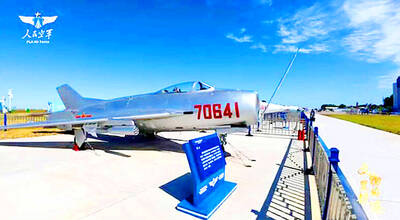
GROUNDED: A KMT lawmaker proposed eliminating drone development programs and freezing funding for counterdrone systems, despite China’s adoption of the technology China has deployed attack drones at air bases near the Taiwan Strait in a strategy aimed at overwhelming Taiwan’s air defense systems through saturation attacks, the Mainland Affairs Council (MAC) said. The council’s latest quarterly report on China said that satellite imagery and open-source intelligence indicate that the Chinese People’s Liberation Army (PLA) had converted retired J-6 fighter jets into J-6W drones, which the PLA has stationed at six air bases near Taiwan, five in China’s Fujian Province and one in Guangdong Province. The report cited J. Michael Dahm, a senior fellow at the US-based Mitchell Institute, as saying that China has


 RSS
RSS