

The issuance on Tuesday of a nationwide air raid alert about the launch of a Chinese satellite was not “politically motivated” or designed to influence voters, the Ministry of National Defense said yesterday.
The ministry said it issued the alert due to the “odd” trajectory of the rocket, which would arc over Taiwan proper.
While the alert in Mandarin said “satellite,” in English, it said “missile flyover.”

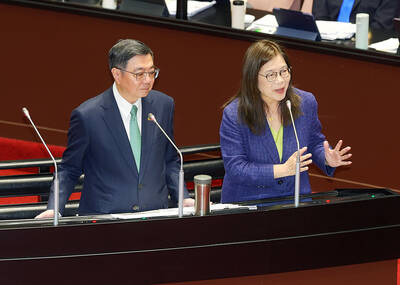
Photo: CNA
The ministry said it would review its processes to determine whether alerts are necessary in such scenarios, adding that it is not aligned with any political party.
According to the Web site rocketlaunch.live, China is today to launch two rockets, one from the Yellow Sea and one from the Jiuquan Satellite Launch Center in Gansu Province.
Tuesday’s launch was from the Xichang Satellite Launch Center in Sichuan Province, the Web site says.
The Chinese Nationalist Party (KMT) yesterday said that the ministry was attempting to influence the outcome of Saturday’s legislative and presidential elections with the alert.
KMT presidential candidate New Taipei City Mayor Hou You-yi (侯友宜) called the alert a ploy and an abuse of government power to trick people into voting for the Democratic Progressive Party (DPP).
He said it was odd that the ministry did not issue an alert when China launched actual missiles after the August 2022 visit of then-US House of Representatives speaker Nancy Pelosi.
The decision to issue the alert negatively affected national security, as it misled the public into believing that China had launched missiles, KMT Chairman Eric Chu (朱立倫) said.
The timing of the alert — especially when the government did not issue air raid alerts during previous Chinese rocket launches — raises concerns that the decision was made for political reasons, Chu said.
Taiwan People’s Party Chairman and presidential candidate Ko Wen-je (柯文哲) said the incident should be treated as a drill and the government should learn from the results.
However, Ko said he was concerned with comments by President Tsai Ing-wen (蔡英文), who at a DPP campaign event in Kaohsiung when the alert was issued said: “It is alright. The president is here, with all of you.”
He also said he doubted that the public knew what to do in the event of an actual air raid situation.
Taiwan AI Labs said that numerous online comments about the incident might have been part of a concerted effort to connect the alert with the perception that the government is attempting to intervene in the upcoming elections.
The organization also recorded a large number of videos shared online from Dec. 30 to Saturday last week that might have been generated by artificial intelligence as part of smear campaigns against certain candidates, Taiwan AI Labs founder Ethan Tu (杜奕瑾) said.
As the election draws closer, the messages of these videos and posts are increasingly in step with Beijing’s, Tu said.
However, such efforts are not guaranteed to succeed, he added.
The donation of offshore patrol vessel Kinmen to the Philippines includes provisions that protect Taiwanese fishers and facilitate security cooperation across the First Island Chain, officials said yesterday. The comment was made during the Cabinet’s comprehensive administrative report at the legislature after Chinese Nationalist Party (KMT) Legislator Hsu Yu-chen (許宇甄) expressed concerns about the decision to give a ship to a country whose coast guard had in 2013 fired on a Taiwanese trawler and killed its captain without provocation. The Cabinet should lay out the safeguards that have been established to prevent the Philippine government from using the Kinmen to harass, expel
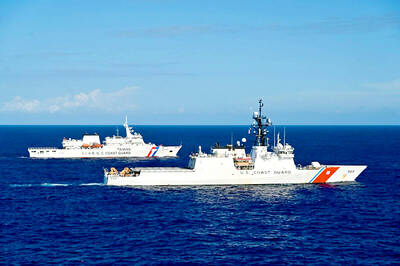
GROWING TIES: The CGA is planning a goodwill mission to the Philippines, in what would be the first time since 1975 a Taiwanese paramilitary vessel has visited the country The Coast Guard Administration (CGA) plans to significantly expand its participation in international security cooperative frameworks and its operational capabilities, a budget proposal for next year showed. The budget indicates a transformation of the CGA from a maritime law enforcement arm into a national defense and intelligence gathering entity capable of tackling larger regional security matters. The proposal showed that personnel from the coast guard’s Intelligence Division and Special Action Support Center are to participate in high-level national security talks with the US. As the CGA has dealt with China’s rising “gray zone” threats around Taiwan, it has become a valuable asset to

The National Police Agency’s Third Special Police Corps yesterday said that from May to July, it intercepted five smuggling operations from China, seizing more than 70,000 counterfeit Beyblades with an estimated infringement value of NT$34.45 million (US$1.08 million). It added that any bootleg unit that reached the local market could present hidden health hazards to players. Beyblades, a line of spinning toy tops used in competitive gaming and developed in Japan by toy company Takara Tomy, have become popular in Taiwan, making them a target for fraudsters. The Third Special Police Corps, dedicated to safeguarding maritime borders and trade lines,
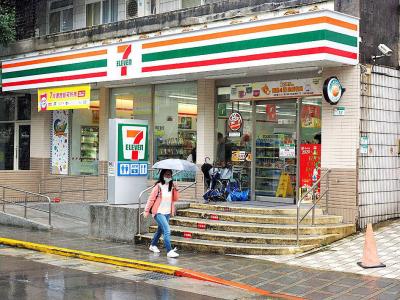
Five customers who made purchases at 7-Eleven stores across Taiwan won the top NT$10 million (US$313,716) special prize in the July-August uniform invoice lottery, including one who spent just NT$27 on photocopying, the convenience store chain said today. The five special prize winners made their purchases at stores in Taoyuan, Taipei, Taichung and Kaohsiung, 7-Eleven operator President Chain Store Corp said. The five winning purchases included NT$29 spent on snacks at a store in Taoyuan's Zhongli District (中壢), NT$27 on photocopying at a store in Taipei's Zhongzheng District (中正), NT$139 on City Cafe coffee and daily necessities at a store in Taipei's


 RSS
RSS