


People working in industries that would be most negatively impacted by the government’s net zero carbon emissions policy have an insufficient understanding of what the target is and what its effects are likely to be, a survey published on Wednesday showed.
The Survey on Awareness of Just Transition of High-carbon Industries in Taiwan, published for the second year by National Taiwan University’s Risk Society and Policy Research Center, found that 49.8 percent of respondents said they had little understanding of the government’s net zero policies.
Although that figure is still high, it marks a substantial decrease from last year’s 81.2 percent, center director Chou Kuei-tien (周桂田) told a news conference in Taipei to introduce the report’s findings.
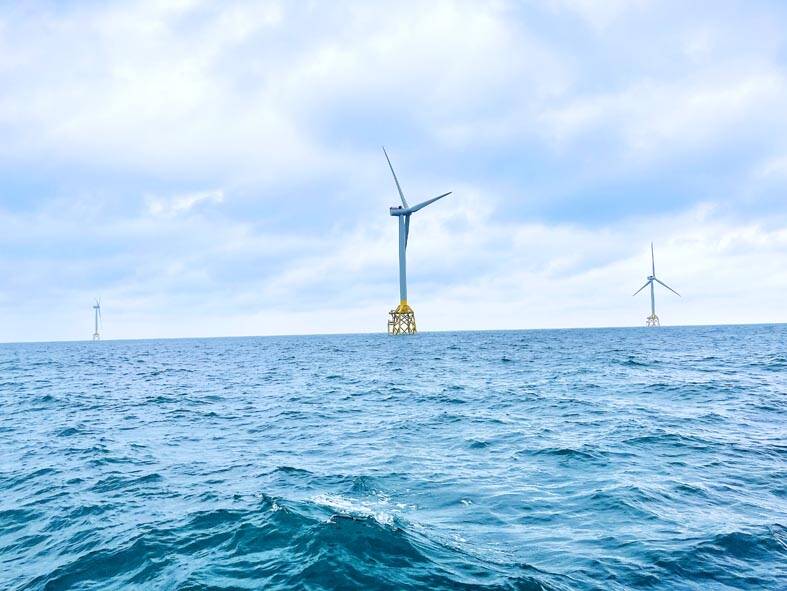
Photo: Liao Chia-ning, Taipei Times
The center surveyed 521 employees, managers and executives working in carbon-intensive industries from October to last month.
The survey showed that 46.8 percent of respondents were worried about the burden of decarbonization on them personally, for example, increased costs being passed on, Chou said, adding that the figure was down from 57.7 percent in last year’s survey.
Young and female employees were the most concerned, he said.
The government should enhance community participation to deepen a “just transition consciousness” and build a strong social foundation for when net zero transition policies are implemented, he said.
Most respondents said that funds collected through carbon fees — scheduled to be collected from 2025 — should be used to boost employment by helping small and medium-sized enterprises (SMEs) and workers acquire skills needed for success in low-carbon industries, the survey showed.
It showed that 89.9 percent agreed SMEs should be consulted before net zero policies are implemented, while 77.5 percent said the government, companies and employees should have three-way meetings to develop ways to help manage the fallout from the policies.
Chou said that carbon fees should be made a “carbon tax,” as the former is more restrictive.
Article 33 of the Climate Change Response Act (氣候變遷因應法) says that the fees could be used to “assist the central competent agency to execute a just transition” among a list of 13 purposes.
“A carbon tax, administered by the Ministry of Finance, could potentially have a much wider scope of use, as it would be collected by the central government,” Chou said.
David Walther (王瑞庚), program manager at Academia Sinica’s Center for Sustainability Science, said that communication and assistance need to be in place early and be available to all who would be affected to avoid large protests.
Walther also highlighted the importance of an Executive Yuan-led oversight mechanism, instead of each ministry having to cope with net zero issues alone, “such as the Ministry of Agriculture regarding solar power and the Ministry of the Interior regarding national land.”
Following this logic, the Ministry of Labor and the Ministry of Welfare and Health are yet to be affected by net zero issues and so have not made any moves, he said.
A Cabinet-level directive needs to be issued to coordinate a comprehensive roadmap encompassing every ministry, especially the Ministry of Digital Affairs, which needs to develop “digital sustainability,” he added.
Youth Labor Union 95 director Ray Cheng (鄭中睿) said that the Ministry of Education needs to take a more active role in helping the public prepare for a green transition.
There is a complete lack of human resource planning in the net zero roadmap that the National Development Council released last year, Cheng said.
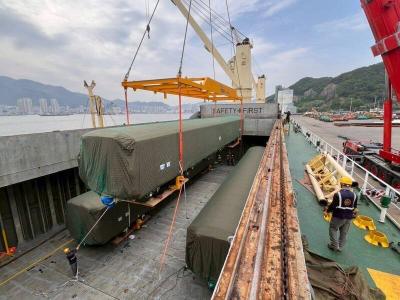
The first of 10 new high-capacity trains purchased from South Korea’s Hyundai Rotem arrived at the Port of Taipei yesterday to meet the demands of an expanding metro network, Taipei Rapid Transit Corp (TRTC) said yesterday. The train completed a three-day, 1,200km voyage from the Port of Masan in South Korea, the company said. Costing NT$590 million (US$18.79 million) each, the new six-carriage trains feature a redesigned interior based on "human-centric" transportation concepts, TRTC said. The design utilizes continuous longitudinal seating to widen the aisles and optimize passenger flow, while also upgrading passenger information displays and driving control systems for a more comfortable
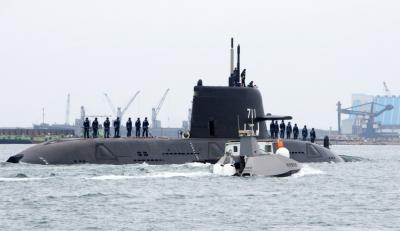
Taiwan's first indigenous defense submarine, the SS-711 Hai Kun (海鯤, or Narwhal), departed for its 13th sea trial at 7am today, marking its seventh submerged test, with delivery to the navy scheduled for July. The outing also marked its first sea deployment since President William Lai (賴清德) boarded the submarine for an inspection on March 19, drawing a crowd of military enthusiasts who gathered to show support. The submarine this morning departed port accompanied by CSBC Corp’s Endeavor Manta (奮進魔鬼魚號) uncrewed surface vessel and a navy M109 assault boat. Amid public interest in key milestones such as torpedo-launching operations and overnight submerged trials,
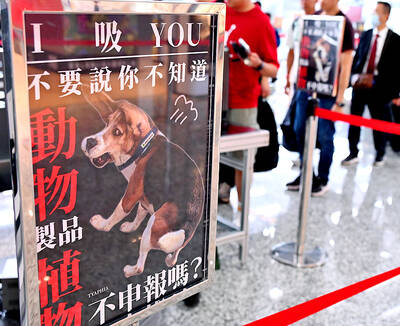
Quarantine awareness posters at Taiwan Taoyuan International Airport have gone viral for their use of wordplay. Issued by the airport branch of the Animal and Plant Health Inspection Agency, the posters feature sniffer dogs making a range of facial expressions, paired with advisory messages built around homophones. “We update the messages for holidays and campaign needs, periodically refreshing materials to attract people’s attention,” quarantine officials said. “The aim is to use the dogs’ appeal to draw focus to quarantine regulations.” A Japanese traveler visiting Taiwan has posted a photo on X of a poster showing a quarantine dog with a

Taiwan’s coffee community has launched a “one-person-one-e-mail” campaign, calling for people to send a protest-e-mail to the World Coffee Championships (WCC) urging it to redesignate Taiwanese competitors as from “Taiwan,” rather than “Chinese Taipei.” The call followed sudden action last week after the WCC changed all references to Taiwanese competitors from “Taiwan” to “Chinese Taipei,” including recent World Latte Art champion Bala (林紹興), who won the World Latte Art Championship in San Diego earlier this month. When Bala received the trophy, he was referred to as representing Taiwan, as well as in the announcement on the WCC’s Web site, until it


 RSS
RSS