


The government must overcome six major problems, including a rigid and disabled civil service system, Taiwan People’s Party (TPP) Chairman and presidential candidate Ko Wen-je (柯文哲) said yesterday as he again called for the adoption of a parliamentary system.
Ko told a news conference at his campaign headquarters in New Taipei City that his main reason for running for president is to create an inclusive society and improve national governance.
Hopefully, Taiwan would become a united and harmonious society with a national leader who honestly faces the nation’s problems and comes up with practical solutions, he added.
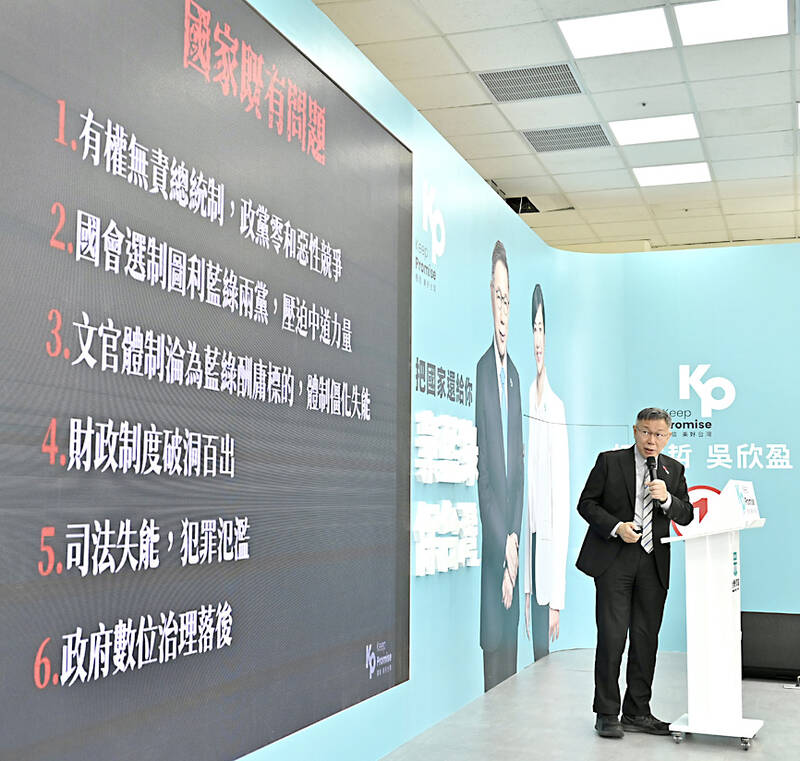
Photo: Tu Chien-jung, Taipei Times
Among the problems with the current system is that the president has “power without responsibilities, causing political parties to engage in zero-sum, cutthroat competition,” while the legislative system benefits the Chinese Nationalist Party (KMT) and the Democratic Progressive Party (DPP) while oppressing a middle force, he said.
Moreover, jobs in civil service have become reward posts for the KMT and the DPP to hand out, he said, adding that the system is too rigid.
The fiscal system is also “full of flaws, the judicial system is disabled and crime is rampant,” Ko said, adding that there is a lack of “digital governance.”
Hopefully, the government would transition into a parliamentary system, but as amendments to the Constitution are difficult to pass, it should start by developing “constitutional conventions,” such as requiring legislative approval of the president’s pick for premier and ministerial appointments, he said, adding that the president should be required to report to the Legislative Yuan periodically to answer questions.
The legislature should be based on “mixed-member proportional representation,” Ko said, adding that the voting age should be lowered to 18 and the minimum age to run for office should be lowered to 20.
The electoral threshold for the allocation of legislator-at-large seats should be lowered to 3 percent from 5 percent to facilitate the growth of small parties, he said.
High-ranking civil servants, and the directors and supervisors of state-owned enterprises should be subject to “open selection,” with the number of political appointments limited, Ko said.
Civil service exams should be improved with more focus on aptitude and oral tests, while civil servants’ salaries should be increased to boost morale, he said.
He also proposed reconstructing the allocation of subsidies and the distribution of tax revenue from the central government, because in most cases less than 50 percent of local government finances are self-financed.
The regulations for the special budgets of the central government should be amended to enforce fiscal discipline, he said.
The former Taipei mayor also proposed setting up a permanent judicial reform commission and a national judicial science committee.
Moreover, TPP legislative candidate Huang Kuo-chang’s (黃國昌) suggestions for amendments to the Criminal Code should be implemented to more effectively fight crime, he added.
Ko said that he supports a digital national ID card, making the Personal Data Protection Committee a second-level independent agency and establishing a national digital transformation agency.
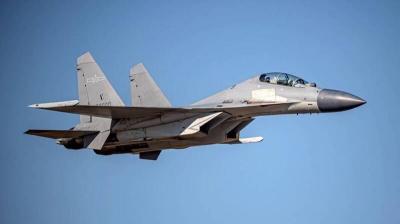
Eight Chinese naval vessels and 24 military aircraft were detected crossing the median line of the Taiwan Strait between 6am yesterday and 6am today, the Ministry of National Defense said this morning. The aircraft entered Taiwan’s northern, central, southwestern and eastern air defense identification zones, the ministry said. The armed forces responded with mission aircraft, naval vessels and shore-based missile systems to closely monitor the situation, it added. Eight naval vessels, one official ship and 36 aircraft sorties were spotted in total, the ministry said.
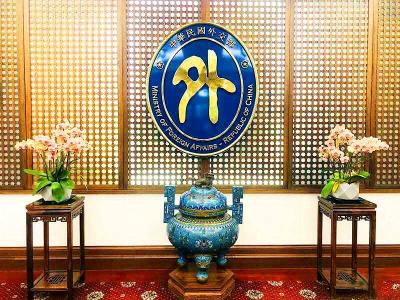
The Ministry of Foreign Affairs (MOFA) today said that if South Korea does not reply appropriately to its request to correct Taiwan’s name on its e-Arrival card system before March 31, it would take corresponding measures to alter how South Korea is labeled on the online Taiwan Arrival Card system. South Korea’s e-Arrival card system lists Taiwan as “China (Taiwan)” in the “point of departure” and “next destination” fields. The ministry said that it changed the nationality for South Koreans on Taiwan’s Alien Resident Certificates from “Korea” to “South Korea” on March 1, in a gesture of goodwill and based on the

Taiwanese officials were shown the first of 66 F-16V fighter jets purchased by Taiwan from the United States, the Ministry of National Defense said yesterday, adding the aircraft has completed an initial flight test and is expected to be delivered later this year. A delegation led by Deputy Minister of National Defense Hsu Szu-chien (徐斯儉) visited Lockheed Martin’s F-16 C/D Block 70 (also known as F-16V) assembly line in South Carolina on March 16 to view the aircraft. The jet will undergo a final acceptance flight in the US before being delivered to Taiwan, the
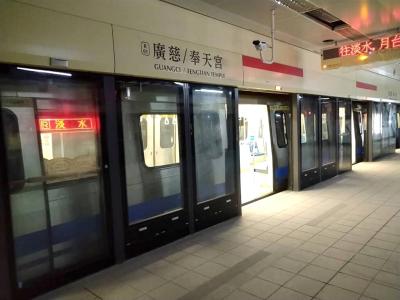
The New Taipei Metro's Sanyin Line and the eastern extension of the Taipei Metro's Tamsui-Xinyi Line (Red Line) are scheduled to begin operations in June, the National Development Council said today. The Red Line, which terminates at Xiangshan Station, would be connected by the 1.4km extension to a new eastern terminal, Guangci/Fengtian Temple Station, while the Sanyin Line would link New Taipei City's Tucheng and Yingge stations via Sanxia District (三峽). The council gave the updates at a council meeting reviewing progress on public construction projects for this year. Taiwan's annual public infrastructure budget would remain at NT$800 billion (US$25.08 billion), with NT$97.3


 RSS
RSS