


People must not forget the suffering and sacrifice of democracy activists who fought against the authoritarian Chinese Nationalist Party (KMT) regime for Taiwanese to have free elections, Vice President William Lai (賴清德), the Democratic Progressive Party’s (DPP) presidential candidate, said yesterday.
Lai was marking the 44th anniversary of the Formosa Incident, also known as the Kaohsiung Incident.
The Formosa Incident was a pro-democracy demonstration organized by Formosa Magazine employees on Dec. 10, 1979 — Human Rights Day. The march led to clashes with military police and soldiers, with virtually all major opposition figures being arrested.

Photo: Hsu Li-chuan, Taipei Times
“People marched shoulder to shoulder during street protests in those years,” Lai told a rally in Kaohsiung, which was held in part to promote DPP Legislator Lee Kun-tse’s (李昆澤) campaign for the Jan. 13 elections.
“We must not forget the pioneers of the Taiwan democracy movement. They had great courage, and were not afraid of the police arresting them, not afraid of being sent to jail, and some were even willing to sacrifice their lives to fight for democracy,” the vice president said.
“Throughout it all, Kaohsiung residents stuck with the activists and supported the democracy cause, so that we could all get through that dark era of one-party rule, to reach the open society with the freedoms we enjoy today,” he said.
Lai said that Taiwan is now facing intimidation from China.
“We must again march shoulder to shoulder and united together as one to safeguard our democracy,” he said.
He said that he and his running mate, former representative to the US Hsiao Bi-khim (蕭美琴), would seek to ensure that Taiwan remains a democracy and participates on the world stage.
He said that it was important for him and Hsiao to attend the commemoration, to recognize the people in Kaohsiung who fought for democracy, referring to the city as “the sacred site of Taiwanese democracy.”
He said that Taiwanese cannot accept policies that would make Taiwan subordinate to China.
“If we accept such policies, that state that Taiwan belongs to China, then Taiwanese sovereignty would no longer exist,” he said.
Additional reporting by Wang Jung-hsiang
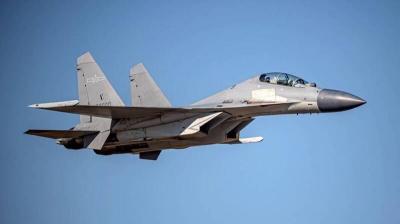
Eight Chinese naval vessels and 24 military aircraft were detected crossing the median line of the Taiwan Strait between 6am yesterday and 6am today, the Ministry of National Defense said this morning. The aircraft entered Taiwan’s northern, central, southwestern and eastern air defense identification zones, the ministry said. The armed forces responded with mission aircraft, naval vessels and shore-based missile systems to closely monitor the situation, it added. Eight naval vessels, one official ship and 36 aircraft sorties were spotted in total, the ministry said.
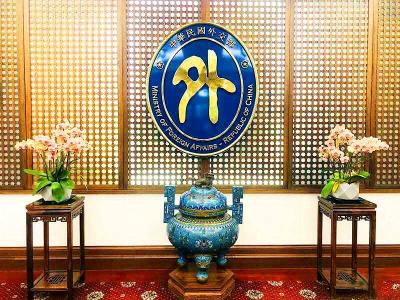
The Ministry of Foreign Affairs (MOFA) today said that if South Korea does not reply appropriately to its request to correct Taiwan’s name on its e-Arrival card system before March 31, it would take corresponding measures to alter how South Korea is labeled on the online Taiwan Arrival Card system. South Korea’s e-Arrival card system lists Taiwan as “China (Taiwan)” in the “point of departure” and “next destination” fields. The ministry said that it changed the nationality for South Koreans on Taiwan’s Alien Resident Certificates from “Korea” to “South Korea” on March 1, in a gesture of goodwill and based on the

Taiwanese officials were shown the first of 66 F-16V fighter jets purchased by Taiwan from the United States, the Ministry of National Defense said yesterday, adding the aircraft has completed an initial flight test and is expected to be delivered later this year. A delegation led by Deputy Minister of National Defense Hsu Szu-chien (徐斯儉) visited Lockheed Martin’s F-16 C/D Block 70 (also known as F-16V) assembly line in South Carolina on March 16 to view the aircraft. The jet will undergo a final acceptance flight in the US before being delivered to Taiwan, the
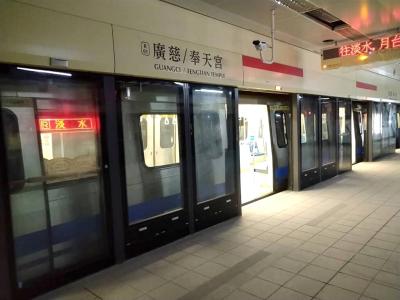
The New Taipei Metro's Sanyin Line and the eastern extension of the Taipei Metro's Tamsui-Xinyi Line (Red Line) are scheduled to begin operations in June, the National Development Council said today. The Red Line, which terminates at Xiangshan Station, would be connected by the 1.4km extension to a new eastern terminal, Guangci/Fengtian Temple Station, while the Sanyin Line would link New Taipei City's Tucheng and Yingge stations via Sanxia District (三峽). The council gave the updates at a council meeting reviewing progress on public construction projects for this year. Taiwan's annual public infrastructure budget would remain at NT$800 billion (US$25.08 billion), with NT$97.3


 RSS
RSS