


Taiwan People’s Party (TPP) Chairman and presidential candidate Ko Wen-je (柯文哲) yesterday accused Chinese Nationalist Party (KMT) Chairman Eric Chu (朱立倫) of using NT$180 million (US$5.4 million) of hidden ill-gotten party assets as an election war chest.
In 2015, Chu liquidated KMT assets and transferred it to privately owned foundations out of fear that the Ill-gotten Party Assets Settlement Committee would seize wealth it acquired during the Martial Law era, Ko said.
The KMT taps into that money during elections, he said.
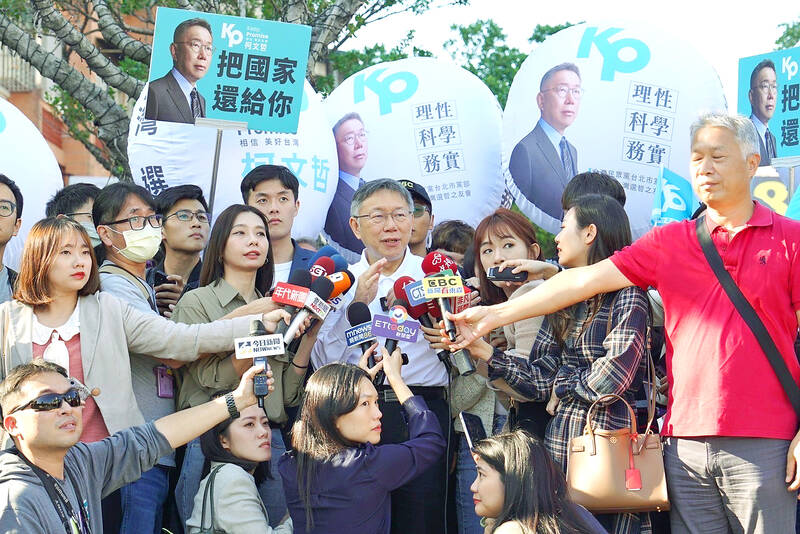
Photo courtesy of the Taiwan People’s Party
“I would like to ask the KMT, how come you cannot pay retired party workers the NT$980 million you owe in unpaid wages, but can afford to spend big in elections?” Ko said, citing the party’s claim that it would organize 15 rallies in the run up to the Jan. 13 presidential and legislative elections.
Chu responded by asking why Ko believes the committee.
Ko later said he would provide financial transactions records that prove his allegations.
In an open letter to TPP members on Friday, Ko said that the KMT presidential campaign was rapidly heading down a pro-China path and had no chance of winning in January.
Ko said that Taiwanese might be used to the pro-unification and pro-independence dichotomy, but aside from this divide, “the Democratic Progressive Party (DPP) and the KMT are much the same,” adding that he questioned whether the two parties are practicing their ideals.
He said the reason why the DPP and KMT have abandoned their beliefs is because their supporters are too kind and believe them too easily.
“For the pan-green camp, once the DPP claims to resist China and protect Taiwan, everything becomes a Chinese Communist Party conspiracy,” Ko said. “And the KMT only has to shout the ‘Republic of China’ loudly for redemption of all their sins.”
New Taipei City Mayor Hou You-yi (侯友宜), the KMT’s presidential candidate, said he made his cross-strait and foreign affairs positions clear, which are to uphold democracy, oppose Beijing’s “one country, two systems” model, and maintain close relations with the US, and peace with China.
Hou’s running mate, Broadcasting Corp of China chairman Jaw Shaw-kong (趙少康), said that if Ko does not like to be smeared as pro-China by the DPP, he should not do it to the KMT.
Ko later responded that “because I am not ‘red’ [pro-China], I get furious when people smear me as ‘red,’ but for those who are originally ‘red,’ the comment is just right.”
Asked to clarify if he meant Jaw is pro-China, Ko said: “Is he not? Is he not seeking rapid unification with China?”
Regarding Hou’s position on China, Ko responded with the Chinese proverb “one takes on the color of one’s company,” implying Hou has been affected by Jaw.
Additional reporting by Hsu Cho-hsun and CNA
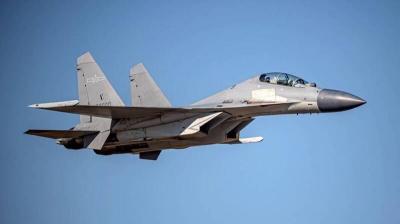
Eight Chinese naval vessels and 24 military aircraft were detected crossing the median line of the Taiwan Strait between 6am yesterday and 6am today, the Ministry of National Defense said this morning. The aircraft entered Taiwan’s northern, central, southwestern and eastern air defense identification zones, the ministry said. The armed forces responded with mission aircraft, naval vessels and shore-based missile systems to closely monitor the situation, it added. Eight naval vessels, one official ship and 36 aircraft sorties were spotted in total, the ministry said.
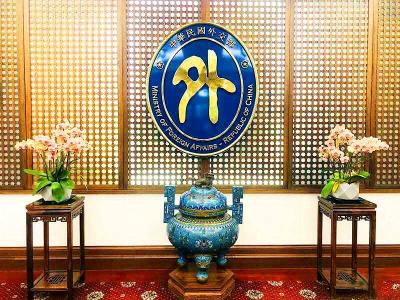
The Ministry of Foreign Affairs (MOFA) today said that if South Korea does not reply appropriately to its request to correct Taiwan’s name on its e-Arrival card system before March 31, it would take corresponding measures to alter how South Korea is labeled on the online Taiwan Arrival Card system. South Korea’s e-Arrival card system lists Taiwan as “China (Taiwan)” in the “point of departure” and “next destination” fields. The ministry said that it changed the nationality for South Koreans on Taiwan’s Alien Resident Certificates from “Korea” to “South Korea” on March 1, in a gesture of goodwill and based on the
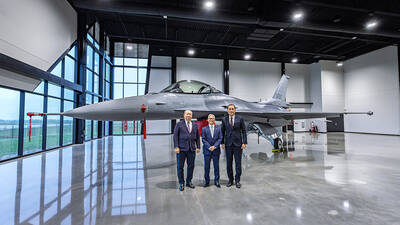
Taiwanese officials were shown the first of 66 F-16V fighter jets purchased by Taiwan from the United States, the Ministry of National Defense said yesterday, adding the aircraft has completed an initial flight test and is expected to be delivered later this year. A delegation led by Deputy Minister of National Defense Hsu Szu-chien (徐斯儉) visited Lockheed Martin’s F-16 C/D Block 70 (also known as F-16V) assembly line in South Carolina on March 16 to view the aircraft. The jet will undergo a final acceptance flight in the US before being delivered to Taiwan, the
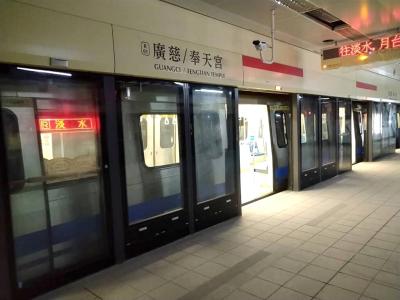
The New Taipei Metro's Sanyin Line and the eastern extension of the Taipei Metro's Tamsui-Xinyi Line (Red Line) are scheduled to begin operations in June, the National Development Council said today. The Red Line, which terminates at Xiangshan Station, would be connected by the 1.4km extension to a new eastern terminal, Guangci/Fengtian Temple Station, while the Sanyin Line would link New Taipei City's Tucheng and Yingge stations via Sanxia District (三峽). The council gave the updates at a council meeting reviewing progress on public construction projects for this year. Taiwan's annual public infrastructure budget would remain at NT$800 billion (US$25.08 billion), with NT$97.3


 RSS
RSS