


Master Taiwanese pool player Yang Ching-shun (楊清順) passed away on Wednesday, Taiwan’s billiards federation said. He was 45.
The federation on Facebook expressed its sadness over the passing of Yang, one of Taiwan’s top pool players internationally and a gold medalist at the 1998 and 2002 Asian Games in men’s individual events.
He is regarded as one of the most talented pool players of his generation covering the late 1990s and early 2000s, earning the nickname “Son of Pool” for his overall excellence with a cue.
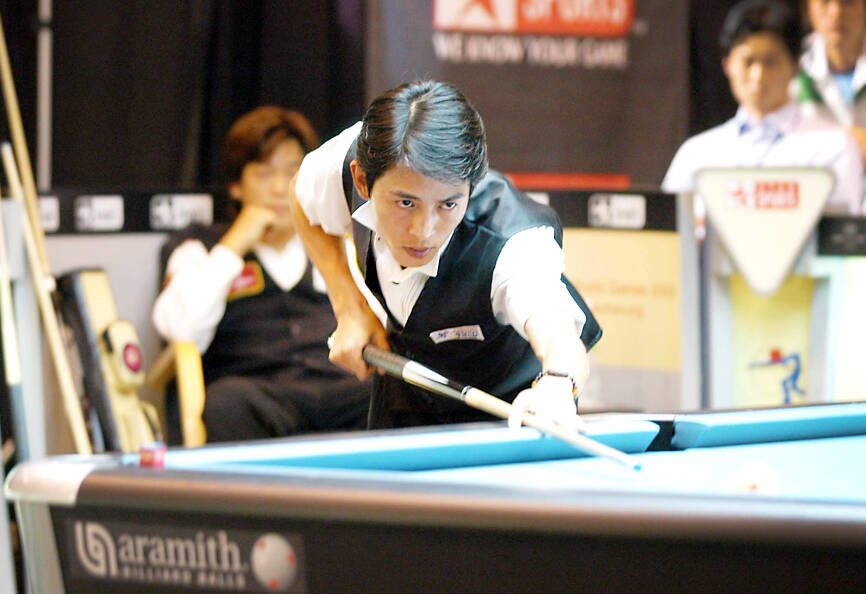
Photo: Wang Jung-hsiang, Taipei Times
“To the legend, ‘the Son of Pool,’ Yang Ching-shun (1978.04.03-2023.12.06),” the federation wrote as it thanked him for his contributions to the development of billiards in Taiwan.
The post was later deleted at the request of Yang’s family.
Billiards coach and commentator Chang Ming-hsiung (張明雄) told Chinese-language media that Yang died of cancer.
United Daily News quoted Chang as saying that Yang was diagnosed with an unidentified cancer about a year ago and had undergone chemotherapy.
“He chose to keep his fight against cancer a secret and did not want us to make it public,” he told the newspaper.
The Kaohsiung native started playing pool professionally in 1996 and became the youngest champion at the All Japan Championship when he won the 1996 title at the age of 18.
He went on to win the nine-ball event at the 1998 Asian Games in Bangkok against then-World Pool champion Kunihiko Takahashi and won at the World Games in Akita, Japan, in 2001.
His best finish at the World Pool Championships was third, when he reached the tournament’s semi-finals in 2002.
During the second half of the 1990s, Yang won at least one international pool title a year except for 1999, when he was serving in the military.
He announced his retirement from professional pool in 2010.

SAFE SUPPLY: Drone shipments from Taiwan help Polish companies mitigate disruption from China, which scaled down its sales to European countries Poland has become the biggest buyer of drones from Taiwan as the eastern European country, on Russia’s doorstep, bolsters its defense capabilities and seeks to reduce reliance on Chinese parts. Poland is now absorbing almost 60 percent of Taiwan’s drone exports, which expanded this year to about US$32 million through last month, from almost nothing in the previous years. The next-largest importer of Taiwan’s drones is the US, to which Taiwan sold about US$7 million worth in the same period. Taiwanese drone maker Ahamani said Polish demand was so great it was planning to open a factory there, and that other foreign

Tigerair Taiwan and China Airlines (CAL) today announced that several international flights were canceled or rescheduled due to Typhoon Ragasa. The Central Weather Administration (CWA) has maintained sea and land warnings for the typhoon. Its storm circle reached the Hengchun Peninsula (恆春半島) on Taiwan's southern tip at 11am today. Tigerair Taiwan said it canceled Monday's IT551/IT552 Taoyuan-Da Nang, IT606/IT607 Taoyuan-Busan and IT602 Taoyuan-Seoul Incheon flights. Tomorrow, cancelations include IT603 Seoul Incheon-Taoyuan, as well as flights between Taoyuan and Sapporo, Osaka, Tokyo Narita, Okinawa, Fukuoka, Saga, Tokyo Haneda, Nagoya, Asahikawa and Jeju. On Wednesday, the IT321/IT322 Kaohsiung-Macau round-trip would also be canceled. CAL announced that today's

Taiwan’s Tiffany Queen (鄭宥筠) on Saturday drew wide attention at the Miss International Queen pageant in Thailand for her outfit inspired by elements of Taiwanese folk culture. Although she did not place at the competition, considered the world’s largest transgender beauty contest, attendees described Queen’s outfit as “dazzling,” capturing the audience’s attention when she took the stage. The costume, modeled after the general guards (將軍守) seen in Taiwan’s temple processions, featured a hand-painted mask, a tall headdress and a trident, all symbols of spiritual authority and the power to ward off evil. The guards are regarded as protectors in Taiwanese folk belief,
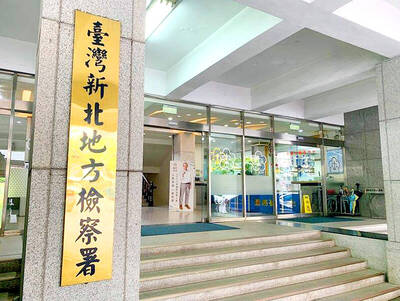
The New Taipei District Prosecutors' Office yesterday indicted Luxshare Precision Industry Co chairwoman and CEO Grace Wang (王來春) and three others for contravening the Act Governing Relations Between the People of the Taiwan Area and the Mainland Area (臺灣地區與大陸地區人民關係條例). The billionaire businesswoman and cofounder of the China-based electronics manufacturer used a Hong Kong subsidiary in 2018 to acquire a division of Liteon Technology Co, a Taiwanese company, prosecutors said. Wang then sought to register it as an overseas Chinese-invested company, but was rejected by the Ministry of Economic Affairs' Investment Commission because its funding involved Chinese capital, prosecutors said. After the rejection, Wang


 RSS
RSS