

A missing person report has not been received from the family of Liao Meng-yen (廖孟彥), a Taiwanese writer allegedly imprisoned in China on charges related to publishing unauthorized material, the Straits Exchange Foundation (SEF) said yesterday.
The statement was released after a post on the Professional Technology Temple (PTT) online bulletin board said that the author, who uses the nom de plume Ronson (羅森) and writes erotic material, was sentenced to 12 years in prison.
The writer’s China-based Web site has been inaccessible since September last year and the most recent post on his Chinese social media account was in November last year, the PTT post said.
Photo: Reuters
Social media posts showed that Liao moved to China following the collapse of the Taiwanese adult book market in the early 2000s, but ran afoul of local authorities, the PTT post said.
The foundation said that Liao’s family had not asked for help, but officials would do all they could to retrieve a person in such a situation if aid was requested.
Liao was known to publish content for He Tu Culture, a Web site run by Taiwan-based Tai Gu He Tu Culture Publishing, which lists him as a representative.
The writer’s content mainly revolves around sadomasochism and sexual violence against women.
Chinese state-owned Xinhua news agency — citing the Chinese Ministry of Public Security’s Bureau of Network Security Protection — on Feb. 7 reported that Chinese police arrested a man surnamed Liao for “propagating obscene messages in the guise of fantasy novels.”
The man was part of a “well-organized and profit-sharing crime group” that published e-books containing banned materials via an app named “He X Novels” targeting underaged readers, it said, using a censored version of the app’s name.
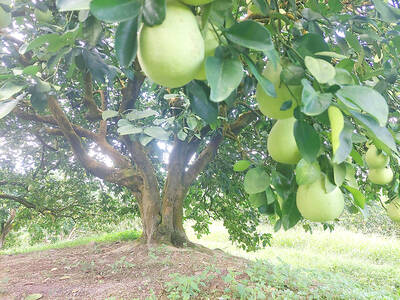
A Hualien pomelo farmer refused to sell to China after the country announced it would permit more Taiwanese pomelo imports, prompting widespread support from Taiwanese consumers, who rallied to buy his fruit. China’s Taiwan Affairs Office last month said that China’s General Administration of Customs registered an additional 79 Taiwanese pomelo orchards and packing facilities in Hualien County, allowing more Taiwanese producers to export pomelos to China. “I am a Hualien fruit farmer and I refuse to sell to China,” Liu Tzu-hao (劉子豪) from Ruisui Township (瑞穗) said in an online post. Liu is a well-known farmer in the community and has served
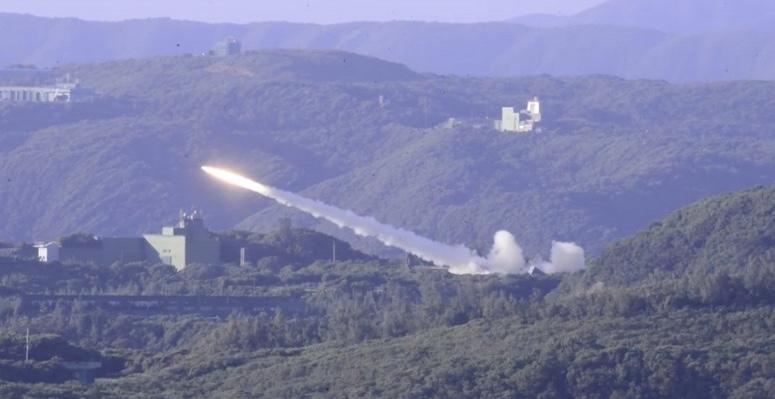
A Chinese military drone was spotted conducting reconnaissance off Taitung County as President William Lai (賴清德) visited Pingtung County this morning to inspect a drill of the armed forces’ precision-strike capabilities, prompting the military to closely monitor its actions. Today was the final day of a three-day military exercise at Jioupeng Base (九鵬基地) to test the joint combat capabilities of the armed forces and coast guard. The exercise began on Wednesday simulating air defense interception and yesterday tested long-range strike capabilities and new air defense weapons. This morning, the military conducted a final exercise involving air defense, anti-ship and drone operations. Military sources said

OCT. 31: The antiviral drugs Tamiflu and Eraflu have been distributed to about 4,000 medical facilities nationwide for people in seven groups who develop flu-like symptoms As the domestic influenza epidemic enters its peak season and continues to escalate, the Centers for Disease Control (CDC) yesterday announced that publicly funded influenza antiviral drugs for seven eligible groups have been extended to Oct. 31, allowing those who develop flu-like symptoms to receive the medication without undergoing a rapid influenza test. The CDC has extended the expanded use of flu antiviral drugs to seven groups: healthcare and influenza-prevention personnel; residents and staff at nursing homes, long-term care facilities and similar institutions; kindergarten and daycare workers and home-based caregivers; students from kindergarten through high school, vocational high school and the

Taiwanese Tsai Chin-shu (蔡金樹), who had been imprisoned in China for engaging in activity that “endangers national security,” said on Facebook on Friday that he has returned to Taiwan. Tsai, chairman of the Southern Taiwan Union of Cross-strait Relations Associations, had traveled frequently between Taiwan and China for years, and at one time ran a trading company in China’s Pingtan. In July 2018, he traveled to Quanzhou, Fujian Province, to attend a cross-strait food trade fair and stayed at a hotel in Xiamen. He checked out the following day and then disappeared. His family had made repeated appeals to the authorities


 RSS
RSS