


Taiwanese chocolatier and founder of the shop Q Sweet Queenie Wu (吳葵妮) has triumphed at the International Chocolate Awards World Final, winning three golds, two silvers and one bronze, plus six special prizes.
The world final took place in Florence, Italy, on Tuesday last week. All of the contestants had won regional and national competitions. Wu qualified after winning three silvers and five bronzes in the Asia-Pacific regional contest.
This is the third consecutive year that Wu has won gold at the world finals. She was awarded medals for her array of creations, which included floral-flavored chocolates and others filled with fruit puree.

Photo courtesy of Q sweet
Her “Comfort fruit - Green Mango” won gold and a special prize with a score of 89.4, while her “Exclusive pate de fruits - Ginger Lily” with a score of 89 and “Comfort chocolate bar - Jasmine & Strawberry” with a score of 88.4 both won gold and two special prizes.
Her chocolates flavored with roses grown in Nantou County and violets also proved to be a hit with the judging panel, winning her accolades.
Wu said she chose to include the essence of flowers in her chocolates to demonstrate girl power and be a voice for women in a male-dominated industry.
A significant challenge when producing the chocolates was figuring out the logistics of using fresh fruit to make pate de fruits — fruit jelly — because even in its origin country, France, frozen puree is used, not fresh fruit, Wu said.
It took her a year to perfect the art of using fresh produce, during which she was forced to throw away tens of kilograms of waste.
Another challenge was ensuring she obtained the best flavor from the fruits and flowers, as each has a different fiber and water content, pH value and sweetness level.
Wu said she hopes her success inspires and empowers more women to enter the chocolate industry.
The International Chocolate Awards are is the world’s largest chocolate product competition and aim to identify the best chocolate on the planet.
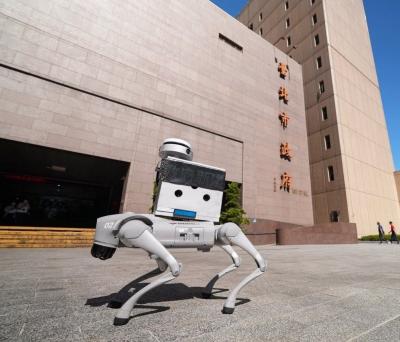
The inspection equipment and data transmission system for new robotic dogs that Taipei is planning to use for sidewalk patrols were developed by a Taiwanese company, the city’s New Construction Office said today, dismissing concerns that the China-made robots could pose a security risk. The city is bringing in smart robotic dogs to help with sidewalk inspections, Taipei Deputy Mayor Lee Ssu-chuan (李四川) said on Facebook. Equipped with a panoramic surveillance system, the robots would be able to automatically flag problems and easily navigate narrow sidewalks, making inspections faster and more accurate, Lee said. By collecting more accurate data, they would help Taipei

TAKING STOCK: The USMC is rebuilding a once-abandoned airfield in Palau to support large-scale ground operations as China’s missile range grows, Naval News reported The US Marine Corps (USMC) is considering new sites for stockpiling equipment in the West Pacific to harden military supply chains and enhance mobility across the Indo-Pacific region, US-based Naval News reported on Saturday. The proposed sites in Palau — one of Taiwan’s diplomatic allies — and Australia would enable a “rapid standup of stored equipment within a year” of the program’s approval, the report said, citing documents published by the USMC last month. In Palau, the service is rebuilding a formerly abandoned World War II-era airfield and establishing ancillary structures to support large-scale ground operations “as China’s missile range and magazine
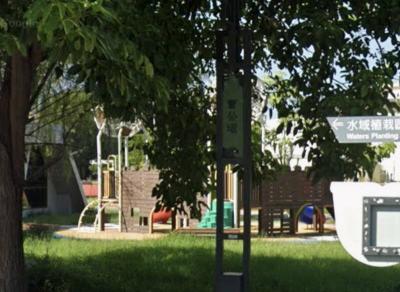
A 72-year-old man in Kaohsiung was sentenced to 40 days in jail after he was found having sex with a 67-year-old woman under a slide in a public park on Sunday afternoon. At 3pm on Sunday, a mother surnamed Liang (梁) was with her child at a neighborhood park when they found the man, surnamed Tsai (蔡), and woman, surnamed Huang (黃), underneath the slide. Liang took her child away from the scene, took photographs of the two and called the police, who arrived and arrested the couple. During questioning, Tsai told police that he had met Huang that day and offered to

A British man was arrested for attempting to smuggle 14.37kg of marijuana into Taiwan through Taiwan Taoyuan International Airport, Taipei Customs said late yesterday. The man, who arrived from Bangkok at 9pm on Friday, was asked by customs officers to open his luggage during a random inspection, Taipei Customs said in a news release. The passenger, whose identity was not disclosed, refused to open his suitcase and tried to flee the restricted area. He was eventually subdued by three customs officials and an Aviation Police Bureau officer. A later search of his checked luggage uncovered 14.37kg of marijuana buds. The case was handed over


 RSS
RSS