


Taitung County’s Tiehua Music Village is to close by Dec. 31, because its organizer said it has completed its goal of helping the region develop.
Lovely Taiwan Foundation CEO Lee Ying-ping (李應平) on Friday said that the foundation initially wanted to present the best of Taiwan through local townships and villages, and the area around Tiehua Music Village has developed well over the past few years.
The aim of Tiehua, which was set up by the foundation in 2010, was to provide Taitung’s indigenous people with a stage to perform music.

Photo: Screen grab from Tiehua’s Facebook page
As Tiehua became popular, a lot of singers from Taiwan and abroad performed there, including Taiwanese singer-songwriter Crowd Lu (盧廣仲) and rock star Wu Bai (伍佰).
The news of its closure first came out on Thursday night, when the foundation posted a statement on Facebook.
The foundation said it appreciated all who have joined the village and worked together over the past 13 years, adding that they made Tiehua blossom.
Many local residents said that they were shocked at the news, and wondered if the foundation was under financial pressure.
In response to their questions, Lee said “the cost of running the village was not what we thought about the most, but whether the project had helped the region grow, and [sparked] motivation and opportunities.”
Tiehua Music Village would always be one of Taitung’s best memories, Lee said, adding that the foundation would continue working in areas such as Pingtung and Miaoli counties, and Taitung’s Chihshang Township (池上).
Meanwhile, Tiehua music director Cheng Chieh-jen (鄭捷任) said that the news came out quite abruptly, but as the foundation is a non-profit organization and has been considering a transformation for some time, it was time for a change.
However, the foundation’s goal to help develop local culture and education would remain the same, Cheng added.

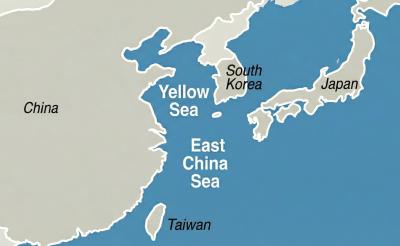
China has reserved offshore airspace in the Yellow Sea and East China Sea from March 27 to May 6, issuing alerts usually used to warn of military exercises, although no such exercises have been announced, the Wall Street Journal (WSJ) reported yesterday. Reserving such a large area for 40 days without explanation is an “unusual step,” as military exercises normally only last a few days, the paper said. These alerts, known as Notice to Air Missions (Notams), “are intended to inform pilots and aviation authorities of temporary airspace hazards or restrictions,” the article said. The airspace reserved in the alert is

NAMING SPAT: The foreign ministry called on Denmark to propose an acceptable solution to the erroneous nationality used for Taiwanese on residence permits Taiwan has revoked some privileges for Danish diplomatic staff over a Danish permit that lists “Taiwan” as “China,” Eric Huang (黃鈞耀), head of the Ministry of Foreign Affairs’ Department of European Affairs, told a news conference in Taipei yesterday. Reporters asked Huang whether the Danish government had responded to the ministry’s request that it correct the nationality on Danish residence permits of Taiwanese, which has been listed as “China” since 2024. Taiwan’s representative office in Denmark continues to communicate with the Danish government, and the ministry has revoked some privileges previously granted to Danish representatives in Taiwan and would continue to review

More than 6,000 Taiwanese students have participated in exchange programs in China over the past two years, despite the Mainland Affairs Council’s (MAC) “orange light” travel advisory, government records showed. The MAC’s publicly available registry showed that Taiwanese college and university students who went on exchange programs across the Strait numbered 3,592 and 2,966 people respectively. The National Immigration Agency data revealed that 2,296 and 2,551 Chinese students visited Taiwan for study in the same two years. A review of the Web sites of publicly-run universities and colleges showed that Taiwanese higher education institutions continued to recruit students for Chinese educational programs without

A bipartisan group of US senators has introduced a bill to enhance cooperation with Taiwan on drone development and to reduce reliance on supply chains linked to China. The proposed Blue Skies for Taiwan Act of 2026 was introduced by Republican US senators Ted Cruz and John Curtis, and Democratic US senators Jeff Merkley and Andy Kim. The legislation seeks to ease constraints on Taiwan-US cooperation in uncrewed aerial systems (UAS), including dependence on China-sourced components, limited access to capital and regulatory barriers under US export controls, a news release issued by Cruz on Wednesday said. The bill would establish a "Blue UAS


 RSS
RSS