


A former military power plant on Matsu archipelago is bathed in an ominous crimson light — an art installation reminding visitors of the ever-present threat of a Chinese invasion.
The exhibit titled “Your Country Needs You: Glory of ‘Jun Hun’” — which means “military spirit” — is part of the Matsu Biennial, which runs until the middle of this month.
Some of the works displayed across Matsu — a chain of rocky islands 20 minutes by boat from China’s eastern coast — focus on its natural beauty, but there were also artists, like light designer Liu Ping-yi and his partner Annie Chu, who chose to capitalize on the outlying islands’ wartime history.
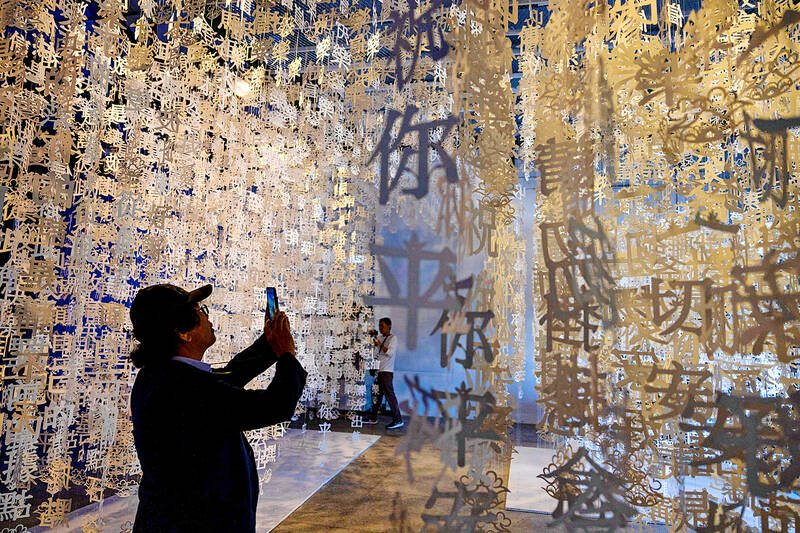
Photo: Annabelle Chih, AFP
“We wanted to use light to let the visitors return to a period in the past, and understand how the soldiers and civilians lived on the island then,” said Liu, who collaborated with a sound artist on the power plant installation. “I hope they can imagine what Matsu was like during wartime.”
The islands were key military strongholds for Chinese Nationalist Party (KMT) forces after they fled China in 1949 following defeat in the Chinese Civil War.
Sporadically shelled by China, the KMT ramped up Matsu’s fortifications, constructing underground tunnels and air raid shelters, while coastal outposts had narrow openings so that soldiers could fire in the direction of China.
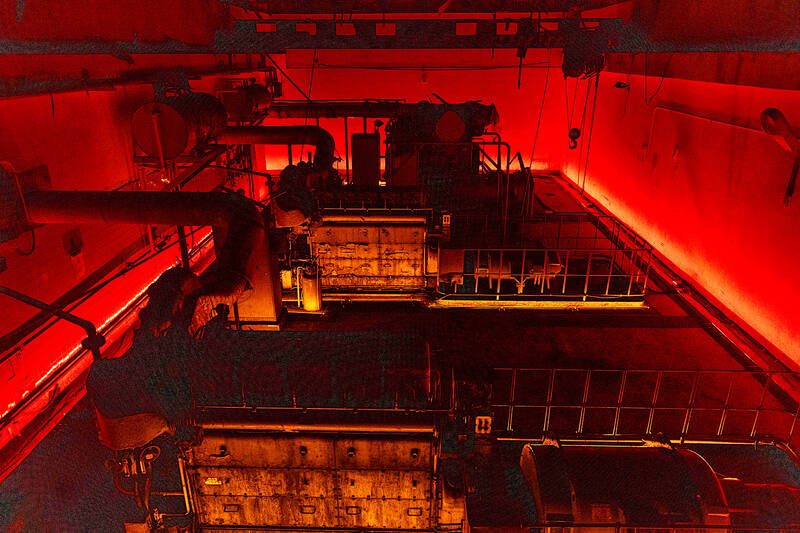
Photo: Annabelle Chih, AFP
Today, many of these military structures are abandoned, although some of the tunnels have been restored and are open to the public.
For the biennial, an air raid shelter now carries soundtracks of the past, while a former military performance hall showcases cut-out Chinese characters strung together — taken from letters sent to service personnel and residents on the islands.
A whale-shaped wire structure is erected on a beach, fashioned out of old Matsu ships with navy vessel accents.
“Matsu is a tourism-oriented county,” said Lienchiang County Commissioner Wang Chung-ming (王忠銘), who takes issue with his home being labeled a “frontline island.”
“Matsu needs to move toward the concept of an island museum,” Wang said.
Beijing has held massive military exercises around the islands in the past year, including one in April that saw warplanes and naval vessels simulate encirclement of Taiwan. For the residents of Matsu, which was the closest Taiwanese territory to April’s drills, life often goes on without skipping a beat in the face of such war games.
Artist Chao Kai-chih, who helped curate the biennial’s installations, said local residents are “not scared of verbal threats by China.”
“Come if you have the guts,” he said — before quickly switching course and quipping that if China were to invade, “you can attack a bit further — attack Taiwan, don’t attack Matsu.”
Growing up in Matsu under the military administration had many restrictions, said Chao, 66, describing a 9pm curfew and not being allowed on the island’s beaches.
“We want peace, we don’t want war and what we can do is to turn Matsu into an art island,” Chao said.
Wang’s hope is that the biennial would bring the islands some much-needed tourism dollars, as three years of border restrictions due to the COVID-19 pandemic have meant a loss in visitors and income.
“Now we have to slowly restart the negotiation process from the perspective of tourism and cargo goods,” Wang said. “Politically, we must follow Taiwan, but economically Matsu must integrate with China.”
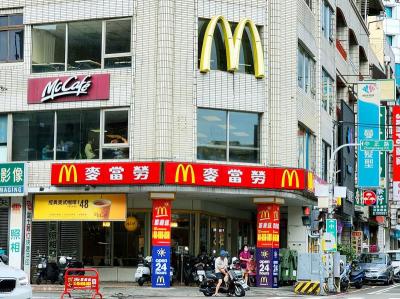
Fast food chain McDonald's is to raise prices by up to NT$5 on some products at its restaurants across Taiwan, starting on Wednesday next week, the company announced today. The prices of all extra value meals and sharing boxes are to increase by NT$5, while breakfast combos and creamy corn soup would go up by NT$3, the company said in a statement. The price of the main items of those meals, if ordered individually, would remain the same. Meanwhile, the price of a medium-sized lemon iced tea and hot cappuccino would rise by NT$3, extra dipping sauces for chicken nuggets would go up
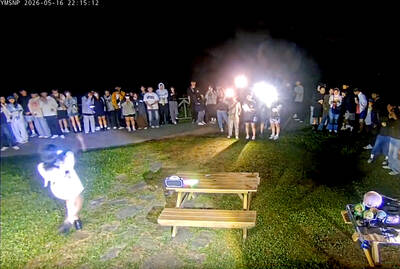
Yangmingshan National Park’s Qingtiangang (擎天崗) nature area has gone viral after a park livestream camera observed a couple in the throes of intimate congress, which was broadcast live on YouTube, drawing large late-night crowds and sparking a backlash over noise, bright lights and disruption to wildlife habitat. The area’s livestream footage appeared to show a couple engaging in sexual activity on a picnic table in the park on Friday last week, with the uncensored footage streamed publicly online. The footage quickly spread across social media, prompting a tide of visitors to travel to the site to “check in” and recreate the

Minister of Digital Affairs Lin Yi-ching (林宜敬) yesterday cited regulatory issues and national security concerns as an expert said that Taiwan is among the few Asian regions without Starlink. Lin made the remarks on Facebook after funP Innovation Group chief executive officer Nathan Chiu (邱繼弘) on Friday said Taiwan and four other countries in Asia — China, North Korea, Afghanistan and Syria — have no access to Starlink. Starlink has become available in 166 countries worldwide, including Ukraine, Malaysia, the Philippines and Vietnam, in the six years since it became commercial, he said. While China and North Korea block Starlink, Syria is not
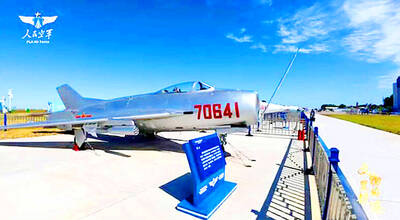
GROUNDED: A KMT lawmaker proposed eliminating drone development programs and freezing funding for counterdrone systems, despite China’s adoption of the technology China has deployed attack drones at air bases near the Taiwan Strait in a strategy aimed at overwhelming Taiwan’s air defense systems through saturation attacks, the Mainland Affairs Council (MAC) said. The council’s latest quarterly report on China said that satellite imagery and open-source intelligence indicate that the Chinese People’s Liberation Army (PLA) had converted retired J-6 fighter jets into J-6W drones, which the PLA has stationed at six air bases near Taiwan, five in China’s Fujian Province and one in Guangdong Province. The report cited J. Michael Dahm, a senior fellow at the US-based Mitchell Institute, as saying that China has


 RSS
RSS