

South Korean authorities cited the risk of Chinese economic retaliation when they charged marine technology firm SI Innotec last year with contravening trade laws for its work on Taiwan’s Indigenous Defense Submarine program, according to a police document seen by Reuters and two people familiar with the matter.
In an affidavit to a judge seeking the arrest of SI Innotec executive director Park Mal-sik from Feb. 17 last year, police said authorities feared a repeat of the sanctions imposed by Beijing in 2016, after Seoul decided to install the US Terminal High-Altitude Area Defense (THAAD) anti-ballistic missile system.
China agreed to lift those measures in late 2017.
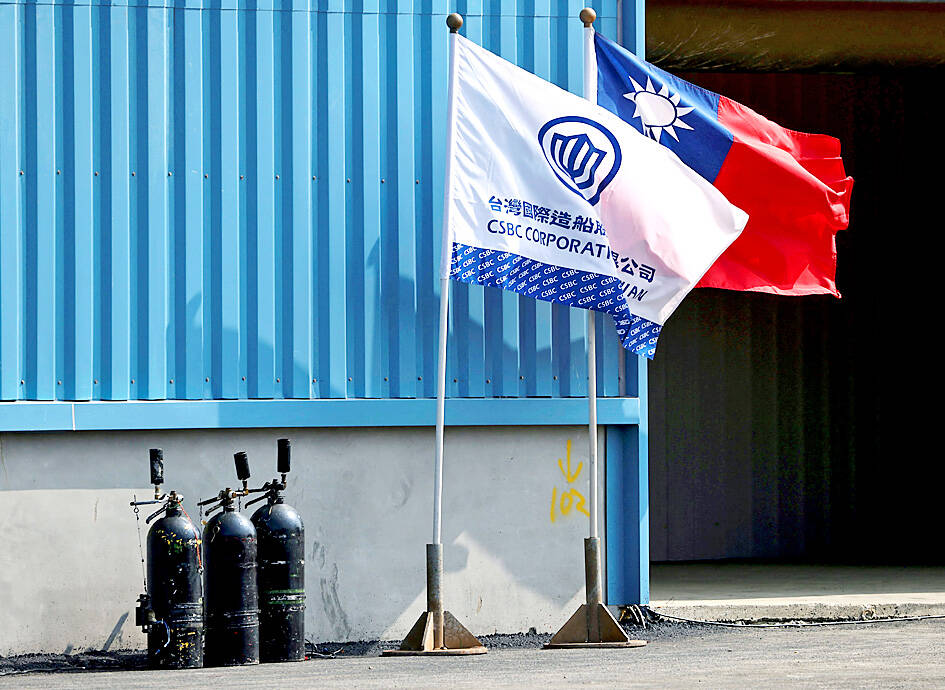
Photo: Ann Wang, Reuters
SI Innotec’s deal to supply Taiwan with submarine manufacturing equipment “directly impacts the overall security of South Korea,” the affidavit said, adding that police, who had consulted with the South Korean Defense Acquisition Program Administration (DAPA) arms sales regulator, were “concerned about a crisis similar to a second THAAD deployment, such as economic retaliation.”
The judge ordered Park’s arrest on Feb. 28 on the grounds that he posed a flight risk and might destroy evidence, a person familiar with the matter said.
In the sealed affidavit reviewed by Reuters, police cited China’s furious reaction in a 2021 Reuters report about defense contractors and experts from South Korea and six other countries working on Taiwan’s submarine program.
SI Innotec, which was fined in August last year, and Park, who received a suspended prison sentence, deny any wrongdoing and have appealed.
In a sign of a broader crackdown, two other South Korean companies that allegedly supplied Taiwan were also charged in November last year with breaking trade laws, and one of their chief executives was accused of industrial espionage, according to court records and four people familiar with the matter.
The identities of defense engineering subcontractors Keumha Naval Technology (KHNT) and S2&K, and the charges facing the codefendants in their closed-door trial, have not been previously reported.
A KHNT official, speaking on condition of anonymity, confirmed an ongoing criminal case.
The firm declined further comment, and S2&K had no comment.
The SI Innotec affidavit and interviews with seven people with military, shipbuilding and legal ties showed how political considerations about an economic rupture with China have weighed on South Korea’s investigations into the three companies.
The people spoke on condition of anonymity as they were discussing ongoing legal proceedings with national security implications.
The South Korean Ministry of Foreign Affairs was “completely against” KHNT’s work with Taiwan and signaled its disapproval to DAPA, a person familiar with the subcontractor said.
Many firms with submarine expertise avoided helping Taiwan, because they did not expect government approval given the risk of “bigger damage to [the] economy than benefits,” including a possible Chinese ban on South Korean exports, the affidavit said.
Reuters attempted to reach then-South Korean president Moon Jae-in through the office of a former aide, which referred questions to the foreign ministry.
The ministry said it was aware the trials were under way, and referred detailed questions to DAPA.
DAPA said it follows the law when making decisions on exports, but had no further comment.
A police investigator said there was no pressure from Moon’s government to get tough on SI Innotec.
Asked for comment, a Chinese Ministry of Foreign Affairs spokesperson did not address a question on whether Beijing pressed Seoul about the subcontractors.
Taiwan’s foreign affairs and national defense ministries had no comment.
For the submarine project, Taiwan drew on the expertise of retired South Korean naval officers — including managers at SI Innotec and KHNT — who are not required by South Korean defense ministry regulations to seek permission before working overseas.
SI Innotec is accused of contravening the Foreign Trade Act, which requires DAPA’s approval to transfer abroad many “strategic goods” for military use.
The regulator is also tasked with promoting exports, a role that requires officials to make hard decisions on otherwise profitable deals that might irk China, four people familiar with the criminal cases said.
In 2019, SI Innotec agreed to a deal with CSBC Corp, Taiwan to supply and install US$12 million in welding and assembly equipment for submarine pressure hull manufacturing, contracts presented at trial showed.
The equipment was not designed solely for military purposes and did not involve sensitive technology, SI Innotec said.
At CSBC’s request, the contract listed the equipment’s primary use as for wind power generation, it said.
It is “customary” for dual-use equipment contracts to be “signed for industrial use, not exposing military use,” and Taiwanese clients are discreet about defense work, SI Innotec said.
In April 2020, DAPA suggested that SI Innotec check with it whether the equipment could be categorized as military goods and require export approval, court documents said.
The subcontractor said it told DAPA that it was exporting dual-use goods, which can undergo a self-certification process that the regulator does not oversee.
The results of that self certification showed export approval was not needed and DAPA was informed, SI Innotec said.
In August last year, the Changwon District Court fined SI Innotec 14 billion won (US$10.3 million).
“The accused were fully aware that the subject equipment would be used to manufacture a military submarine,” the court said.
SI Innotec said police designated its equipment as military goods after a “subjective and opaque” consultation with DAPA reliant on “limited data.”
It said that it had “strong doubts” about whether its exports would be considered military grade if they had not been sent to Taiwan.
SI Innotec CEO Park Moo-sik — who was not charged — continues to work in Taiwan on the project, two people familiar with his movements said.
He declined comment through a company lawyer.
KHNT and its CEO, retired naval officer Yang Hyang-kweon, are alleged to have illicitly transferred a submarine component to Taiwan, two people familiar with the subcontractor’s agreement said.
Yang was detained last year and released on bail in March, court records showed.
The component was related to a torpedo launching tube, two people familiar with KHNT’s work said.
KHNT’s codefendant, S2&K, specializes in such systems.
KHNT initially went through DAPA’s process, three people familiar with the matter said.
However, it received no response when it wanted to send detailed designs and went ahead to meet a deadline, two of the people said.
It was then that Seoul’s foreign ministry told DAPA it disapproved of the deal, one of them said.
A total of 400 foreign “high- level” professionals have been naturalized as Republic of China (Taiwan) citizens over the past decade as the government has eased nationality rules to attract talent from a wider range of fields, the Ministry of the Interior said yesterday. The 400th high-level professional, who works in the electronics industry, was approved for ROC citizenship on Aug. 26, the MOI said. The MOI quoted the newly naturalized citizen as saying that Taiwan is a leader in fields such as semiconductors, electronics manufacturing, artificial intelligence development and energy technology. He also said
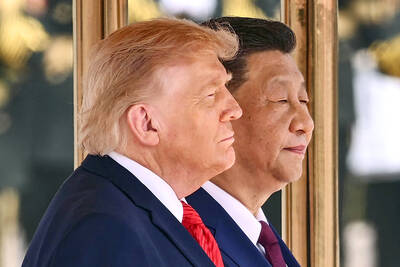
China has warned that it could cancel a planned US-China leaders’ summit if Washington approves new arms sales to Taiwan, a Japanese media outlet quoted sources as saying yesterday. US President Donald Trump, “apparently eager to showcase some diplomatic achievements ahead of November’s midterm congressional elections, places great importance on holding the summit with Chinese President Xi Jinping (習近平),” Japan’s Kyodo News reported. “While preparing for Xi’s upcoming trip, China has restated its position that the Taiwan issue is a ‘red line’ in bilateral relations,” the report said. The report said that when Xi met with Trump in Beijing in May, Xi said
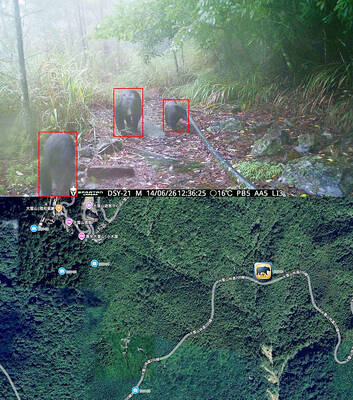
RARE PEEK: The footage released showed one of the bears staying in a cave for as long as 70 days, providing the first record of Formosan black bear’s overwintering The Forestry and Nature Conservation Agency yesterday released tracking records of released Formosan black bears for the first time, showing that they get much closer to human settlements than previously thought. The agency said it had captured two bears, Da Qu-ali (達古阿里) and Aziman (阿里曼), in indigenous villages in Hualien County and began to track them with a camera-mounted satellite collar after releasing them back into the wild. The results confirmed that the bears have moved from deep mountain areas into lowland hills closer to human communities, leading to an increase in human-bear conflicts, it said. The agency has introduced artificial intelligence-assisted early
DIPLOMATIC TOUR: Chinese President Xi Jinping began a series of overseas visits last month to Kyrgyzstan, Egypt and India, aimed at securing leverage, an official said Recent Chinese diplomatic and military moves are aimed at creating pressure ahead of a planned meeting between Chinese President Xi Jinping (習近平) and US President Donald Trump, National Security Council adviser Huang Chung-yen (黃重諺) said. Trump when visiting China in May extended an invitation to Xi to visit Washington on Sept. 24. China is yet to officially announce plans for Xi’s visit to the US. In an interview with the Liberty Times (sister paper of the Taipei Times) on Thursday, Huang said Xi’s overseas visits, China’s “gray zone” activities along the First Island Chain and efforts to expand its trade surplus with the


 RSS
RSS