


To US Representative Mike Collins, China is a bigger threat to the US than Russia, so the Georgia Republican has voted against providing military aid to Ukraine as he advocates doing more to arm Taiwan, which is facing military aggression from Beijing.
For Collins and other Republican lawmakers, Taiwan and Ukraine are effectively rivals for a limited pool of US military assistance, but that is not necessarily how Taiwan and many of its supporters see it. They view Taiwan’s fate as closely linked to that of Ukraine as it struggles to push back a Russian invasion.
They say China is watching closely to see if the US has the political stamina to support an ally in a prolonged, costly war. US aid to Ukraine has also led to weapons manufacturers stepping up production — something that could benefit Taiwan in a clash with China.
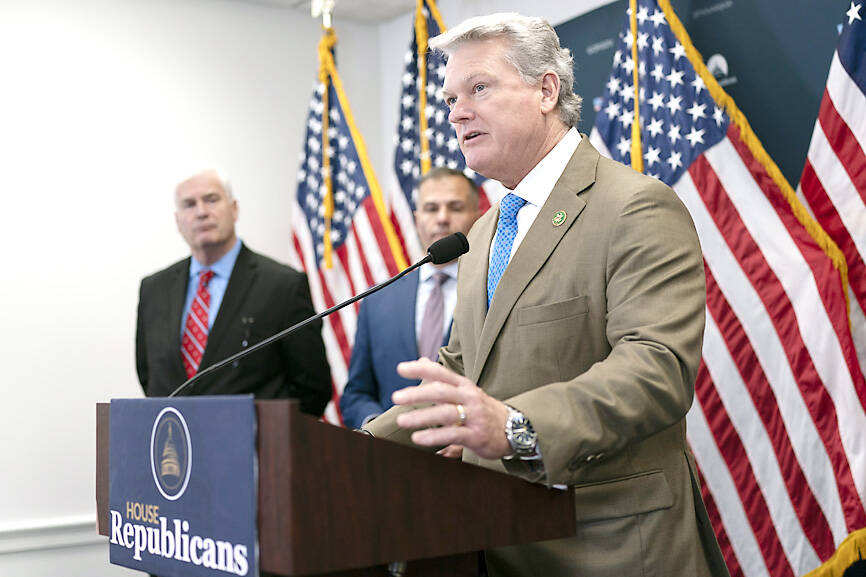
Photo: AP
“Ukraine’s survival is Taiwan’s survival. Ukraine’s success is Taiwan’s success,” Representative to the US Hsiao Bi-khim (蕭美琴) said in May at the Sedona Forum hosted by the McCain Institute.
Still, Taiwan has been careful not to weigh in on the US debate about continued funding for Ukraine, which has become a divisive political issue after initially having strong bipartisan support.
Asked about the US Congress removing Ukraine funding from a temporary spending measure that prevented a US government shutdown on Oct. 1, Taiwan’s diplomatic office in the US responded with discretion.
“Taiwan is grateful to have strong bipartisan support from the US. We will continue to work with the US to maintain the peace and stability of the Taiwan Strait,” the Taipei Economic and Cultural Representative Office said in a statement e-mailed to The Associated Press.
However, Congress’ refusal to include the aid raises “alarm bells” in Taiwan, said Bonnie Glaser, managing director of the Indo-Pacific program at the German Marshall Fund.
She said the Taiwanese government “has argued that Ukraine’s victory is existential for Taiwan.”
“These worries exist even though most Republicans who seek to end US support for Ukraine are still very pro-Taiwan and willing to do more to help defend Taiwan,” she said.
Taiwan is the thorniest issue in the frayed US-China relationship.
Beijing vows to seize Taiwan, by force if necessary, to achieve “unification.” The US wants a peaceful resolution and has a security pact with Taipei, supplying it with military hardware and technologies to prevent any forced takeover by Beijing.
China’s military actions near Taiwan have fueled concerns about armed attacks.
US President Joe Biden has said he would send troops to defend Taiwan in the event of war, while Chinese President Xi Jinping (習近平) has demanded the US respect his country’s “sovereignty and territorial integrity.”
Collins traveled to Taiwan on his first overseas trip as a congressman. When he returned, he called for timely weapon deliveries to the nation, especially since as much as US$19 billion worth of weapons sold to Taiwan have been delayed.
“These delays are primarily a result of a US manufacturing backlog and a distracted Biden administration with weapons deliveries to Ukraine taking preference over Taiwan,” he said. “We must get serious about offering support to our ally Taiwan, because ultimately when it comes to countering China, our interests align.“
Bradley Bowman, senior director of the Foundation for Defense of Democracies’ Center of Military and Political Power, disagrees with that logic.
“It’s not a zero-sum game,” he said. “Taiwan supports the US aid to Ukraine. They understand that the deterrence message works.”
On a practical level, the aid for Ukraine is helping the US expand its weapons production, which would benefit Taiwan and enhance US military readiness, Bowman said.
US Representative Michael McCaul, a Texas Republican who in April led a congressional delegation to Taiwan as chairman of the US House of Representatives Foreign Affairs Committee, said support for the nation has not diminished on the Hill.
“Throughout the conversations about aid to Ukraine, I have not heard a single person take a swipe at Taiwan,” McCaul said at a recent National Day celebration hosted by the Taipei Economic and Cultural Representative Office in Washington.
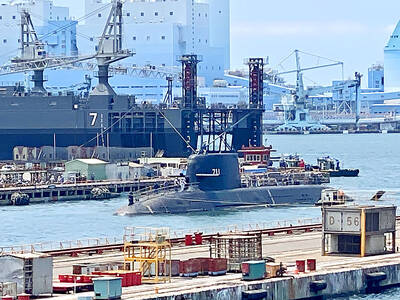
AGING: While Japan has 22 submarines, Taiwan only operates four, two of which were commissioned by the US in 1945 and 1946, and transferred to Taiwan in 1973 Taiwan would need at least 12 submarines to reach modern fleet capabilities, CSBC Corp, Taiwan chairman Chen Cheng-hung (陳政宏) said in an interview broadcast on Friday, citing a US assessment. CSBC is testing the nation’s first indigenous defense submarine, the Hai Kun (海鯤, Narwhal), which is scheduled to be delivered to the navy next month or in July. The Hai Kun has completed torpedo-firing tests and is scheduled to undergo overnight sea trials, Chen said on an SET TV military affairs program. Taiwan would require at least 12 submarines to establish a modern submarine force after assessing the nation’s operational environment and defense

A white king snake that frightened passengers and caused a stir on a Taipei MRT train on Friday evening has been claimed by its owner, who would be fined, Taipei Rapid Transit Corp (TRTC) said yesterday. A person on Threads posted that he thought he was lucky to find an empty row of seats on Friday after boarding a train on the Bannan (Blue) Line, only to spot a white snake with black stripes after sitting down. Startled, he jumped up, he wrote, describing the encounter as “terrifying.” “Taipei’s rat control plan: Release snakes on the metro,” one person wrote in reply, referring
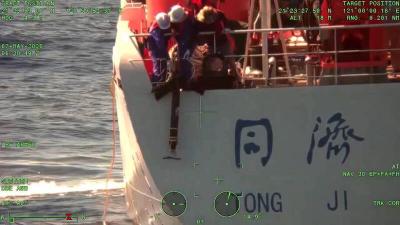
The coast guard today said that it had disrupted "illegal" operations by a Chinese research ship in waters close to the nation and driven it away, part of what Taipei sees a provocative pattern of China's stepped up maritime activities. The coast guard said that it on Thursday last week detected the Chinese ship Tongji (同濟號), which was commissioned only last year, 29 nautical miles (54km) southeast of the southern tip of Taiwan, although just outside restricted waters. The ship was observed lowering ropes into the water, suspected to be the deployment of scientific instruments for "illegal" survey operations, and the coast
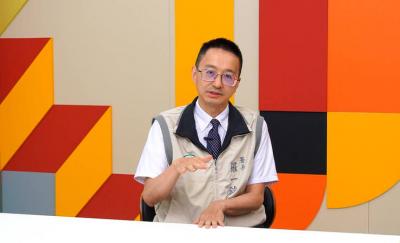
Taiwan’s two cases of hantavirus so far this year are on par with previous years’ case numbers, and the government is coordinating rat extermination work, so there should not be any outbreaks, Centers for Disease Control (CDC) Director-General Philip Lo (羅一鈞) said today in an interview with the Liberty Times (the Taipei Times’ sister newspaper). An increase in rat sightings in Taipei and New Taipei City has raised concerns about the spread of hantavirus, as rats can carry the disease. In January, a man in his 70s who lived in Taipei’s Daan District (大安) tested positive posthumously for hantavirus, Taiwan’s


 RSS
RSS