


This year’s Taipei Nuit Blanche is to begin tomorrow evening in Xinyi District (信義) around three main venues, and is set to see the Taipei City Government and Taipei City Council buildings transformed into the settings of a series of performances and cultural activities.
Built around the theme “time to rise up,” the 12-hour event, which begins at 6pm tomorrow, offers a platform for civic engagement and dialogue, thereby raising public awareness about a host of topics, including climate change, environmental sustainability, war and peace, human rights and freedom, animal protection, gender equality and the aspirations of young people through the shows and artworks on display, the event’s organizers said.
From 8:30pm, performers are to start staging the circus show One Night in Taipei at the legislative chamber of the Taipei City Council, which is to see performers interact with microphones and other fixtures in the chamber, with the show set to music by a DJ, the organizers said.

Photo courtesy of the Taipei Department of Cultural Affairs via
A total of four shows have been planned, with the final one taking place at 9:40pm, while seating at the circus show would be reserved for visitors who have registered in advance, they said.
From 11pm, God’s Voice, a theater piece featuring actors and musicians portraying deities and angels attending a meeting on the betterment of the human realm, is to be staged.
Six shows have been planned, with the last one set to begin at 12:40am.
In the Taipei City Hall lobby, Swing Taiwan, the nation’s largest swing dancing education organization, is holding a workshop from 8pm to 9:30pm targeting people wanting to experience the dance style, while a jazz band is also to play at the venue as the dancing takes place.
From 10pm to 4am, several musicians have been selected to play Taiwanese, Western and Japanese music popular in Taiwan from different eras.
Meanwhile, on the 14th floor of Taipei City Hall, an actor donning a cat helmet created by Japanese artist Housetu Sato and performers from the House Peace troupe are to interact with visitors who have signed up in advance in the Mayor’s Office, the organizers said.
The event is to be livestreamed and is meant to show that Taipei aspires to become an “animal-friendly” city, organizers said.
In addition, more than 1,000 large photographs of random people who participated in photoshoots initiated by French artist JR last month are to be plastered on the facade of the Taipei City Hall and at various locations across the city.
The installation artwork, which forms part of JR’s international “Inside Out Project,” seeks to proclaim to the world that despite being a geopolitical flashpoint, Taiwan proudly embraces freedom and a democratic way of life through a collage of portraits of its inhabitants, organizers said.
At the Sun Yat-sen Memorial Hall, a series of installation artworks and a bazaar are planned.
Among the artworks is Minimum Monument, a limited-time-only work by Brazilian sculptor Nele Azevedo showcasing 3,000 figurines sculpted from ice, which are to be placed on the stairs at the east entrance of the hall.
The piece is a reminder of the threats of climate change and a tribute to victims of historical events, the artist said.
This year’s event would also see the participation of eight bars working in collaboration with the Raptor Research Group of Taiwan to each serve up a specially mixed cocktails inspired by endangered predatory birds to raise awareness of environmental protection.
Launched in Paris in 2002, Nuit Blanche is observed internationally on the first Saturday of October and aims to make art more accessible to the public and allow residents to see their cities in a new light.
Taipei held its first-ever Nuit Blanche in 2016.
The Taipei City Government said last year’s Nuit Blanche in Shilin District (士林) attracted about 400,000 attendees.

Actor Darren Wang (王大陸) was sentenced to six months in prison, commutable to a fine, by the New Taipei District Court today for contravening the Personal Data Protection Act (個人資料保護法) in a case linked to an alleged draft-dodging scheme. Wang allegedly paid NT$3.6 million (US$114,380) to an illegal group to help him evade mandatory military service through falsified medical documents, prosecutors said. He transferred the funds to Chen Chih-ming (陳志明), the alleged mastermind of a draft-evasion ring, although he lost contact with him as he was already in detention on fraud charges, they said. Chen is accused of helping a

SECURITY: Starlink owner Elon Musk has taken pro-Beijing positions, and allowing pro-China companies to control Taiwan’s critical infrastructure is risky, a legislator said Starlink was reluctant to offer services in Taiwan because of the nation’s extremely high penetration rates in 4G and 5G services, the Ministry of Digital Affairs said yesterday. The ministry made the comments at a meeting of the legislature’s Transportation Committee, which reviewed amendments to Article 36 of the Telecommunications Management Act (電信管理法). Article 36 bans foreigners from holding more than 49 percent of shares in public telecommunications networks, while shares foreigners directly and indirectly hold are also capped at 60 percent of the total, unless specified otherwise by law. The amendments, sponsored by Chinese Nationalist Party (KMT) Legislator Ko

NON-RED SUPPLY: Boosting the nation’s drone industry is becoming increasingly urgent as China’s UAV dominance could become an issue in a crisis, an analyst said Taiwan’s drone exports to Europe grew 41.7-fold from 2024 to last year, with demand from Ukraine’s fight against Russian aggression the most likely driver of growth, a study showed. The Institute for Democracy, Society and Emerging Technology (DSET) in a statement on Wednesday said it found that many of Taiwan’s uncrewed aerial vehicle (UAV) sales were from Poland and the Czech Republic. These countries likely transferred the drones to Ukraine to aid it in its fight against the Russian invasion that started in 2022, it said. Despite the gains, Taiwan is not the dominant drone exporter to these markets, ranking second and fourth
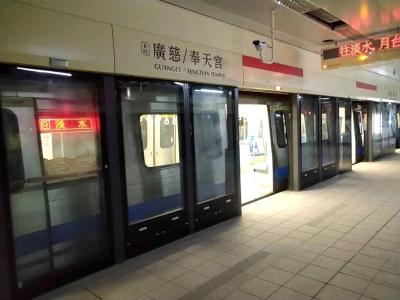
The eastern extension of the Taipei MRT Red Line could begin operations as early as late June, the Taipei Department of Rapid Transit Systems said yesterday. Taipei Rapid Transit Corp said it is considering offering one month of free rides on the new section to mark its opening. Construction progress on the 1.4km extension, which is to run from the current terminal Xiangshan Station to a new eastern terminal, Guangci/Fengtian Temple Station, was 90.6 percent complete by the end of last month, the department said in a report to the Taipei City Council's Transportation Committee. While construction began in October 2016 with an


 RSS
RSS