


Democratic Progressive Party (DPP) legislators yesterday urged prosecutors to investigate allegations that some lawmakers have intervened in the indigenous submarine program and leaked national defense secrets to China.
The lawmakers issued the call after Indigenous Defense Submarine program head Huang Shu-kuang (黃曙光) on Thursday told the media that there were “certain legislators” allegedly making it difficult for the program to purchase critical equipment, which was previously listed in the “red zone,” and a contractor who had failed to obtain the bid forwarded the information they had to the Chinese military.
Huang made the remarks on the sidelines of the launch ceremony for Taiwan’s first domestically made submarine, named Hai Kun (海鯤), or “Narwhal.” The Ministry of National Defense has divided required components into three categories, with “red” for imported technologies that the nation cannot research and develop.
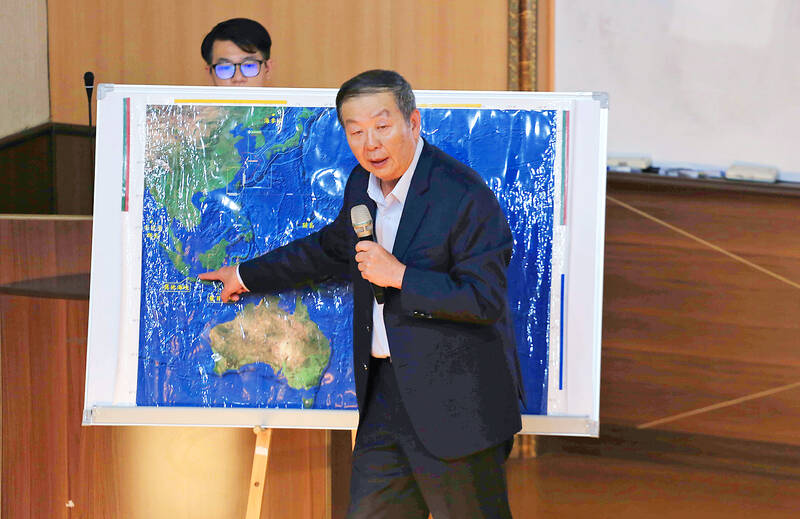
Photo courtesy of National Sun Yat-sen University
DPP Legislator Cheng Yun-peng (鄭運鵬) said that breaching national defense secrets contravenes the National Security Act (國家安全法) and the Classified National Security Information Protection Act (國家機密保護法), and politically, legislators are elected officials that have not only the trust of Taiwanese, but also that of international allies who have helped with the indigenous submarine program.
Cheng urged prosecutors to look into his accusations, adding that a lack of an investigation would be a dereliction of duty by the Ministry of Justice.
DPP Legislator Wang Ting-yu (王定宇) said that certain bidding companies had backed out and it was discovered that they had been under Chinese pressure.
DPP Legislator Chao Tien-lin (趙天麟) said that some legislators attempted to freeze large amounts of the program’s funding and made handwritten copies of the contract during the review process, adding that it was no surprise Huang would make such accusations.
Retired navy captain Kuo Hsi (郭璽) on Thursday said that Chinese Nationalist Party (KMT) Legislator Ma Wen-chun (馬文君) was the legislator in question.
Ma yesterday urged Huang to name the legislator he accused of sabotaging the project.
Ma yesterday said Kuo was acting as Huang’s “hitman,” while urging Huang to name the legislator he accused of sabotaging the project.
She said that Huang is aiming to rush the submarine program’s budget through the legislature during President Tsai Ing-wen’s (蔡英文) final term in office.
Ma said Huang is attempting to achieve this goal by making allegations against legislators and hinting that if they do not fall in line, they would be called “traitors” or people “chasing after petty profit margins.”
Additional reporting by Chen Cheng-yu
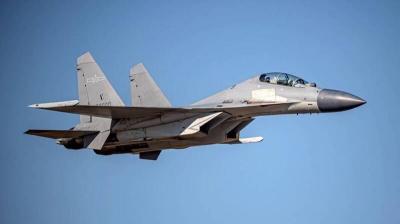
Eight Chinese naval vessels and 24 military aircraft were detected crossing the median line of the Taiwan Strait between 6am yesterday and 6am today, the Ministry of National Defense said this morning. The aircraft entered Taiwan’s northern, central, southwestern and eastern air defense identification zones, the ministry said. The armed forces responded with mission aircraft, naval vessels and shore-based missile systems to closely monitor the situation, it added. Eight naval vessels, one official ship and 36 aircraft sorties were spotted in total, the ministry said.
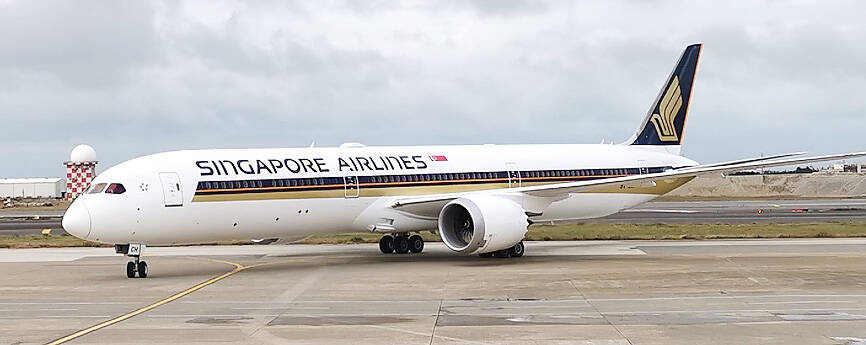
INCREASED CAPACITY: The flights on Mondays, Wednesdays, Fridays and Sundays would leave Singapore in the morning and Taipei in the afternoon Singapore Airlines is adding four supplementary flights to Taipei per week until May to meet increased tourist and business travel demand, the carrier said on Friday. The addition would raise the number of weekly flights it operates to Taipei to 18, Singapore Airlines Taiwan general manager Timothy Ouyang (歐陽漢源) said. The airline has recorded a steady rise in tourist and business travel to and from Taipei, and aims to provide more flexible travel arrangements for passengers, said Ouyang, who assumed the post in July last year. From now until Saturday next week, four additional flights would depart from Singapore on Monday, Wednesday, Friday
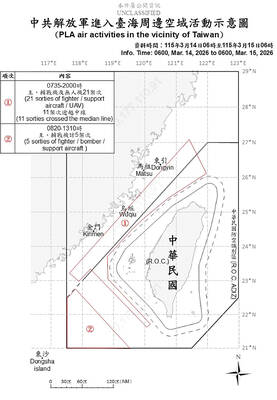
The Ministry of National Defense yesterday reported the return of large-scale Chinese air force activities after their unexplained absence for more than two weeks, which had prompted speculation regarding Beijing’s motives. China usually sends fighter jets, drones and other military aircraft around the nation on a daily basis. Interruptions to such routine are generally caused by bad weather. The Ministry of National Defense said it had detected 26 Chinese military aircraft in the Taiwan Strait over the previous 24 hours. It last reported that many aircraft on Feb. 25, when it spotted 30 aircraft, saying Beijing was carrying out another “joint combat

Taiwan successfully defended its women’s 540 kilogram title and won its first-ever men’s 640 kg title at the 2026 World Indoor Tug of War Championships in Taipei yesterday. In the women’s event, Taiwan’s eight-person squad reached the final following a round-robin preliminary round and semifinals featuring teams from Ukraine, Japan, Thailand, Vietnam, the Basque Country and South Korea. In the finals, they swept the Basque team 2-0, giving the team composed mainly of National Taiwan Normal University students and graduates its second championship in a row, and its fourth in five years. Team captain


 RSS
RSS