


The Ministry of Agriculture yesterday said it would prioritize imports of prepackaged eggs in future programs to avoid the controversies incurred by a special import program this year.
When facing an egg shortage at the start of the year, agriculture officials in the special egg import program purchased about 140 million eggs from abroad, Department of Animal Industry Director-General Chang Ching-wei (張經緯) told the Cabinet.
The import program had achieved the desired result of ensuring a steady supply and inhibiting erratic price hikes, Chang said.
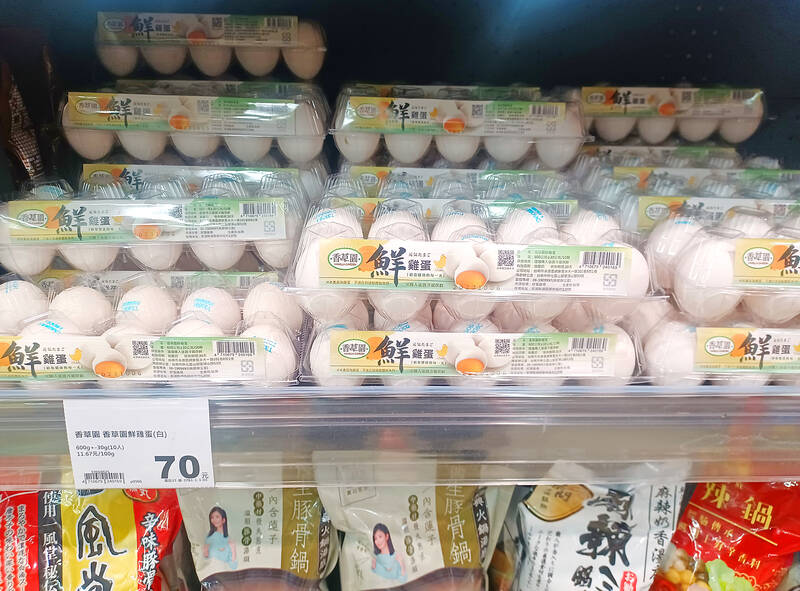
Photo: Liu Yu-ching, Taipei Times
In the ministry’s report to the Cabinet, Chang estimated that overall benefits derived from the program totaled about NT$6 billion (US$186.85 million) — about 10 times the amount paid by the ministry for the imported eggs.
“This program specifically dealt with the shortage to fill domestic demand for eggs. It had limited conditions for the time frame and country of origin,” Chang said.
As the ministry did not reduce import tariffs, “it would not affect the prices provided by domestic egg producers, protecting their revenue,” he added.
Negotiations resulted in deals with 12 countries, for which egg imports are open through this year for Paraguay, Guatemala, Singapore, Canada and Turkey, and until the end of June next year for Japan, the US, Australia, Brazil, Philippines, Malaysia and Thailand, he said.
Chang said that the new measures would see the imported eggs held in reserve released in a timely fashion for processing, and that they would not be sold at retail outlets.
“We are constantly monitoring the situation, and will pick up on the special import program when the egg shortage surpasses 10 percent nationwide,” he added. “In principle, future imports will require washing and packaging in the country of origin, while the eggs must be under cold-chain storage inside its own packaging. Each shipment must be registered with the Food and Drug Administration, which will publish testing results at regular intervals.”
Deputy Minister of Agriculture Chen Junne-jih (陳駿季) also said that imported eggs were not past their expiration date, which is a misconception being circulated on social media.
Chen said the ministry plans to import 330,000 chicken broilers this year, and increase its quota for egg-laying hens to 34 million to meet domestic demand.
The ministry would also provide NT$4.4 billion in additional investment to build new cold-storage chains and upgrade chicken farms to create more animal-friendly living conditions, he added.

Yangmingshan National Park authorities yesterday urged visitors to respect public spaces and obey the law after a couple was caught on a camera livestream having sex at the park’s Qingtiangang (擎天崗) earlier in the day. The Shilin Police Precinct in Taipei said it has identified a suspect and his vehicle registration number, and would summon him for questioning. The case would be handled in accordance with public indecency charges, it added. The couple entered the park at about 11pm on Thursday and began fooling around by 1am yesterday, the police said, adding that the two were unaware of the park’s all-day live

Yangmingshan National Park’s Qingtiangang (擎天崗) nature area has gone viral after a park livestream camera observed a couple in the throes of intimate congress, which was broadcast live on YouTube, drawing large late-night crowds and sparking a backlash over noise, bright lights and disruption to wildlife habitat. The area’s livestream footage appeared to show a couple engaging in sexual activity on a picnic table in the park on Friday last week, with the uncensored footage streamed publicly online. The footage quickly spread across social media, prompting a tide of visitors to travel to the site to “check in” and recreate the
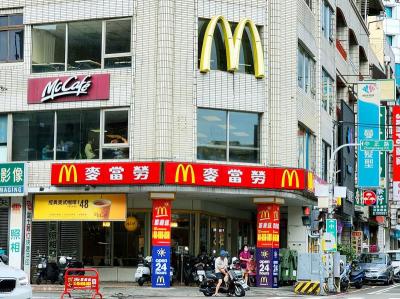
Fast food chain McDonald's is to raise prices by up to NT$5 on some products at its restaurants across Taiwan, starting on Wednesday next week, the company announced today. The prices of all extra value meals and sharing boxes are to increase by NT$5, while breakfast combos and creamy corn soup would go up by NT$3, the company said in a statement. The price of the main items of those meals, if ordered individually, would remain the same. Meanwhile, the price of a medium-sized lemon iced tea and hot cappuccino would rise by NT$3, extra dipping sauces for chicken nuggets would go up

Minister of Digital Affairs Lin Yi-ching (林宜敬) yesterday cited regulatory issues and national security concerns as an expert said that Taiwan is among the few Asian regions without Starlink. Lin made the remarks on Facebook after funP Innovation Group chief executive officer Nathan Chiu (邱繼弘) on Friday said Taiwan and four other countries in Asia — China, North Korea, Afghanistan and Syria — have no access to Starlink. Starlink has become available in 166 countries worldwide, including Ukraine, Malaysia, the Philippines and Vietnam, in the six years since it became commercial, he said. While China and North Korea block Starlink, Syria is not


 RSS
RSS