


From today, the mask mandate is to be lifted for some medical facilities, but masks are still required at hospitals, clinics, nursing homes and senior welfare facilities, the Centers for Disease Control (CDC) announced yesterday.
As the local COVID-19 outbreak has slowed, and considering the current virus strains circulating, the positivity rates at residential care facilities and the nation’s overall disease prevention capacity, the mask mandate for some medical facilities would be lifted, although wearing a mask when visiting them is still “recommended,” the CDC said.
The facilities include pharmacies, medical laboratories, medical imaging centers, physical and occupational therapy centers, midwife clinics, psychiatric rehabilitation centers, home care centers and blood donation centers, it said.
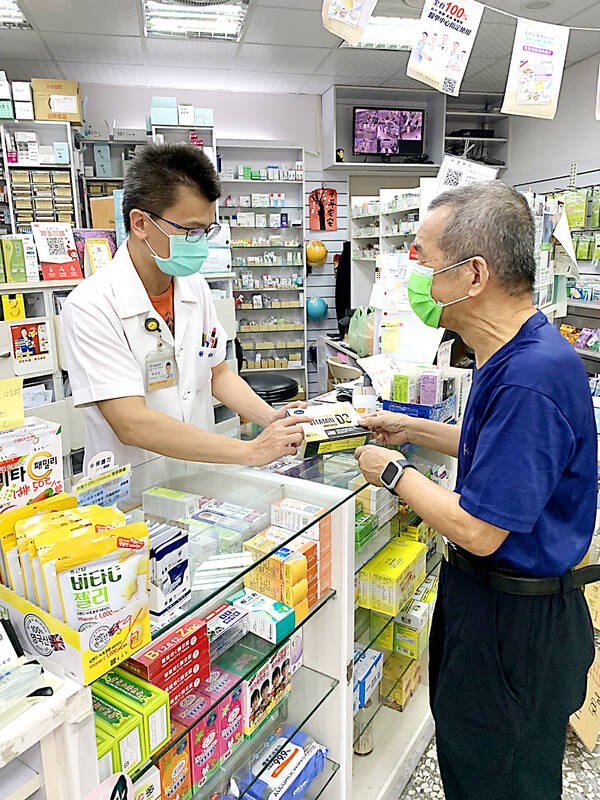
Photo courtesy of the Nantou County Government
It is still mandatory to wear a mask at four types of medical facilities: hospitals, clinics, nursing homes and senior welfare facilities (including long-term care facilities), the CDC said.
Hospitals would decide whether masks are required in their teaching, research and administration areas, it added.
It is recommended that people with a fever or respiratory symptoms, and elderly or immunocompromised people still wear a mask when going out and when visiting crowded places with poor ventilation, the CDC said.
People should also wear a mask when coming into close contact with elderly or immunocompromised people, especially if they are not fully vaccinated, it said.
The CDC said its revised recommendations for people visiting inpatients and healthcare workers returning to work after contracting COVID-19 also take effect today.
Healthcare workers who have tested positive for SARS-CoV-2 are advised to practice self-health management, and avoid going to work until they have had no fever for at least 24 hours (without taking antipyretics) and their other symptoms have disappeared, it said, adding that they should assess the appropriateness of patient exposure during self-health management.
They should also cover their mouth and nose when coughing or sneezing after returning to work, wear a mask when taking care of patients and maintain good hand hygiene, the CDC said.
The CDC said it is also lifting the rule that people with COVID-19 related symptoms or who are under self-health management must show a negative COVID-19 rapid test result when visiting inpatients.
However, they are still advised to avoid unnecessary visits, and if accompanying a hospital patient, it is suggested they produce a negative COVID-19 test result from the same day, it said.
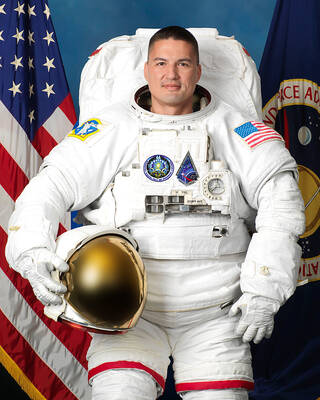
SPACE VETERAN: Kjell N. Lindgren, who helps lead NASA’s human spaceflight missions, has been on two expeditions on the ISS and has spent 311 days in space Taiwan-born US astronaut Kjell N. Lindgren is to visit Taiwan to promote technological partnerships through one of the programs organized by the US for its 250th national anniversary. Lindgren would be in Taiwan from Tuesday to Saturday next week as part of the US Bureau of Educational and Cultural Affairs’ US Speaker Program, organized to celebrate the 250th anniversary of the signing of the Declaration of Independence, the American Institute in Taiwan (AIT) said in a statement yesterday. Lindgren plans to engage with key leaders across the nation “to advance cutting-edge technological partnerships and inspire the next generation of scientists and engineers,”
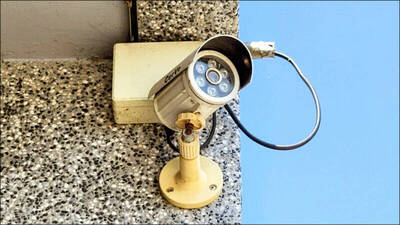
UNREASONABLE SURVEILLANCE: A camera targeted on an road by a neighbor captured a man’s habitual unsignaled turn into home, netting him dozens of tickets The Taichung High Administrative Court has canceled all 45 tickets given to a man for failing to use a turn signal while driving, as it considered long-term surveillance of his privacy more problematic than the traffic violations. The man, surnamed Tseng (曾), lives in Changhua County and was reported 45 times within a month for failing to signal while driving when he turned into the alley where his residence is. The reports were filed by his neighbor, who set up security cameras that constantly monitored not only the alley but also the door and yard of Tseng’s house. The surveillance occurred from July

A Japan Self-Defense Forces vessel entered the Taiwan Strait yesterday, Japanese media reported. After passing through the Taiwan Strait, the Ikazuchi was to proceed to the South China Sea to take part in a joint military exercise with the US and the Philippines, the reports said. Japan Self-Defense Force vessels were first reported to have passed through the strait in September, 2024, with two further transits taking place in February and June last year, the Asahi Shimbun reported. Yesterday’s transit also marked the first time since Japanese Prime Minister Sanae Takaichi took office that a Japanese warship has been sent through the Taiwan
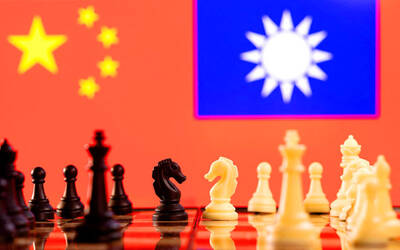
‘SAME OLD TRICK’: Even if Beijing resumes individual travel to Taiwan, it would only benefit Chinese tourism companies, the Economic Democracy Union convener said China’s 10 new “incentives” are “sugar-coated poison,” an official said yesterday, adding that Taiwanese businesses see them clearly for what they are, but that Beijing would inevitably find some local collaborators to try to drums up support. The official, speaking on condition of anonymity, made the remark ahead of a news conference the General Chamber of Commerce is to hold today. The event, titled “Industry Perspectives on China’s Recent Pro-Taiwan Policies,” is expected to include representatives from industry associations — such as those in travel, hotels, food and agriculture — to request the government cooperate with China’s new measures, people familiar with


 RSS
RSS