


Vice President William Lai (賴清德) on Sunday pledged to safeguard democracy and freedom in Taiwan and never back down from authoritarian intimidation.
Lai was speaking before a group of overseas Taiwanese during a stopover in New York on his way to attend the inauguration of Paraguayan president-elect Santiago Pena today.
“Only domestic unity can win international support,” Lai told more than 700 overseas Taiwanese at a banquet held at The Glasshouse private event space on Sunday.
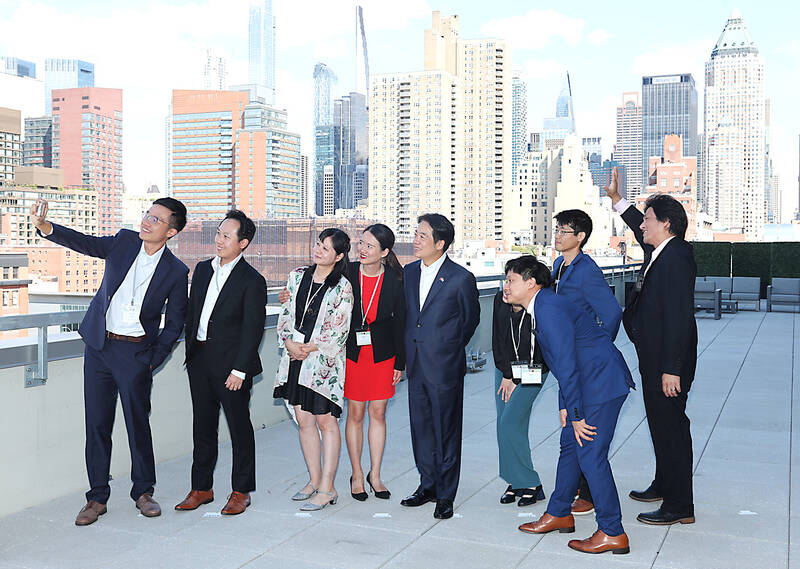
Photo: CNA
He expressed his gratitude to the US for supporting Taiwan and helping arrange the stopover, despite pressure from China.
He also thanked the group of overseas Taiwanese, who he said had gathered because they share the same sentiment, values and goals, and identify with Taiwan.
Taiwan is becoming more important to the world, not only because it produces more than 90 percent of the world’s advanced chips, but also because of its success in combating the COVID-19 pandemic and international aid offered to Ukraine, he said.
The efforts embodied the spirit of Taiwanese — positive and forward-looking, warm and kind, and a responsible member of the global community, he said.
Taiwanese value freedom and democracy, and are determined to pass down this hard-earned free and open society to future generations, he said.
Democracy ties Taiwan to the world, Lai said, citing the US Congress proposing nearly 30 Taiwan-friendly bills or resolutions in the past six months and the passing of the first agreement under the US-Taiwan Initiative on 21st-Century Trade.
Taiwan’s diplomatic efforts have won the support of international society, with leading global figures visiting Taiwan to demonstrate their friendship with the country, he said.
Taiwan would never shrink back from authoritarian threats; instead, the nation would uphold the values of democracy and freedom, and join hands with democratic partners to safeguard stability in the Indo-Pacific region, he said.
He called on all political parties to put national interests ahead of party interests in the pursuit of democracy, peace and prosperity.
Taiwan is on the path of democracy and should not turn around out of fear of authoritarianism, he said.
He promised to protect and strengthen Taiwan, as well as facilitate the progress of the nation with innovative and progressive policies.
On cross-strait relations, he said that as long as dignity and equality are ensured, he would be happy to engage in dialogue and cooperation with China to facilitate peace and stability in the Indo-Pacific region.
American Institute in Taiwan (AIT) Managing Director Ingrid Larson said that the US supports Taiwan’s inclusion in international organizations, as Taiwanese deserve to be part of the international community, and the international community needs Taiwan’s critical support as it responds to global challenges.
AIT Chair Laura Rosenberger, who could not attend because she was at her sister’s wedding, said in a prerecorded video that she looked forward to meeting Lai in San Francisco on his way back from Paraguay.
Maintaining peace and stability across the Taiwan Strait is in the US’ and Taiwan’s interests, she said, adding that Washington remains committed to supporting Taiwan’s self-defense capabilities.
Later on Sunday, Lai met with young Taiwanese who hold important positions in key fields in the US, urging them to join his efforts in building a stronger Taiwan.
Lai hopes to learn from these young people about the newest developments and prospects in fields such as superconductors and quantum mechanics, biomedicine, higher education, law and politics, and the advice they have for Taiwan’s development, the Presidential Office said.
Additional reporting by CNA
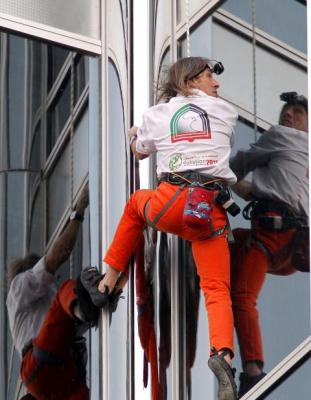
Alain Robert, known as the "French Spider-Man," praised Alex Honnold as exceptionally well-prepared after the US climber completed a free solo ascent of Taipei 101 yesterday. Robert said Honnold's ascent of the 508m-tall skyscraper in just more than one-and-a-half hours without using safety ropes or equipment was a remarkable achievement. "This is my life," he said in an interview conducted in French, adding that he liked the feeling of being "on the edge of danger." The 63-year-old Frenchman climbed Taipei 101 using ropes in December 2004, taking about four hours to reach the top. On a one-to-10 scale of difficulty, Robert said Taipei 101
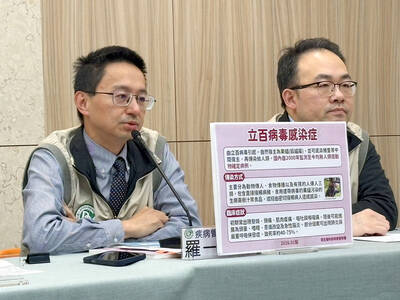
Nipah virus infection is to be officially listed as a category 5 notifiable infectious disease in Taiwan in March, while clinical treatment guidelines are being formulated, the Centers for Disease Control (CDC) said yesterday. With Nipah infections being reported in other countries and considering its relatively high fatality rate, the centers on Jan. 16 announced that it would be listed as a notifiable infectious disease to bolster the nation’s systematic early warning system and increase public awareness, the CDC said. Bangladesh reported four fatal cases last year in separate districts, with three linked to raw date palm sap consumption, CDC Epidemic Intelligence
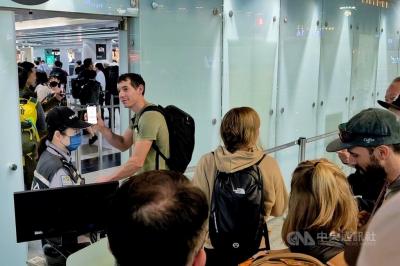
US climber Alex Honnold left Taiwan this morning a day after completing a free-solo ascent of Taipei 101, a feat that drew cheers from onlookers and gained widespread international attention. Honnold yesterday scaled the 101-story skyscraper without a rope or safety harness. The climb — the highest urban free-solo ascent ever attempted — took just more than 90 minutes and was streamed live on Netflix. It was covered by major international news outlets including CNN, the New York Times, the Guardian and the Wall Street Journal. As Honnold prepared to leave Taiwan today, he attracted a crowd when he and his wife, Sanni,
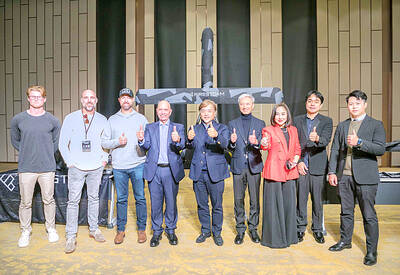
Taiwanese and US defense groups are collaborating to introduce deployable, semi-autonomous manufacturing systems for drones and components in a boost to the nation’s supply chain resilience. Taiwan’s G-Tech Optroelectronics Corp subsidiary GTOC and the US’ Aerkomm Inc on Friday announced an agreement with fellow US-based Firestorm Lab to adopt the latter’s xCell, a technology featuring 3D printers fitted in 6.1m container units. The systems enable aerial platforms and parts to be produced in high volumes from dispersed nodes capable of rapid redeployment, to minimize the risk of enemy strikes and to meet field requirements, they said. Firestorm chief technology officer Ian Muceus said


 RSS
RSS