


MILITARY
Warplane incident resolved
An Indigenous Defense Fighter jet that appeared to malfunction in mid-air landed safely at the Ching Chuan Kang Air Base in Taichung yesterday, the air force said. Ground crew spotted the plane’s apparent malfunction and instructed the pilot to land immediately, the air force said in a statement. The incident happened during an aerial rehearsal ahead of an open day at the air base tomorrow, the air force said. The air force said that the incident was caused by a defective exhaust nozzle sleeve. A preliminary investigation indicated that the malfunctioning component allowed flames to shoot from the nozzle walls, it said. The engine remained intact and no foreign object or internal object damage was detected, it added. The jet is to undergo repairs, it said without elaborating.
MILITARY
Chinese craft detected
Thirty-three Chinese warplanes were detected in the nation’s air defense identification zone in the 24 hours to 6am yesterday, including eight that crossed the median line of the Taiwan Strait, the Ministry of National Defense said. Six J-10 and two J-16 fighters crossed the median line, while a Y-8 anti-submarine warfare plane and a Y-9 electronic warfare aircraft flew close to the southwestern boundary of the zone before turning back, flight path information released by the ministry showed. In addition, six Chinese military vessels were detected in waters around Taiwan during the same 24-hour period, it said. The ministry deployed aircraft, ships and coastal missile systems in response to the situation, it said.
MILITARY
Live-fire drills unveiled
The air force and navy are to jointly conduct annual live-fire exercises using air-to-air and anti-ship missiles in waters off the southeastern coast for three days from Tuesday next week, a military source said. Dubbed a “precision missile drill,” the testing is a major military exercise organized alternately by the air force and the navy every year to assess combat readiness, the source said. Air force fighters — Mirage-2000 5s, domestically made Indigenous Defense Fighters and F-16Vs — would fire “shoot and forget” AIM-120 medium-range air-to-air MICAs made by European missile maker MBDA, the source said. The navy would launch Taiwan-made Hsiung Feng anti-ship missiles at four decommissioned vessels, including two Ching Chiang-class patrol vessels, and two rescue and salvage ships, the source said.
ASTRONOMY
Perseids to peak on Sunday
The peak of the annual Perseid meteor shower is to occur on Sunday, with conditions to spot “shooting stars” expected to be the best for the past few years, the Taipei Astronomical Museum said on Wednesday. The meteor shower, famed for long-lasting streaks of light, is expected to provide views of up to 100 meteors per hour, the museum said. Due to a waning crescent moon, which will not rise until 3am on Monday, stargazing should be relatively easy, it said. The best Perseid performance on record was in 1993, when there were up to 300 meteors visible an hour, NASA said. The Perseids, considered one of the most spectacular meteor showers — along with the Quadrantids in January and the Geminids in December — are active from July 17 to Aug. 24 this year, the museum said. Clear skies are forecast in northern and eastern Taiwan over the weekend, while rain is likely elsewhere, the Central Weather Bureau said.

SPACE VETERAN: Kjell N. Lindgren, who helps lead NASA’s human spaceflight missions, has been on two expeditions on the ISS and has spent 311 days in space Taiwan-born US astronaut Kjell N. Lindgren is to visit Taiwan to promote technological partnerships through one of the programs organized by the US for its 250th national anniversary. Lindgren would be in Taiwan from Tuesday to Saturday next week as part of the US Bureau of Educational and Cultural Affairs’ US Speaker Program, organized to celebrate the 250th anniversary of the signing of the Declaration of Independence, the American Institute in Taiwan (AIT) said in a statement yesterday. Lindgren plans to engage with key leaders across the nation “to advance cutting-edge technological partnerships and inspire the next generation of scientists and engineers,”

UNREASONABLE SURVEILLANCE: A camera targeted on an road by a neighbor captured a man’s habitual unsignaled turn into home, netting him dozens of tickets The Taichung High Administrative Court has canceled all 45 tickets given to a man for failing to use a turn signal while driving, as it considered long-term surveillance of his privacy more problematic than the traffic violations. The man, surnamed Tseng (曾), lives in Changhua County and was reported 45 times within a month for failing to signal while driving when he turned into the alley where his residence is. The reports were filed by his neighbor, who set up security cameras that constantly monitored not only the alley but also the door and yard of Tseng’s house. The surveillance occurred from July
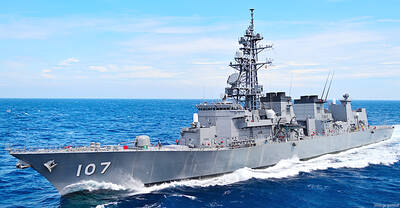
A Japan Self-Defense Forces vessel entered the Taiwan Strait yesterday, Japanese media reported. After passing through the Taiwan Strait, the Ikazuchi was to proceed to the South China Sea to take part in a joint military exercise with the US and the Philippines, the reports said. Japan Self-Defense Force vessels were first reported to have passed through the strait in September, 2024, with two further transits taking place in February and June last year, the Asahi Shimbun reported. Yesterday’s transit also marked the first time since Japanese Prime Minister Sanae Takaichi took office that a Japanese warship has been sent through the Taiwan

‘SAME OLD TRICK’: Even if Beijing resumes individual travel to Taiwan, it would only benefit Chinese tourism companies, the Economic Democracy Union convener said China’s 10 new “incentives” are “sugar-coated poison,” an official said yesterday, adding that Taiwanese businesses see them clearly for what they are, but that Beijing would inevitably find some local collaborators to try to drums up support. The official, speaking on condition of anonymity, made the remark ahead of a news conference the General Chamber of Commerce is to hold today. The event, titled “Industry Perspectives on China’s Recent Pro-Taiwan Policies,” is expected to include representatives from industry associations — such as those in travel, hotels, food and agriculture — to request the government cooperate with China’s new measures, people familiar with


 RSS
RSS