


Taoyuan International Airport Corp (TIAC) has been working with airlines to reduce the industry’s carbon footprint and build a sustainable third terminal at Taiwan Taoyuan International Airport, TIAC president and chief executive officer Fan Hsiao-lun (范孝倫) said yesterday.
“Pursuing sustainability is not an extra workload, but an attitude,” Fan said in a speech at the sixth Taiwan Future international summit held by Business Today in Taipei.
Fan and other guests were invited to share their experience of using innovative technologies to pursue sustainability in the aviation industry.
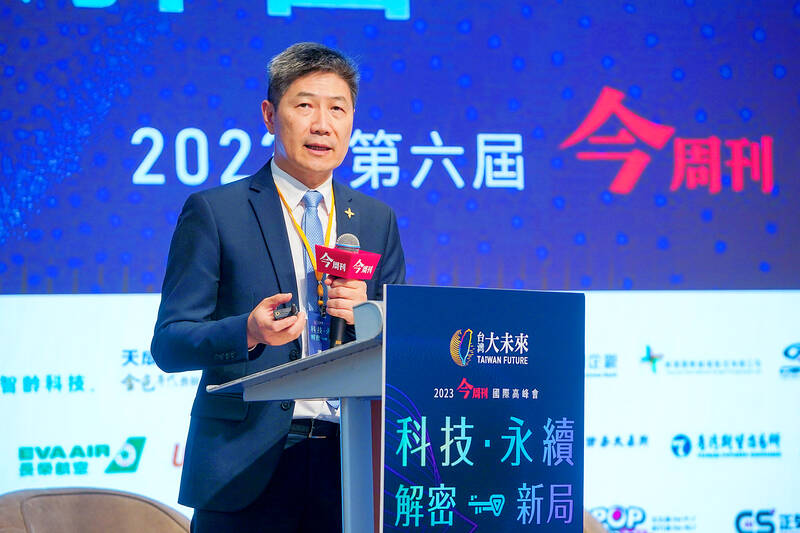
Photo courtesy of Taoyuan International Airport Corp
The airport relies on more than 35,000 employees from 240 public units and private businesses, such as customs and immigration agencies, airlines, duty-free shops and equipment manufacturers, he said.
The sustainability of the airport requires close cooperation among these parties, he added.
The International Civil Aviation Organization, the International Air Transport Association and the Airports Council International (ACI) have issued guidelines and taken measures to promote the sustainable development of the industry, he said.
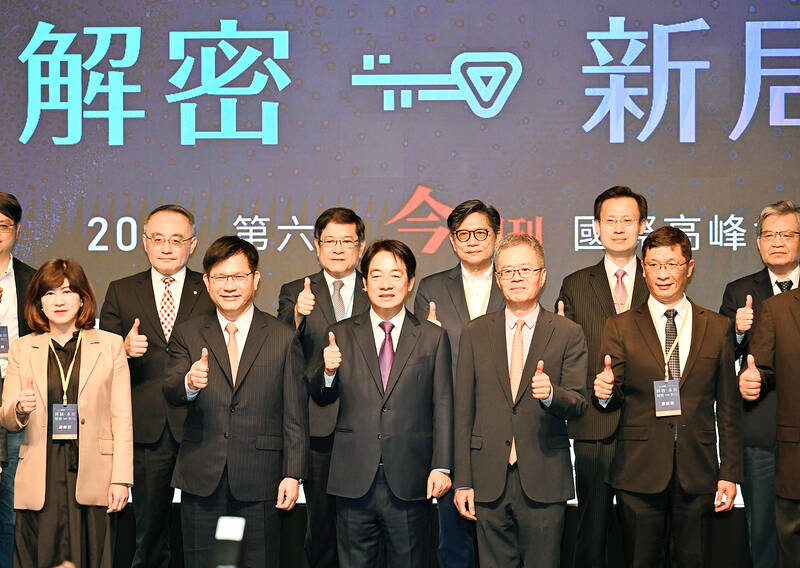
Photo: Tien Yu-hua, Taipei Times
The ACI launched its Airport Carbon Accreditation in 2009, assessing the efforts of airports to manage and reduce carbon emissions through six levels of certification: mapping, reduction, optimization, neutrality, transformation and transition.
The levels indicate the stage of an airport on its journey toward comprehensive carbon management, the Web site of the accreditation program says.
Taoyuan airport is at Level 3 optimization, and “is continuing to work on it,” Fan said.
The ACI started the Green Airports Recognition program in 2017 to recognize airports’ outstanding accomplishments in environmental projects by presenting awards to airports that perform the best in the theme set each year, he said.
Taoyuan airport was awarded Gold recognition last year, when “carbon management” was the theme, among airports serving 15 million to 50 million passengers per year.
By switching to highly efficient pumps and LED lighting, the airport reduced carbon emissions by about 4,000 tonnes per year, Fan said.
Installing preconditioned air and fixed electrical ground power on air bridges helps airlines reduce 11,491 tonnes of carbon emissions per year, he added.
The airport is still replacing old equipment with new air-conditioners, cooling towers and escalators with an energy-saving mode, as well as replacing gasoline vehicles with electric vehicles to further reduce carbon emissions, he said.
The construction of the third terminal, which began in 2015 and is scheduled for completion in 2026, is in full swing, he said, calling it “a terminal of a new era.”
The design of Terminal 3 incorporates advanced technologies, such as smart lighting control systems, as well as sound-proof and heat-proof materials, to make it energy efficient and sustainable, he said.
The airport would continue to explore the applications of new technologies in its operation, such as sustainable aviation fuels and hydrogen energy, he said.
EVA Airways Corp chief executive vice president Ho Ching-sheng (何慶生) and China Airlines senior vice president Peng Pao-chu (彭寶珠) said that their companies are committed to achieving net zero emissions by 2050, and are deliberating the use of sustainable aviation fuels.
Taoyuan International Airport special report

The Ministry of Finance this afternoon announced the winning numbers for the March-April uniform invoice lottery. The winning number for the NT$10 million (US$318,060) special prize is 19531471, and the winning number for the NT$2 million grand prize is 85941329. Three numbers were drawn for the NT$200,000 first prize: 07225810, 20231230 and 83518781. Those with receipts matching the last seven digits of any of the first-prize numbers will win the NT$40,000 second prize, while those matching the last six digits will win the NT$10,000 third prize. Those whose receipts match the last five digits of the first-prize numbers can claim the NT$4,000 fourth prize,

SIX SUBSIDIES: The monthly allowance for older farmers is to increase to NT$10,000, and NT$5,000 is to be given to homemakers under the national pension system, Lai said The government is to implement major welfare policies for disadvantaged groups, including raising the monthly allowance for older farmers to NT$10,000 and providing homemakers with NT$5,000 per month, President William Lai (賴清德) said yesterday. Lai made the remarks during a visit to Wangling Temple in Chiayi County, saying that the planned increases were being introduced amid economic growth and an increase in tax revenue. Touting a policy, in which the government plans to provide a monthly allowance of NT$5,000 for every child under the age of 18 in a bid to address Taiwan’s low birthrate, Lai said that if received for the
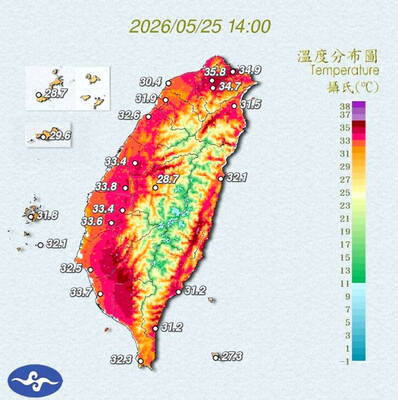
STAY COOL: The HPA recommended that people stay hydrated, use air-conditioning or fans while indoors, wear loose-fitting clothes and walk in the shade while outdoors Employers must implement measures such as installing cooling equipment, and providing drinking water and rest breaks for outdoor workers starting from Monday next week, the Taipei Department of Labor said on Sunday. Employers who fail to comply could face fines of NT$30,000 to NT$300,000 under the Occupational Safety and Health Act (職業安全衛生法), the department said. Businesses in Taipei employing fewer than 100 workers, as well as registered self-employed workers with labor insurance coverage, could receive on-site assessments and guidance from occupational safety consultants to help them apply for central government subsidies to implement or improve heat-protection measures, it said. Under the Ministry of
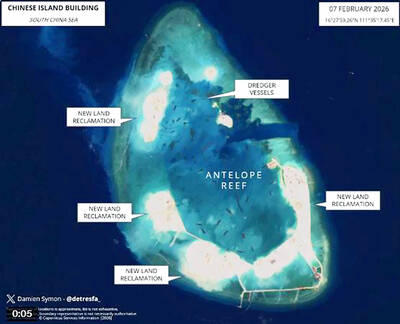
ISOLATION: The outposts would serve as support and backup bases, forcing US forces to either face China head-on or reroute, increasing travel time and operational costs China’s outposts in the South China Sea could be used to delay and constrain foreign forces during a conflict in the Taiwan Strait, giving Beijing a critical window to carry out amphibious landing and blockade operations, a report said. The Chinese Communist Party’s (CCP) forward operating bases on islands and reclaimed features in the South China Sea could delay foreign forces long enough for the Chinese People’s Liberation Army (PLA) to secure a key 48-to-72-hour window in the Taiwan Strait, a report commissioned by the Mainland Affairs Council found. The report, conducted by the Institute for National Defense and Security Research, examined


 RSS
RSS