


Minister of Foreign Affairs Joseph Wu (吳釗燮) called out Elon Musk on Twitter, saying the value of democracy transcends that of money after the Tesla CEO said that China was likely to “integrate” Taiwan.
Asked in an interview with CNBC on Tuesday last week if “China would make a move to take control of Taiwan,” Musk said that “the official policy of China is that Taiwan should be integrated... One does not need to read between the lines.”
“There is a certain inevitability to the situation,” he added.
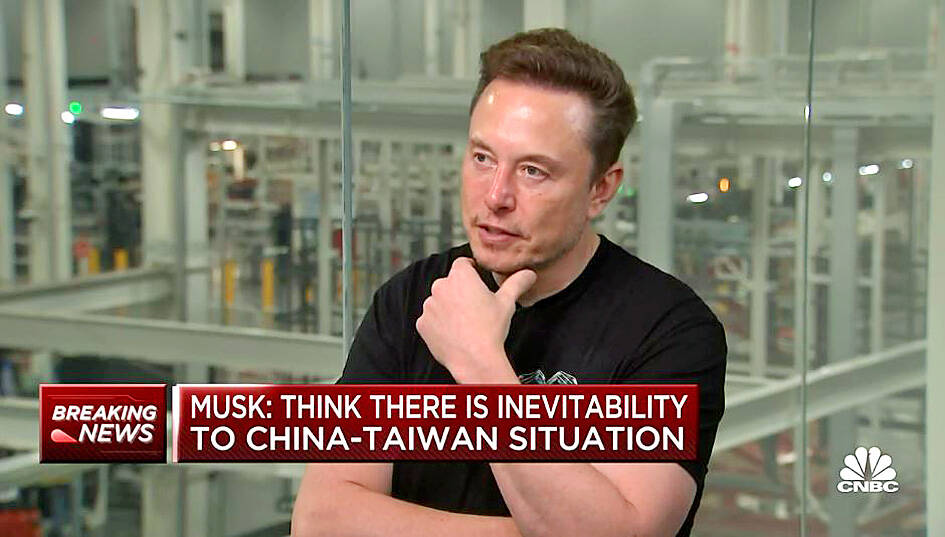
Photo: screen grab from CNBC
“That is their policy, and I think you should take their word seriously,” Musk said.
Regarding whether such a move by China would be bad for Tesla, Musk said that the Chinese economy and the global economy are like conjoined twins and any attempt to separate them would affect them both.
Responding to Musk’s comments, Wu on Friday wrote on Twitter that the Chinese Communist Party’s “bullying & threats are a concern, especially for those who would rather stay free & democratic.”
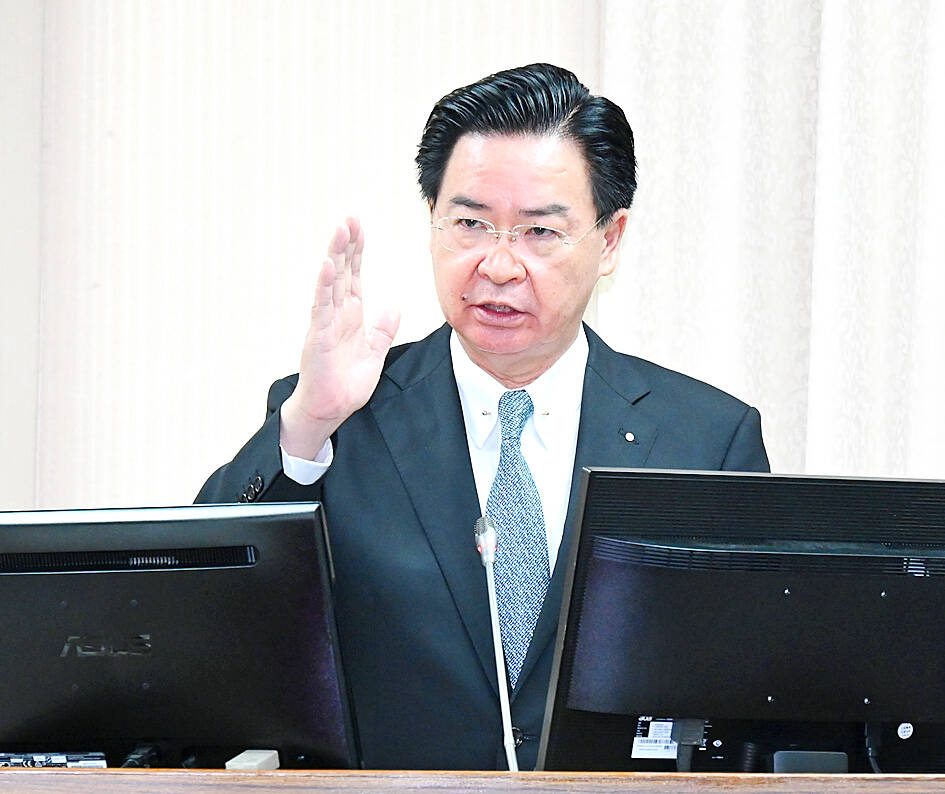
Photo: Chu Pei-hsiung, Taipei Time
Beijing’s global expansion undermines the rules-based international order and “status quo,” he added.
“Mr. @ElonMusk, other than money, there is something we call VALUES,” he wrote on the Ministry of Foreign Affairs’ Twitter account.
The post has so far received more than 130,000 views and hundreds of responses, with some commenters praising Wu for speaking out, saying they believe Musk only cares about his own interests.
Other commenters said they believed Musk was only expressing the thoughts of the business community and that Taiwan would never boycott Tesla.
Among them was Mark Simon — previously the personal assistant of Jimmy Lai (黎智英), the jailed founder of Hong Kong’s Next Digital, formerly Next Media — who said that taking on Musk was a “bad fight to pick.”
Separately, a report published by The Economist on Thursday said that from the perspective of China, the Starlink satellite Internet system provided to Kyiv by Musk’s Space Exploration Technologies Corp (SpaceX) not only puts Russia at a disadvantage in its war with Ukraine, but also raises concerns about Taiwan.
If SpaceX gave Taiwan access to the system, it would make a Chinese invasion much more difficult, it said.
Analysts say that if China invaded Taiwan, it could start by severing the 14 undersea Internet cables that keep the country connected to the world, the report said, adding that Taiwan is adding cables and planning how to defend its landing points.
The government is also testing antennae in 700 locations, including outside Taiwan, that would be able to send and receive signals from low Earth orbit satellites, like the ones Starlink uses, The Economist said.
Although China has the capability to shoot down satellites, the Starlink network is made up of more than 4,000 satellites and aims eventually to have tens of thousands.
As such, China might have more success leaning on the SpaceX CEO to deny Taiwan access to Starlink, given that Musk’s other major venture, Tesla, has a large factory in Shanghai, The Economist said.
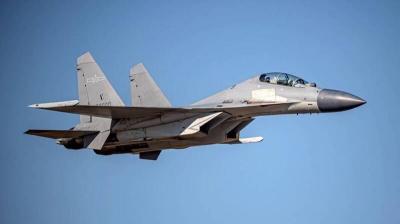
Eight Chinese naval vessels and 24 military aircraft were detected crossing the median line of the Taiwan Strait between 6am yesterday and 6am today, the Ministry of National Defense said this morning. The aircraft entered Taiwan’s northern, central, southwestern and eastern air defense identification zones, the ministry said. The armed forces responded with mission aircraft, naval vessels and shore-based missile systems to closely monitor the situation, it added. Eight naval vessels, one official ship and 36 aircraft sorties were spotted in total, the ministry said.
The Ministry of Foreign Affairs (MOFA) today said that if South Korea does not reply appropriately to its request to correct Taiwan’s name on its e-Arrival card system before March 31, it would take corresponding measures to alter how South Korea is labeled on the online Taiwan Arrival Card system. South Korea’s e-Arrival card system lists Taiwan as “China (Taiwan)” in the “point of departure” and “next destination” fields. The ministry said that it changed the nationality for South Koreans on Taiwan’s Alien Resident Certificates from “Korea” to “South Korea” on March 1, in a gesture of goodwill and based on the
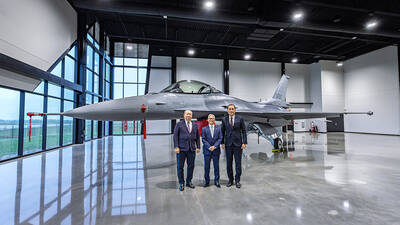
Taiwanese officials were shown the first of 66 F-16V fighter jets purchased by Taiwan from the United States, the Ministry of National Defense said yesterday, adding the aircraft has completed an initial flight test and is expected to be delivered later this year. A delegation led by Deputy Minister of National Defense Hsu Szu-chien (徐斯儉) visited Lockheed Martin’s F-16 C/D Block 70 (also known as F-16V) assembly line in South Carolina on March 16 to view the aircraft. The jet will undergo a final acceptance flight in the US before being delivered to Taiwan, the
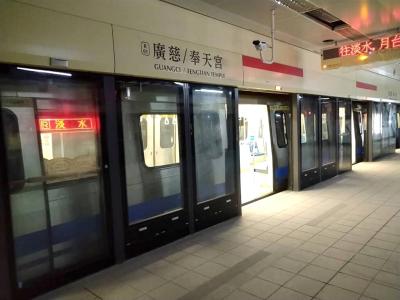
The New Taipei Metro's Sanyin Line and the eastern extension of the Taipei Metro's Tamsui-Xinyi Line (Red Line) are scheduled to begin operations in June, the National Development Council said today. The Red Line, which terminates at Xiangshan Station, would be connected by the 1.4km extension to a new eastern terminal, Guangci/Fengtian Temple Station, while the Sanyin Line would link New Taipei City's Tucheng and Yingge stations via Sanxia District (三峽). The council gave the updates at a council meeting reviewing progress on public construction projects for this year. Taiwan's annual public infrastructure budget would remain at NT$800 billion (US$25.08 billion), with NT$97.3


 RSS
RSS