


The Green Island Human Rights Art Festival is to be held later this month, showcasing Taiwan’s history under authoritarian rule as well as current human rights issues through the works of young artists.
Titled “Listening to the Overtones of Fissures,” the exhibition’s fourth edition seeks to provide a path to understanding the White Terror period from 1949 to 1992, event head curator Tsai Ming-jiun (蔡明君) said.
The White Terror era refers to the suppression of political dissidents following the 228 Incident, an uprising that was sparked on Feb. 27, 1947, which was brutally suppressed by the then-Chinese Nationalist Pary (KMT) regime. The government subsequently imposed martial law, which was lifted on July 15, 1987.
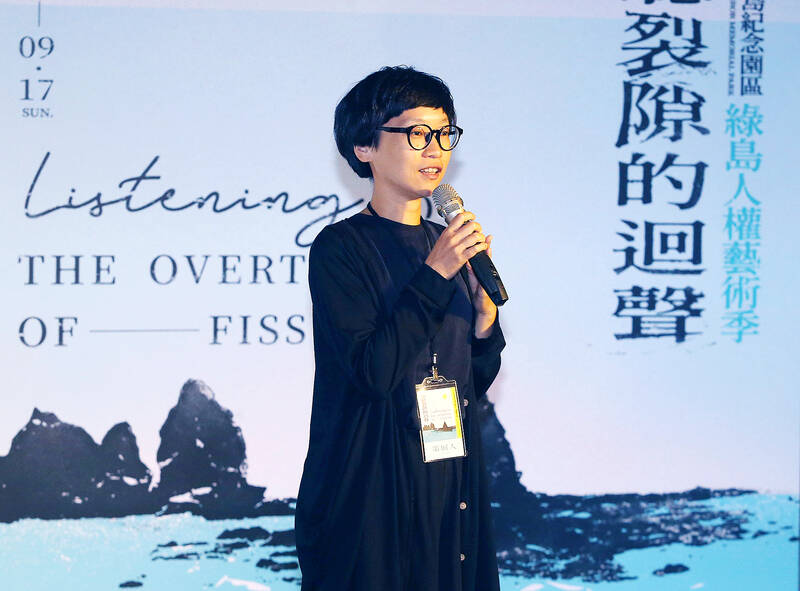
Photo: CNA
Tsai, who is also an assistant professor of fine arts at Tunghai University in Taichung, said the human rights exhibition, which is to be held on Green Island (綠島), would explore the island’s cultural landscape while touching on human rights issues in Taiwan and other Asian countries.
As the exhibition shows work from 22 groups of artists, the majority of whom are women and under the age of 40, she said she hopes that the exhibition will appeal to more people from younger generations.
Visitors to the exhibition, which starts on Wednesday next week and lasts through Sept. 17 at the Green Island White Terror Memorial Park, are encouraged to reflect upon the relationship between history and the world they live in, she added.
The park was once a prison where thousands of political prisoners were subject to hard labor and ideological re-education from the 1950s until the late 1980s, the National Human Rights Museum said.
This year’s exhibition includes 15 newly commissioned works, including National Award for Arts recipient Wu Ma-li’s (吳瑪俐) installation inspired by a letter written in blood by political prisoner Kao Tsau (高草) before she was executed in 1952 at the age of 26.
Vietnamese conceptual artist Nguyen Phuong Linh and Philippine visual artist Leeroy New have also spent days and weeks on Green Island to create new works for the exhibition.
Nguyen created a magical realism-style video, titled The Monument — The Playground — The Island, about her discoveries on the island, while New’s installation Vessel/Village consists of seven vessels made of bamboo and coastal waste collected locally.
Minister of Culture Shih Che (史哲) applauded the involvement of young artists in the exhibition, saying that knowledge of the White Terror era in Taiwan should be passed on down the generations in different communities.
He also said he hopes the exhibition will attract tourists who travel to Green Island in summer, developing greater understanding of the White Terror period.
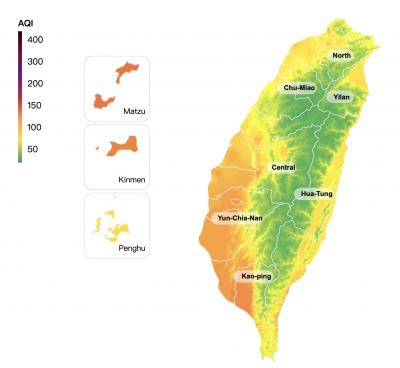
As of 4pm this afternoon, 27 monitoring stations across Taiwan had issued an orange rating for air quality, mostly concentrated in the central and southern regions, the Ministry of Environment (MOENV) Web site showed. An orange warning indicates air quality that is “unhealthy for sensitive groups.” None of the monitoring stations nationwide reported a “green” air quality rating, with all other stations recording yellow for “moderate” air quality. The ministry advised those sensitive to pollution, such as the elderly, children and those with weaker immune systems, to reduce strenuous outdoor activities and wear masks for protection. Northeasterly winds could carry
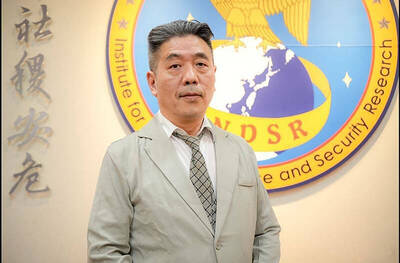
The year 2027 is regarded as the year China would likely gain the capability to invade Taiwan, not the year it would launch an invasion, Taiwanese defense experts said yesterday. The experts made the remarks after President William Lai (賴清德) told a news conference on Wednesday that his administration would introduce a NT$1.25 trillion (US$39.8 billion) special defense budget bill to boost Taiwan’s overall defense posture over the next eight years. Lai said that Beijing aims for military unification of Taiwan by 2027. The Presidential Office later clarified that what Lai meant was that China’s goal is to “prepare for military unification

HOW RUDE: Joe Biden’s Indo-Pacific defense chief condemned China’s response to Takaichi’s remarks as inappropriate and heavy-handed, while praising Japan’s nerve A former US defense official under former US president Joe Biden has voiced support for Japanese Prime Minister Sanae Takaichi for her remarks suggesting that Japan could help defend Taiwan, while describing Beijing’s response as “inappropriate.” Ely Ratner, who served as assistant secretary of defense for Indo-Pacific security affairs from 2021 to this year, said in a CNA interview that Takaichi’s comments on Taiwan simply reflected Japan’s position and stance on Taiwan. On Nov. 7, the Japanese prime minister commented in a parliamentary session that a Chinese attack on Taiwan could constitute “a situation threatening Japan’s survival” that could trigger a military
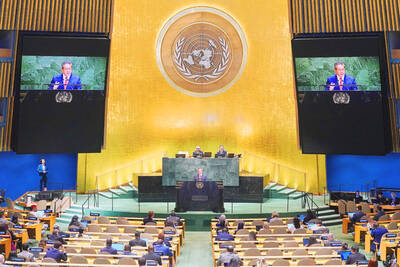
In the roughly three weeks since Japanese Prime Minister Sanae Takaichi commented on a possible Taiwan contingency in the Japanese Diet, China has unleashed economic reprisals, nationalist barbs and a diplomatic offensive to show its displeasure. Now, Chinese President Xi Jinping’s (習近平) government is escalating the dispute with an appeal to the UN, a move aimed at pressuring countries to side with China’s stance on a potential conflict over Taiwan — or stay out of its way. In a letter to UN Secretary-General Antonio Guterres on Friday last week, Chinese Permanent Representative to the UN Fu Cong (傅聰) accused Takaichi of contravening


 RSS
RSS