


Taiwan High Speed Rail Corp’s (THSRC) board of directors on Wednesday passed a resolution authorizing management to spend about NT$28.5 billion (US$930.4 million) to procure 12 sets of next-generation high-speed trains from the Hitachi Toshiba Supreme Consortium (HTSC).
The procurement of new trains has been planned since 2019 after taking into account various factors, from growth of transport volume to capacity to maintain and repair trains, flexibility in train deployment, and train occupancy rates on weekdays, weekends and holidays, THSRC said.
The deal was only finalized after the company held a public tender for the procurement for the third time in March last year, it said.
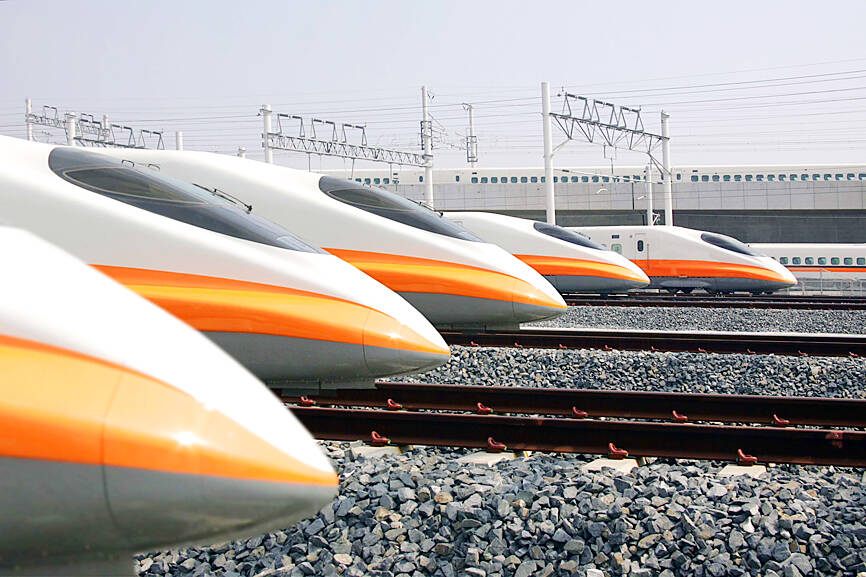
Photo courtesy of Taiwan High Speed Rail Corp via CNA
The first two tenders failed as the prices quoted by Japanese manufacturers were much higher than the market rate, the company said.
The board on Wednesday voted to grant the contract to HTSC after the company’s management reviewed tender documents prepared by contractors and engaged in multiple rounds of negotiations with companies that have priority negotiation rights, THSRC said.
Modeled after the N700S Shinkansen system, the next-generation high-speed trains would feature a more streamlined and energy-
saving design than the current 700T trains, the company said, adding that the new trains would travel faster and better serve passengers.
Each seat on the new train would be equipped with a 110V socket, and each train car would have an LCD panel to display information, double-deck luggage racks and other equipment, it said.
The agreement between THSRC and HTSC requires the contractor to begin delivering the new trains to Taiwan 42 months after it commences production, the railway operator said, adding that the first set should start operating 50 months after the project begins.
Local news media outlets reported that the first two tenders failed because Japanese contractors offered tenders of NT$5 billion per set of high-speed trains.
The deal was finalized after the price was halved to NT$2.3 billion, the reports said.
Last year, Japan-Republic of China Diet Members’ Consultative Council chairman Keiji Furuya raised the issue of THSRC’s procurement of new train cars from Japan at his meeting with President Tsai Ing-wen (蔡英).
The high-speed rail system “is a symbol of solid friendship between Taiwan and Japan, for which the two countries must cooperate,” Furuya said.
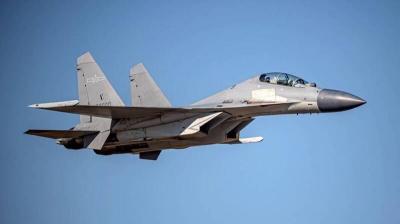
Eight Chinese naval vessels and 24 military aircraft were detected crossing the median line of the Taiwan Strait between 6am yesterday and 6am today, the Ministry of National Defense said this morning. The aircraft entered Taiwan’s northern, central, southwestern and eastern air defense identification zones, the ministry said. The armed forces responded with mission aircraft, naval vessels and shore-based missile systems to closely monitor the situation, it added. Eight naval vessels, one official ship and 36 aircraft sorties were spotted in total, the ministry said.
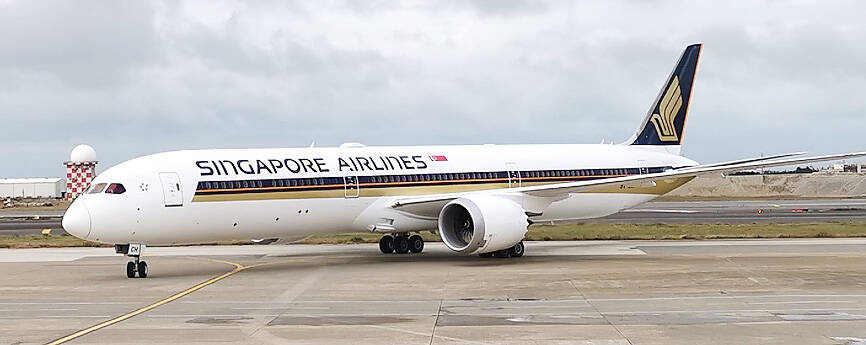
INCREASED CAPACITY: The flights on Mondays, Wednesdays, Fridays and Sundays would leave Singapore in the morning and Taipei in the afternoon Singapore Airlines is adding four supplementary flights to Taipei per week until May to meet increased tourist and business travel demand, the carrier said on Friday. The addition would raise the number of weekly flights it operates to Taipei to 18, Singapore Airlines Taiwan general manager Timothy Ouyang (歐陽漢源) said. The airline has recorded a steady rise in tourist and business travel to and from Taipei, and aims to provide more flexible travel arrangements for passengers, said Ouyang, who assumed the post in July last year. From now until Saturday next week, four additional flights would depart from Singapore on Monday, Wednesday, Friday
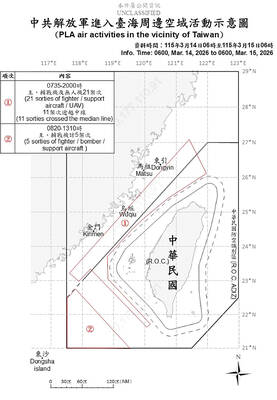
The Ministry of National Defense yesterday reported the return of large-scale Chinese air force activities after their unexplained absence for more than two weeks, which had prompted speculation regarding Beijing’s motives. China usually sends fighter jets, drones and other military aircraft around the nation on a daily basis. Interruptions to such routine are generally caused by bad weather. The Ministry of National Defense said it had detected 26 Chinese military aircraft in the Taiwan Strait over the previous 24 hours. It last reported that many aircraft on Feb. 25, when it spotted 30 aircraft, saying Beijing was carrying out another “joint combat
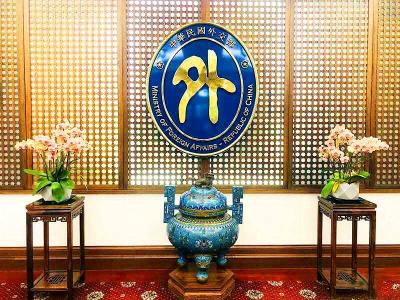
The Ministry of Foreign Affairs (MOFA) today said that if South Korea does not reply appropriately to its request to correct Taiwan’s name on its e-Arrival card system before March 31, it would take corresponding measures to alter how South Korea is labeled on the online Taiwan Arrival Card system. South Korea’s e-Arrival card system lists Taiwan as “China (Taiwan)” in the “point of departure” and “next destination” fields. The ministry said that it changed the nationality for South Koreans on Taiwan’s Alien Resident Certificates from “Korea” to “South Korea” on March 1, in a gesture of goodwill and based on the


 RSS
RSS