


The Ministry of Labor (MOL) on Saturday encouraged women to consider part-time work after releasing data showing that only 3.2 percent of women were employed in such jobs in 2021.
Part-time jobs have been unfairly stigmatized in Taiwan as an inferior form of employment and as something Taiwanese “settle for” due to a lack of options, Department of Statistics head Jasmine Mei (梅家瑗) said.
As a result, female participation in the Taiwanese labor market trails Japan, where 25.6 percent of women have part-time jobs, and South Korea, where 16.1 percent of women have part-time employment, Mei said.
Ministry data published on Wednesday, International Women’s Day, showed that the nation’s female labor participation was 51.5 percent in 2021, while Japan’s and South Korea’s both stood at 53.5 percent.
Although female labor participation in all three countries peaks among women aged 25 to 29, Japanese and South Korean women who leave the labor market in their 20s and 30s are more likely to return to the work force in their 40s, Mei said.
Moreover, women returning to work after having children in Japan and South Korea tend to find part-time employment, she said.
Despite negative stereotypes among Taiwanese, part-time employment can be beneficial for those juggling work and family responsibilities, she said, adding that companies employing part-time workers are often more accommodating to women who leave for family reasons and return to work.
For industries dealing with labor shortages, hiring part-time workers is a quick way to fill workforce gaps, she said.
One downside to recruiting part-time workers is that it often requires hiring two people to cover the workload of a full-time employee, which is more costly for employers paying the minimum hourly wage, and could potentially push up personnel costs due to higher turnover and increased need for training, she added.
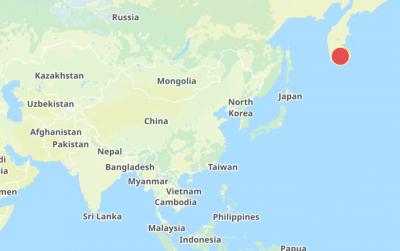
The Central Weather Administration (CWA) today issued a "tsunami watch" alert after a magnitude 8.7 earthquake struck off the Kamchatka Peninsula in northeastern Russia earlier in the morning. The quake struck off the east coast of the Kamchatka Peninsula at 7:25am (Taiwan time) at a depth of about 19km, the CWA said, citing figures from the Pacific Tsunami Warning Center. The CWA's Seismological Center said preliminary assessments indicate that a tsunami could reach Taiwan's coastal areas by 1:18pm today. The CWA urged residents along the coast to stay alert and take necessary precautions as waves as high as 1m could hit the southeastern

The National Museum of Taiwan Literature is next month to hold an exhibition in Osaka, Japan, showcasing the rich and unique history of Taiwanese folklore and literature. The exhibition, which is to run from Aug. 10 to Aug. 20 at the city’s Central Public Hall, is part of the “We Taiwan” at Expo 2025 series, highlighting Taiwan’s cultural ties with the international community, National Museum of Taiwan Literature director Chen Ying-fang (陳瑩芳) said. Folklore and literature, among Taiwan’s richest cultural heritages, naturally deserve a central place in the global dialogue, Chen said. Taiwan’s folklore would be immediately apparent at the entrance of the
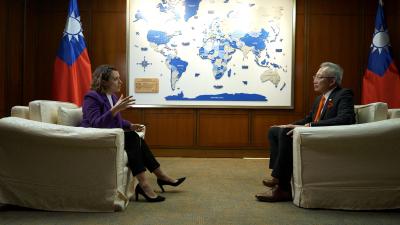
“China is preparing to invade Taiwan,” Deputy Minister of Foreign Affairs Francois Wu (吳志中) said in an exclusive interview with British media channel Sky News for a special report titled, “Is Taiwan ready for a Chinese invasion?” the Ministry of Foreign Affairs said today in a statement. The 25-minute-long special report by Helen Ann-Smith released yesterday saw Sky News travel to Penghu, Taoyuan and Taipei to discuss the possibility of a Chinese invasion and how Taiwan is preparing for an attack. The film observed emergency response drills, interviewed baseball fans at the Taipei Dome on their views of US President

Speeding and badly maintained roads were the main causes of a school bus accident on a rainy day in Taipei last year that severely injured two people and left 22 with minor injuries, the Taiwan Transportation and Safety Board said. On March 11 last year, a Kang Chiao International School bus overturned inside the Wenshan Tunnel (文山隧道) on the northbound lane of the Xinyi Expressway. The tour bus, owned by Long Lai Co, exceeded the speed limit after entering the tunnel, the board’s investigation found. Sensing that the rear of the vehicle was swaying, the driver attempted to use the service and exhaust


 RSS
RSS