

Residents of Taipei, Taoyuan and Tainan lag behind those of the three other special municipalities in taking advantage of free health checkups for young children, data from the Ministry of Health and Welfare showed.
The ministry offers seven free checkups for children up to the age of seven, aimed at preventing stunted development.
The WHO defines stunting as impaired growth and development due to poor nutrition, repeated infection or inadequate psychosocial stimulation.
Between 958,000 and 1.1 million preventative checkups were performed annually from 2017 to 2021, and 77.7 to 80.9 percent of children received them every year, the data showed.
Among Taiwan’s regions, the lowest number of children receiving them were in Keelung, at 62.6 percent, Lienchiang County at 70.8 percent and Chiayi County at 73.3 percent.
For this year the ministry has budgeted NT$240 million (US$7.8 million) for the checkups, saying it anticipates about 888,000 checkups to be performed.
Chen Li-chuan (陳麗娟), a senior specialist in the Health Promotion Administration’s Maternal and Child Health Division, on Friday said that the participation rate is calculated based on population figures provided by household registration offices.
As many people do not live where they are registered, the rates are only estimates, she said.
The Taipei Department of Health said that the city had the highest checkup participation rate before the COVID-19 pandemic began, but it decreased significantly in 2020.
However, the rate increased over the past two years, it said, adding that it sends notifications about the checkups to parents via SMS.
The city also sends nurses to kindergartens each year to conduct physical, vision, hearing and oral examinations on about 60,000 children, it said.
Taoyuan Department of Public Health Deputy Director Su Po-wen (蘇柏文) said his agency has provided checkups at kindergartens and community centers since 2020, helping the city reach a coverage rate of 90.16 percent.
Additional reporting by Tsai Ssu-pei, Cheng Shu-ting and Hung Jui-chin

A Hualien pomelo farmer refused to sell to China after the country announced it would permit more Taiwanese pomelo imports, prompting widespread support from Taiwanese consumers, who rallied to buy his fruit. China’s Taiwan Affairs Office last month said that China’s General Administration of Customs registered an additional 79 Taiwanese pomelo orchards and packing facilities in Hualien County, allowing more Taiwanese producers to export pomelos to China. “I am a Hualien fruit farmer and I refuse to sell to China,” Liu Tzu-hao (劉子豪) from Ruisui Township (瑞穗) said in an online post. Liu is a well-known farmer in the community and has served
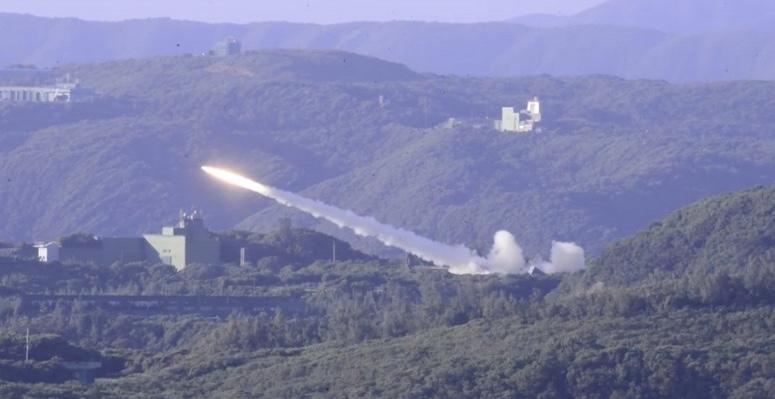
A Chinese military drone was spotted conducting reconnaissance off Taitung County as President William Lai (賴清德) visited Pingtung County this morning to inspect a drill of the armed forces’ precision-strike capabilities, prompting the military to closely monitor its actions. Today was the final day of a three-day military exercise at Jioupeng Base (九鵬基地) to test the joint combat capabilities of the armed forces and coast guard. The exercise began on Wednesday simulating air defense interception and yesterday tested long-range strike capabilities and new air defense weapons. This morning, the military conducted a final exercise involving air defense, anti-ship and drone operations. Military sources said

OCT. 31: The antiviral drugs Tamiflu and Eraflu have been distributed to about 4,000 medical facilities nationwide for people in seven groups who develop flu-like symptoms As the domestic influenza epidemic enters its peak season and continues to escalate, the Centers for Disease Control (CDC) yesterday announced that publicly funded influenza antiviral drugs for seven eligible groups have been extended to Oct. 31, allowing those who develop flu-like symptoms to receive the medication without undergoing a rapid influenza test. The CDC has extended the expanded use of flu antiviral drugs to seven groups: healthcare and influenza-prevention personnel; residents and staff at nursing homes, long-term care facilities and similar institutions; kindergarten and daycare workers and home-based caregivers; students from kindergarten through high school, vocational high school and the

Taiwanese Tsai Chin-shu (蔡金樹), who had been imprisoned in China for engaging in activity that “endangers national security,” said on Facebook on Friday that he has returned to Taiwan. Tsai, chairman of the Southern Taiwan Union of Cross-strait Relations Associations, had traveled frequently between Taiwan and China for years, and at one time ran a trading company in China’s Pingtan. In July 2018, he traveled to Quanzhou, Fujian Province, to attend a cross-strait food trade fair and stayed at a hotel in Xiamen. He checked out the following day and then disappeared. His family had made repeated appeals to the authorities


 RSS
RSS