

Uighur women are forced to marry Han Chinese and have abortions, and face other atrocities by the Chinese Communist Party (CCP) as part of its efforts to eradicate Uighurs, Uighur advocate Rushan Abbas told a news conference in Taipei yesterday.
The Campaign for Uyghurs founder and 2022 Nobel Peace Prize nominee urged world governments to condemn China’s “war against human dignity, democracy and freedom,” and act to stop Uighur genocide.
Women and children have been the most direct victims of Beijing’s policies to culturally assimilate Uighurs, including forcing Uighur women to marry Han Chinese men, repressing Uighur culture and religion, and controlling the Uighur population, Abbas said.

Photo: CNA
The CCP has dispatched more than 1.1 million party members to surveil Uighur women in their homes, and some of the women are raped or forced to have abortions, she said.
The party provides Han men in Xinjiang homes with preferential loans, while encouraging them to marry Uighur women, Abbas said.
Many women living in government-run camps are sexually abused by the police, Abbas said.
“The bodies of Uighur women [have] become the battlefield on which Uighur genocide is being carried out,” she added.
Beijing’s “Pomegranate Flower Plan” has displaced millions of Uighur children by placing them with Chinese families, foster homes or boarding schools, denying them Uighur culture, she said.
Washington-based Center for Uyghur Studies director Abdulhakim Idris, speaking remotely at the event, said that the CCP in 1949 promised the East Turkestan government that it would preserve its autonomy.
Idris said he had not been able to contact family in the region for many years, and they are probably being held in government camps.
Taiwan should learn the lessons of Tibet, Xinjiang and Hong Kong, he said.
“This is the price of signing a peace accord with the CCP,” he said.
Taiwan East Turkestan Association president Ho Chao-tung (何朝棟) said that one out of six people in Xinjiang was being held in a government camp, which he described as experiment labs.
If Taiwan should be “incorporated” into the CCP, it could become Xinjiang, he said.
Young Taiwanese need to understand that the nation’s democracy was hard-won and not a gift from heaven, he added.
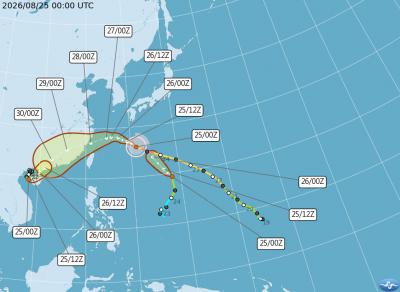
Typhoon Saudel has shown signs of weakening but is still expected to affect Taiwan when it comes closest to the nation on Friday, the Central Weather Administration (CWA) said today. The radius of Saudel shrank to about 220km as of 8am today from 250km a day earlier, and its maximum sustained winds were down to 155kph from 184kph previously, the weather agency said. As of 8am, Typhoon Saudel was 980km east of Taipei, moving west-northwest at 18kph, it said. Under the influence of a Pacific high pressure system, the storm is moving northward, meaning it is less likely to make landfall in Taiwan,

Minister of Sports Lee Yang (李洋) today said the Chinese Taipei Basketball Association (CTBA) has been urged not to undermine Taiwan’s credibility in international competitions, after a Taiwanese team advanced to the semi-finals of the 45th William Jones Cup over the Philippines last week due to a controversial new rule guaranteeing a semi-final place to the host team. The Republic of China Blue team advanced to the semi-finals after winning just one game in the group round due to a “host guarantee” spot, overtaking the Philippines, who held a 5-1 record ahead of the semi-finals. The Blue team finished the tournament
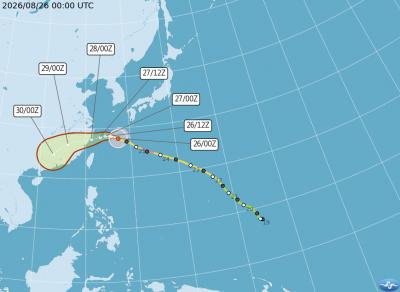
A sea warning for Typhoon Saudel, which has shifted to a more northerly track as it nears Taiwan, is expected early tomorrow, the Central Weather Administration (CWA) said today. As of this morning, Saudel was about 650km east-northeast of Taipei, moving west-northwest at 12kph with maximum sustained winds of 162kph, CWA data showed. Although Saudel remains a moderate typhoon, it has weakened and is expected to weaken further as it nears Taiwan due to unfavorable atmospheric and ocean conditions, CWA forecaster Lin Po-tung (林伯東) said. The storm is forecast to make its closest approach to Taiwan tomorrow and on Friday, Lin added. According to
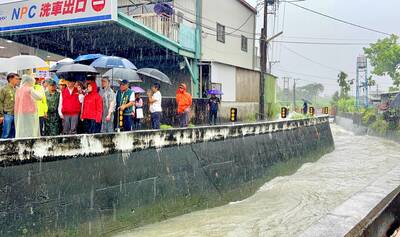
SEA WARNING EXPECTED: As atmospheric conditions are unfavorable for its development, the storm’s intensity is continuing to weaken, a CWA official said Typhoon Saudel is continuing to weaken and shift its path northward, with a sea warning expected to be issued this evening, the Central Weather Administration (CWA) said yesterday. The agency did not rule out issuing a land warning for outlying Lienchiang County (Matsu) tomorrow morning, although all storm warnings could be lifted by Friday night. Saudel is expected to be closest to Taiwan from tomorrow night to Friday, bringing localized heavy rain to northern and southern Taiwan, as well as central mountainous areas, the agency said. As of 2pm yesterday, the center of moderate Typhoon Saudel was about 890km east-northeast


 RSS
RSS