


Doctors achieved a Taiwan first with a lung transplant on an 11-year-old girl, National Taiwan University Hospital (NTUH) told a news conference in Taipei yesterday.
Surgeons in October completed a 15-hour operation to replace the child’s damaged lungs with donations from her father’s lower right lung and the lower left lung of her mother, said Hsu Hsao-hsun (徐紹勛), head of the hospital’s thoracic surgery unit.
The girl, surnamed Liao (廖), was transferred to NTUH from another hospital in July last year after a cellulitis infection developed into sepsis, which required her to be put on life support, Hsu said.
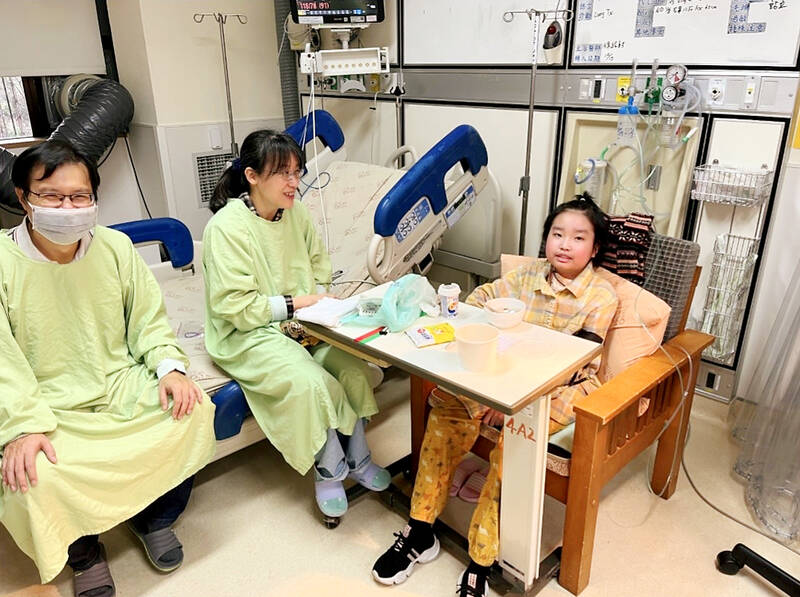
Photo copied by Yang Yuan-ting, Taipei Times
Liao was put on a transplant waiting list, but no suitable lungs were found due to a chronic shortage of registered organ donors, he said, adding that living donations from family members comprise the vast majority of the nation’s liver and kidney transplants.
The parents consented to each donate lung portions when doctors presented them with the option, he said.
In 2005, NTUH was certified to perform live lung transplants by what was at the time the department of health, he said.
The hospital has carefully maintained the capability to carry out the procedure, Hsu said.
Regulations stipulate that living donations of lungs must come from two blood relatives within five degrees of separation from the recipient, while there are additional medical requirements linked to lung health, age and body size, he said.
NTUH did not make the decision to proceed with the transplant lightly, as the chances of success for the operation were assessed at no more than 50 percent by Kyoto University Hospital, the world’s leading authority on the procedure, Hsu said.
The operation presented a significant challenge, as the lung tissue had to be removed from two donors and transplanted into the patient, with each step carrying a risk of death, he said.
Four surgical teams rehearsed the operation in 16 planning sessions before conducting the procedure, he said.
Children who get lung transplants have a 10-year survival rate of 80 percent and Liao’s prognosis is likely better because transplants from blood relatives carry a smaller risk of rejection, he said.
The girl is in physical therapy to ensure the transplants remain healthy and grow with her, he added.
Liao’s father said it was trying to see their child on the verge of death.
He jumped at the chance to save his daughter’s life, he said.
The sole concern he had with the procedure was his high blood-sugar levels, which could have made his lung tissue unsuitable for transplantation, the father added.
Additional reporting by CNA

Fast food chain McDonald's is to raise prices by up to NT$5 on some products at its restaurants across Taiwan, starting on Wednesday next week, the company announced today. The prices of all extra value meals and sharing boxes are to increase by NT$5, while breakfast combos and creamy corn soup would go up by NT$3, the company said in a statement. The price of the main items of those meals, if ordered individually, would remain the same. Meanwhile, the price of a medium-sized lemon iced tea and hot cappuccino would rise by NT$3, extra dipping sauces for chicken nuggets would go up
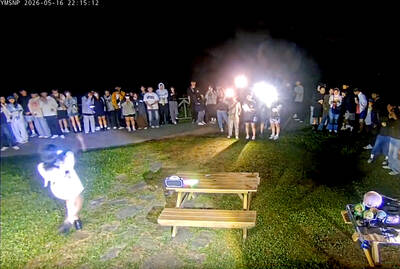
Yangmingshan National Park’s Qingtiangang (擎天崗) nature area has gone viral after a park livestream camera observed a couple in the throes of intimate congress, which was broadcast live on YouTube, drawing large late-night crowds and sparking a backlash over noise, bright lights and disruption to wildlife habitat. The area’s livestream footage appeared to show a couple engaging in sexual activity on a picnic table in the park on Friday last week, with the uncensored footage streamed publicly online. The footage quickly spread across social media, prompting a tide of visitors to travel to the site to “check in” and recreate the

Carrefour Taiwan is to begin using a new name from the start of July, but it cannot divulge the name until then, the chairman of the supermarket chain's parent company said today. President Chain Store Co chairman Lo Chih-hsien (羅智先) was asked by reporters after a shareholders' meeting to confirm whether the company has settled on a new name for the supermarket brand. In March, the government-registered name of two Carrefour Taiwan branches was quietly changed to "Le Chia Kang" (樂家康) in Chinese, raising speculation that has been selected as the name. Lo said that because of local regulations and contractual obligations, the
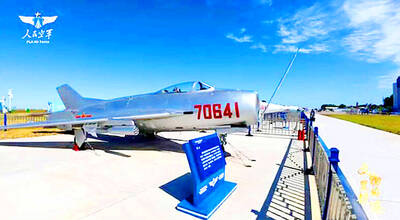
GROUNDED: A KMT lawmaker proposed eliminating drone development programs and freezing funding for counterdrone systems, despite China’s adoption of the technology China has deployed attack drones at air bases near the Taiwan Strait in a strategy aimed at overwhelming Taiwan’s air defense systems through saturation attacks, the Mainland Affairs Council (MAC) said. The council’s latest quarterly report on China said that satellite imagery and open-source intelligence indicate that the Chinese People’s Liberation Army (PLA) had converted retired J-6 fighter jets into J-6W drones, which the PLA has stationed at six air bases near Taiwan, five in China’s Fujian Province and one in Guangdong Province. The report cited J. Michael Dahm, a senior fellow at the US-based Mitchell Institute, as saying that China has


 RSS
RSS