


Increased penalties and roadside checks as well as upgraded treatment programs would be implemented to combat driving under the influence (DUI) as the Lunar New Year holiday approaches, the Ministry of Justice said yesterday.
Minister of Justice Tsai Ching-hsiang (蔡清祥) said that alcohol is commonly served at year-end banquets.
“Getting drunk is dangerous and people must not drive after drinking,” Tsai told a news conference at the ministry in Taipei. “Government agencies will strictly enforce the rules and uphold punishments for DUI offenses.”
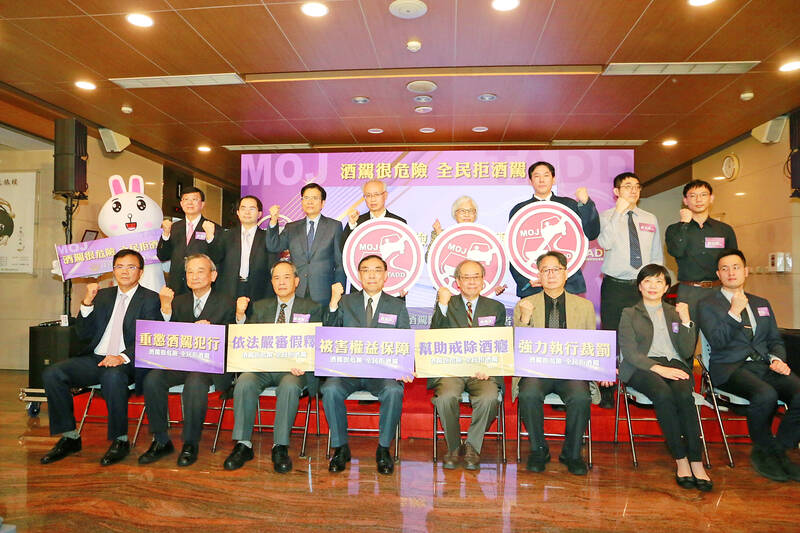
Photo: CNA
People must not think they can get away with being behind the wheel after drinking, he said, adding that the ministry’s agencies and prosecutors have been ordered to coordinate with law-enforcement personnel to expand prevention programs, patrols and roadside checks for the next few weeks.
Five measures — “strict implementation of roadside DUI checks,” “severe punishments for DUI offenses,” “upgraded treatment programs for people with alcohol addiction,” “guaranteed protection and compensation for people hurt by DUI offenses” and “strict scrutiny of DUI offenders seeking early parole” — were implemented yesterday, he said.
The medical community and Ministry of Health and Welfare officials told the news conference that people must remember drinking alcohol impairs mental and physical functions, diminishing reaction times and leading to mishaps.
Alcohol poses a real danger to drivers, as well as pedestrians and other vehicles on the road, they said.
“Schools have taught that drunk driving is wrong, while society and the media provide constant reminders about the dangers, but the DUI situation in Taiwan is much worse than in some less-developed countries with far lower GDP,” Taiwan Against Drunk Driving Association director Chen Chiao-chi (陳喬琪) said. “This fact is shameful for our society.”
The Taiwan Alcohol Prevention Association, the Taiwan Society of Psychiatry, Mackay Memorial Hospital, doctors at the ministry’s Taipei City Hospitals, and delegates from the Agency of Corrections, the Administrative Enforcement Agency and the Agency Against Corruption also attended the news conference.
Enforcement last year resulted in 3,244 DUI indictments with sentences that were not commutable to fines, a sixfold increase from 2021, justice ministry data showed.
Overall, there were 9,159 people convicted of DUI offenses last year, 1.4 times the number a year earlier, the data showed.
Separately, National Police Agency Director-General Huang Ming-chao (黃明昭) confirmed a personnel reshuffle, with 87 regional police chiefs and other high-ranking officials affected.
It is the largest ever reshuffle of the top brass of Taiwan’s police, Huang said.
“The priority is to guard public safety and uphold social order in all administrative regions,” he said.
Many senior officers are soon to reach retirement age, so now is a good time to shuffle top positions, which will bring change and new vitality to local law-enforcement units, he said.
The transfers include new police chiefs before the Lunar New Year holiday begins next week at the six special municipalities, including a replacement for Taipei Police Chief Yang Yuan-ming (楊源明), who is to take over as president of Central Police University in Taoyuan, Huang said.
Some police chiefs and other senior officials would be transferred to administrative roles at the police agency’s headquarters in Taipei due to allegations of corruption among officers under their charge, he said.

Taiwanese can file complaints with the Tourism Administration to report travel agencies if their activities caused termination of a person’s citizenship, Mainland Affairs Council Minister Chiu Chui-cheng (邱垂正) said yesterday, after a podcaster highlighted a case in which a person’s citizenship was canceled for receiving a single-use Chinese passport to enter Russia. The council is aware of incidents in which people who signed up through Chinese travel agencies for tours of Russia were told they could obtain Russian visas and fast-track border clearance, Chiu told reporters on the sidelines of an event in Taipei. However, the travel agencies actually applied
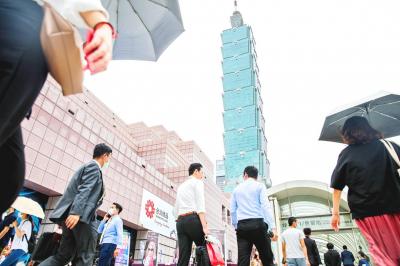
Japanese footwear brand Onitsuka Tiger today issued a public apology and said it has suspended an employee amid allegations that the staff member discriminated against a Vietnamese customer at its Taipei 101 store. Posting on the social media platform Threads yesterday, a user said that an employee at the store said that “those shoes are very expensive” when her friend, who is a migrant worker from Vietnam, asked for assistance. The employee then ignored her until she asked again, to which she replied: "We don't have a size 37." The post had amassed nearly 26,000 likes and 916 comments as of this

New measures aimed at making Taiwan more attractive to foreign professionals came into effect this month, the National Development Council said yesterday. Among the changes, international students at Taiwanese universities would be able to work in Taiwan without a work permit in the two years after they graduate, explainer materials provided by the council said. In addition, foreign nationals who graduated from one of the world’s top 200 universities within the past five years can also apply for a two-year open work permit. Previously, those graduates would have needed to apply for a work permit using point-based criteria or have a Taiwanese company
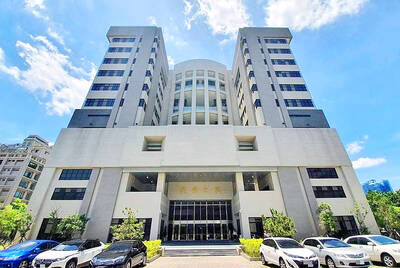
The Shilin District Prosecutors’ Office yesterday indicted two Taiwanese and issued a wanted notice for Pete Liu (劉作虎), founder of Shenzhen-based smartphone manufacturer OnePlus Technology Co (萬普拉斯科技), for allegedly contravening the Act Governing Relations Between the People of the Taiwan Area and the Mainland Area (臺灣地區與大陸地區人民關係條例) by poaching 70 engineers in Taiwan. Liu allegedly traveled to Taiwan at the end of 2014 and met with a Taiwanese man surnamed Lin (林) to discuss establishing a mobile software research and development (R&D) team in Taiwan, prosecutors said. Without approval from the government, Lin, following Liu’s instructions, recruited more than 70 software


 RSS
RSS