


Retired air force officers major general Chien Yao-tung (錢耀棟) and lieutenant colonel Wei Hsien-yi (魏先儀) were yesterday found guilty by the Taipei District Court of attempted espionage and espionage respectively.
The court handed down a one-year prison term and a four-year suspended sentence for Chien, while Wei received a sentence of one year and 10 months and a five-year suspended sentence, the court said.
It also fined Chien NT$300,000 and Wei NT$600,000.
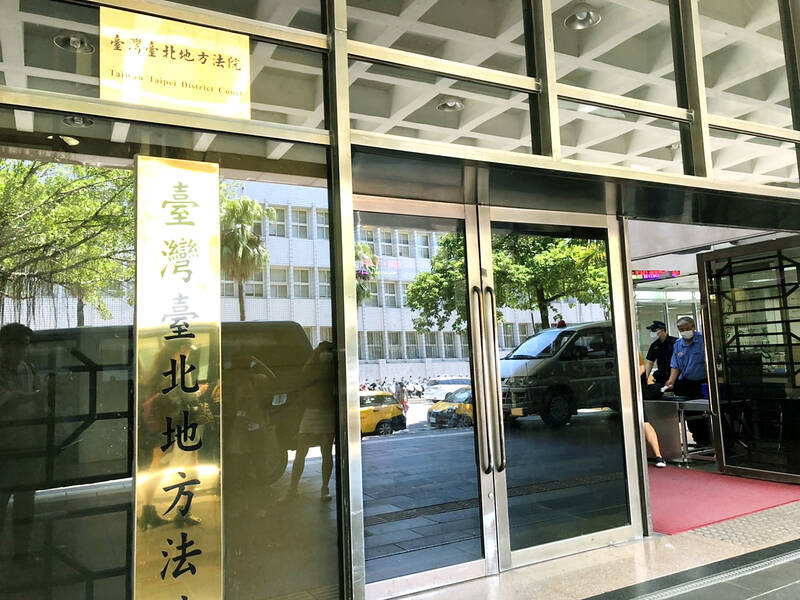
Photo: Wang Meng-lun, Taipei Times
The ruling can be appealed.
The pair were charged over contraventions of the National Security Act (國家安全法) after investigators linked them to a Chinese intelligence operative surnamed Hsieh (謝), who recruited Taiwanese military officers while posing as a businessman from Hong Kong, the court said.
The purpose of Hsieh’s efforts was to obtain information about Taiwan’s armed forces, it said, adding that he fled the nation following the launch of the investigation in 2019 that led to the indictments against Chien and Wei.
Hsieh recruited Wei as an informant sometime after making contact with him at banquets in 2003, while Chien was recruited through his personal relationship with Wei, it said.
Despite knowing that Hsieh was an agent of Beijing spying for military secrets, Chien and Wu helped him arrange multiple banquets and trips to China for retired Taiwanese officers, the court said.
The activities they organized included a visit in 2012 to China’s Guangdong Province featuring golfing and an air show, and a visit to Wuhan in 2017, it said.
The targets for recruitment included a retired air force lieutenant colonel surnamed Huang (黃), who dined with Hsieh several times before growing suspicious of the man and refusing further contact, the court said.
A retired air force general surnamed Shen (沈), a major general surnamed Chen (陳) and a retired army colonel surnamed Lu (呂) went on trips with members of Hsieh’s group, but they denied sharing secrets with China, the court said.

The Centers for Disease Control (CDC) yesterday reported the first case of a new COVID-19 subvariant — BA.3.2 — in a 10-year-old Singaporean girl who had a fever upon arrival in Taiwan and tested positive for the disease. The girl left Taiwan on March 20 and the case did not have a direct impact on the local community, it said. The WHO added the BA.3.2 strain to its list of Variants Under Monitoring in December last year, but this was the first imported case of the COVID-19 variant in Taiwan, CDC Deputy Director-General Lin Ming-cheng (林明誠) said. The girl arrived in Taiwan on

South Korea is planning to revise its controversial electronic arrival card, a step Taiwanese officials said prompted them to hold off on planned retaliatory measures, a South Korean media report said yesterday. A Yonhap News Agency report said that the South Korean Ministry of Foreign Affairs is planning to remove the “previous departure place” and “next destination” fields from its e-arrival card system. The plan, reached after interagency consultations, is under review and aims to simplify entry procedures and align the electronic form with the paper version, a South Korean ministry official said. The fields — which appeared only on the electronic form

The Ministry of Foreign Affairs (MOFA) is suspending retaliation measures against South Korea that were set to take effect tomorrow, after Seoul said it is updating its e-arrival system, MOFA said today. The measures were to be a new round of retaliation after Taiwan on March 1 changed South Korea's designation on government-issued alien resident certificates held by South Korean nationals to "South Korea” from the "Republic of Korea," the country’s official name. The move came after months of protests to Seoul over its listing of Taiwan as "China (Taiwan)" in dropdown menus on its new online immigration entry system. MOFA last week
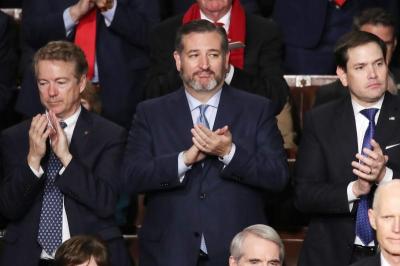
A bipartisan group of US senators has introduced a bill to enhance cooperation with Taiwan on drone development and to reduce reliance on supply chains linked to China. The proposed Blue Skies for Taiwan Act of 2026 was introduced by Republican US senators Ted Cruz and John Curtis, and Democratic US senators Jeff Merkley and Andy Kim. The legislation seeks to ease constraints on Taiwan-US cooperation in uncrewed aerial systems (UAS), including dependence on China-sourced components, limited access to capital and regulatory barriers under US export controls, a news release issued by Cruz on Wednesday said. The bill would establish a "Blue UAS


 RSS
RSS