


On Oct. 26, young Taiwanese tea ceremony organizer Chang Chia-lun (張家綸) took the stage in London’s Fortnum & Mason department store to attend the first-ever The Leafies, the UK’s first dedicated tea awards co-organized by the upmarket store and the UK Tea Academy.
Chang, 24, was there to receive Leafie gold awards on behalf of two Nantou County companies, Yung Hao Tea Garden for its Spring Jade Oolong and Chang San Wo for its Highland Four Seasons Black Tea.
Another Nantou County company, Wang Family Tea, also won gold and a highly recommended distinction for its Dong Fang Mei Ren Cha.
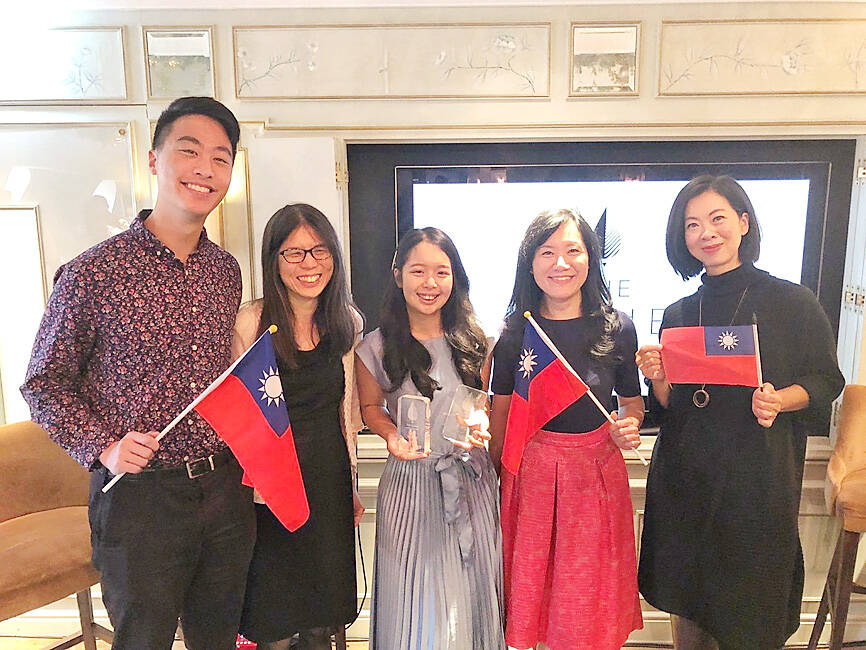
Photo courtesy of Yunghao Tea
The awards were founded to celebrate the world’s best loose leaf teas, distinct from the more common and affordable commercial tea bags, by bestowing gold awards, highly recommended accolades, or both.
Winners are chosen from tea farmers, producers, suppliers and retailers around the world, judged by the likes of UK Tea Academy cofounder and tea historian Jane Pettigrew, tea expert Timothy d’Offay, the Ritz London’s decade-long tea master Giandomenico Scanu and Nantou native Lin Wei-chun (林韋君).
Lin, who works as a lecturer on tea in the UK, said that aside from the popular bubble tea, Taiwan’s more well-known teas in the UK are oolong, its popular sub-strain Dong Fang Mei Ren and the nation’s No. 18 premium black tea.
The three Nantou companies that were recognized at The Leafies are experts at these types of teas.
Fortnum & Mason, founded in 1707, said that the winning teas would have a chance of being sold at the London store’s Rare Tea Counter.
Chang said the Yung Hao Tea Garden garden belongs to her relatives, who use passion fruit yeast in their fertilizers to give their tea leaves their signature fragrant aroma.
While the tea expert has become well-known for promoting Taiwanese tea in Europe, she said she was not always so knowledgeable about tea.
Chang said that she did not develop an interest in the family business until her post-high-school graduation gap year, when she backpacked across Southeast Asia and Europe.
What piqued her interest in the business was when she purchased some tea leaves in Sweden.
The tea, unlike the Taiwanese variety, lacked a lasting aftertaste, she said, inspirising her to research and learn more about the tea grown in her country.
The COVID-19 pandemic gave her the opportunity to return to Nantou and embark on her journey, she said.
There, she learned many aspects of the tea-making process — a trade that is traditionally occupied by men.
She said it took her one month just to persuade her mentor to teach her how to pan-fry tea leaves, all the while reminding her that the job is too hard for “delicate” women.
Chang proved her cynics wrong by winning a second-degree accolade in one of Taiwan’s national tea-making competitions.
Returning to Europe, Chang is a student at Mykolas Romeris University in the Lithuanian capital, Vilnius, where she is also known in the local tea scene as a tea ceremony organizer.
The tea expert’s events feature Taiwanese utensils and music to guide her guests in learning about Taiwanese history and culture.
She said that tea ceremonies are a great catalyst for cultural exchanges.
By tasting and savoring the flavor and fragrance of Taiwanese teas, people from other cultures may open their hearts to experiencing the “deliciousness” of Taiwan, she said.
Chang in April hosted Tomas Ivanauskas, the Lithuanian cultural attache in China and South Korea at the Lithuanian embassy in China who fell in love with Taiwan’s Tao culture during a previous visit.
Chang was also instrumental in introducing Taiwanese teas to Michelin star restaurants in Sweden.
She said that the plethora of cultural experiences she gained abroad has given her a different perspective of Taiwan, inspiring her to experiment with cross-cultural tea ceremonies that combine Taiwanese and Lithuanian practices, which she plans to implement next month or in February.
Asked about international marketing prospects, Chang said that while the quality of Taiwanese tea is impeccable, marketing it has been constrainted by local traditions.
As Taiwanese tea is considered an upper, middle-tier product in the international market, Taiwanese businesses should aim to market their products as boutique tea, Chang said.
Taiwanese businessowners should get out of their comfort zone and take advantage of the international trend of food and tea pairings if they want to expand their market horizon, she said.

Kenting National Park service technician Yang Jien-fon (楊政峰) won a silver award in World Grand Prix Photography Awards Spring Season for his photograph of two male rat snakes intertwined in combat. Yang’s colleagues at Kenting National Park said he is a master of nature photography who has been held back by his job in civil service. The awards accept entries in all four seasons across six categories: architectural and urban photography, black-and-white and fine art photography, commercial and fashion photography, documentary and people photography, nature and experimental photography, and mobile photography. Awards are ranked according to scores and divided into platinum, gold and

More than half of the bamboo vipers captured in Tainan in the past few years were found in the city’s Sinhua District (新化), while other districts had smaller catches or none at all. Every year, Tainan captures about 6,000 snakes which have made their way into people’s homes. Of the six major venomous snakes in Taiwan, the cobra, the many-banded krait, the brown-spotted pit viper and the bamboo viper are the most frequently captured. The high concentration of bamboo vipers captured in Sinhua District is puzzling. Tainan Agriculture Bureau Forestry and Nature Conservation Division head Chu Chien-ming (朱健明) earlier this week said that the
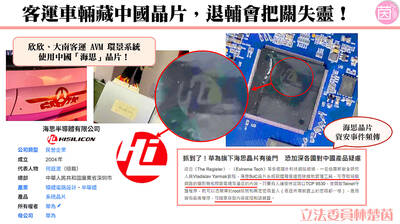
BREACH OF CONTRACT: The bus operators would seek compensation and have demanded that the manufacturer replace the chips with ones that meet regulations Two bus operators found to be using buses with China-made chips are to demand that the original manufacturers replace the systems and provide compensation for breach of contract, the Veterans Affairs Council said yesterday. Democratic Progressive Party Legislator Michelle Lin (林楚茵) yesterday said that Da Nan Bus Co and Shin-Shin Bus Co Ltd have fielded a total of 82 buses that are using Chinese chips. The bus models were made by Tron-E, while the systems provider was CYE Electronics, Lin said. Lin alleged that the buses were using chips manufactured by Huawei subsidiary HiSilicon Co, which presents a national security risk if the

The National Immigration Agency has banned two Chinese from returning to Taiwan, after they published social media content it described as disrespectful to national sovereignty. The agency imposed a two-month ban on a Chinese man surnamed Liang (梁) and a permanent ban on a woman surnamed Yang (楊), an influencer with 23 million followers, in October last year and last week respectively. Minister of the Interior Liu Shyh-fang (劉世芳) yesterday said on the sidelines of a legislative meeting that Chinese visitors to Taiwan are required to comply with the rules and regulations governing their entry permits. The government has handled the ban and


 RSS
RSS