


Taiwan is set for a more contentious presidential race focused on rising tensions with China, after low turnout in local elections contributed to the Democratic People’s Party’s (DPP) massive losses.
The DPP won just five of 21 city and county races on Saturday. The Chinese Nationalist Party (KMT) held on to 13 seats, and captured the mayoral seats in Taipei and Taoyuan.
President Tsai Ing-wen (蔡英文) quit as head of the DPP to take responsibility for the losses, which came amid rising public disquiet over cost-of-living issues and an uptick in COVID-19 deaths.

Photo: CNA
However, while the KMT now controls four of Taiwan’s six special municipalities, the turnout in those areas slumped to 59.86 percent, the lowest since 1994, data from the Central Election Commission showed.
For both parties, the results are certain to ignite internal jockeying ahead of the presidential election in 2024, when Tsai is to step down due to term limits.
“Primary season is upon us,” National Chengchi University associate professor Lev Nachman said. “But not all is lost for the DPP by any means, and they are still expected to do well in 2024, when national security and relations with China become much more salient in the election.”
Relations with Beijing are expected to be a key test for candidates vying to succeed Tsai.
The DPP’s poor showing could boost Vice President William Lai (賴清德) over rivals such as his predecessor, Chen Chien-jen (陳建仁), and Taoyuan Mayor Cheng Wen-tsan (鄭文燦), who are more aligned with Tsai.
Lai has previously described himself as a “political worker for Taiwanese independence,” although he has moderated his stance in recent years.
Taipei mayor-elect Chiang Wan-an (蔣萬安), 43, is widely viewed as too young to run for president in 2024, and he was helped by a split opposition, increasing the KMT’s vote share by less than 2 percentage points.
More likely contenders in 2024 are KMT Chairman Eric Chu (朱立倫), who favors much closer relations with China, and re-elected New Taipei City Mayor Hou You-yi (侯友宜), who has been more cautious on calling for dialogue with Beijing.
“Chu will take credit for the KMT’s wins, and will be qualified to run for presidency for sure,” said Arthur Wang, an academic and director of think tank Taiwan NextGen Foundation. “However, Hou is long-favored as the next candidate in the party.”
However, the economy could play a key role in 2024 if growth continues to slow. While Taiwan outperformed most major economies during the COVID-19 pandemic, export orders are shrinking and the misery index, derived from inflation and jobless rates, is near its highest level since 2013.
The TAIEX on Monday fell 1.5 percent, before gaining 1.2 percent yesterday.
“Past records show that the TAIEX rose by 10 percent on average in the month after local elections, as the uncertainty of the vote is removed and investors look ahead to the next year,” Capital Investment Trust Corp fund manager Angela Chuang (莊慧君) said.

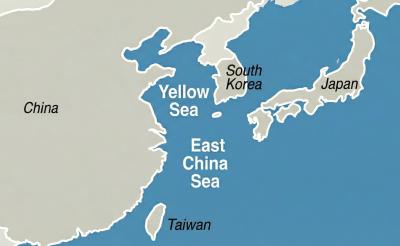
China has reserved offshore airspace in the Yellow Sea and East China Sea from March 27 to May 6, issuing alerts usually used to warn of military exercises, although no such exercises have been announced, the Wall Street Journal (WSJ) reported yesterday. Reserving such a large area for 40 days without explanation is an “unusual step,” as military exercises normally only last a few days, the paper said. These alerts, known as Notice to Air Missions (Notams), “are intended to inform pilots and aviation authorities of temporary airspace hazards or restrictions,” the article said. The airspace reserved in the alert is

More than 6,000 Taiwanese students have participated in exchange programs in China over the past two years, despite the Mainland Affairs Council’s (MAC) “orange light” travel advisory, government records showed. The MAC’s publicly available registry showed that Taiwanese college and university students who went on exchange programs across the Strait numbered 3,592 and 2,966 people respectively. The National Immigration Agency data revealed that 2,296 and 2,551 Chinese students visited Taiwan for study in the same two years. A review of the Web sites of publicly-run universities and colleges showed that Taiwanese higher education institutions continued to recruit students for Chinese educational programs without
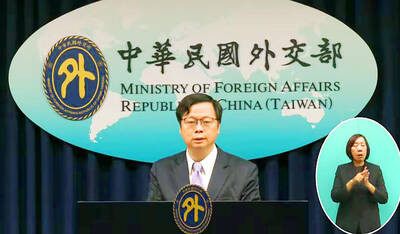
NAMING SPAT: The foreign ministry called on Denmark to propose an acceptable solution to the erroneous nationality used for Taiwanese on residence permits Taiwan has revoked some privileges for Danish diplomatic staff over a Danish permit that lists “Taiwan” as “China,” Eric Huang (黃鈞耀), head of the Ministry of Foreign Affairs’ Department of European Affairs, told a news conference in Taipei yesterday. Reporters asked Huang whether the Danish government had responded to the ministry’s request that it correct the nationality on Danish residence permits of Taiwanese, which has been listed as “China” since 2024. Taiwan’s representative office in Denmark continues to communicate with the Danish government, and the ministry has revoked some privileges previously granted to Danish representatives in Taiwan and would continue to review

A bipartisan group of US senators has introduced a bill to enhance cooperation with Taiwan on drone development and to reduce reliance on supply chains linked to China. The proposed Blue Skies for Taiwan Act of 2026 was introduced by Republican US senators Ted Cruz and John Curtis, and Democratic US senators Jeff Merkley and Andy Kim. The legislation seeks to ease constraints on Taiwan-US cooperation in uncrewed aerial systems (UAS), including dependence on China-sourced components, limited access to capital and regulatory barriers under US export controls, a news release issued by Cruz on Wednesday said. The bill would establish a "Blue UAS


 RSS
RSS