


About 98 percent of Taiwanese immigrants to Canada identify as “Taiwanese,” the country’s most recent census data showed.
Statistics Canada on Wednesday published census data for last year, which showed that 8.3 million Canadians were born outside the country.
Among those, 65,365 people reported their place of birth as Taiwan, 64,202 of whom answered “Taiwanese” in the “ethnic of cultural origin” category of the census.
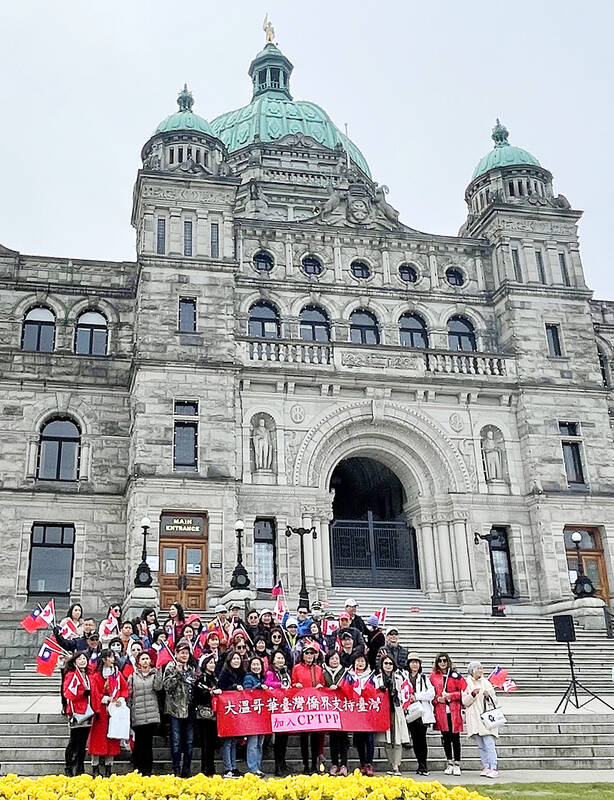
Photo: CNA
Canada conducts a census every five years.
Before 2016, the census questionnaire did not have the option “Taiwanese” as ethnic or cultural identity.
In Taipei, the Overseas Community Affairs Council said many Taiwanese immigrants to Canada reported that they had previously reluctantly ticked “Chinese” as ethnic or cultural identity, or that they ticked “other” and wrote in “Taiwanese” themselves.
The council and members of Canada’s Taiwanese community fought for several years to have the option of “Taiwanese” added.
“However, the decision to add the option was done close to census time, and many people were unaware it was added, so they overlooked it when completing the census,” the council said.
Prior to last year’s census, the council notified members of the Taiwanese community through public events and social media, urging them to mark “Taiwanese” if that is how they identified themselves, it said.
Jenny Wang, who migrated to Canada 30 years ago, said she is “very proud of being Taiwanese.”
“I traveled back to Taiwan 20 years ago when my child was being born, so that they could be born in Taiwan. The first passport they got was a Taiwanese passport,” she said.
Wang said she has long worked with the Taiwanese community in Canada, and she speaks on behalf of Taiwan whenever the opportunity arises.
“Identity is very important. It’s not only about the emotional connection we have to our country of origin, it’s also about ensuring our community gets the right allocation of resources from the Canadian government,” she said.
This year’s census also included the option of “Hong Konger” as an ethnicity.
Members of Canada’s Hong Kong community launched an information campaign about the option through social media using the hashtag #IAmHongKonger.
Canadian government data showed that 213,855 Canadians were born in Hong Kong, and 81,680 people identified as “Hong Konger” in last year’s census.
One member of Canada’s Hong Kong community told the Central News Agency that they regretted that only 38 percent of Canadians born in Hong Kong identified as “Hong Kongers.”
“It seems like the Taiwanese community is more united and proud than we are,” they said.
Asian-Canadian Special Events Association managing director Charlie Wu (吳權益) promoted Hong Konger identity at the 2016 Taiwan Cultural Festival in Toronto, through an event titled “Dancing With Hong Kong.”
“Hong Kong people are beginning to break free from the framework and seek greater freedom,” Wu said at the time. “Today’s Canadians from Hong Kong are like Canadians from Taiwan 20 years ago, hoping to label themselves more accurately.”
Commenting on last year’s census results, Wu said that he expects that Hong Kongers who had migrated to Canada would increasingly identify as “Hong Kongers” on future censuses.
“Although the percentage of people who choose ‘Hong Kong’ is not high in this questionnaire, it is only a matter of time, and in five years, more people will agree, he said.
Census data showed that Canada’s total population has reached 38.25 million, of which about 23 percent were born elsewhere, the largest proportion since Canada was established as a federation, and the highest in the G7.
Most of the early Canadian immigrants came from Europe, but over the past 50 years, the proportion of newcomers from Europe has declined, while those from Asia (including the Middle East) has risen, becoming the largest source of immigrants to the country.
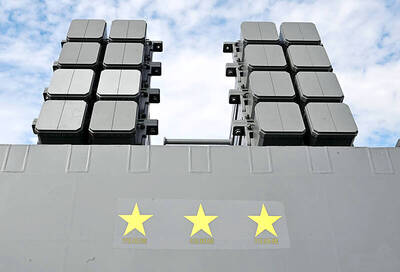
UPGRADE: The Kang Ding-class frigate is replacing its Chaparall missiles with Tien Chien II and Hua Yang VLS, which would provide it with long-range, 360° air defense Taiwan plans to produce 1,200 to 1,376 Hai Chien II missiles (海劍二, Sea Sword II) — also known as TC-2N — to serve as the standard air defense system of the navy’s surface combatant fleet, a source said yesterday. Last week, the Hai Chien II, the naval version of the Tien Kung II missile (天劍二, Sky Sword II), completed a live-fire test in waters off the National Chungshan Institute of Science and Technology’s Jiupeng facility (九鵬) in Pingtung County’s Manjhou Township (滿州). The MIM72 Chaparral and other dated air defense missiles that currently arm Taiwanese ships have inadequate range to combat Chinese

REASONS FOR TRAVEL: An assistant professor said that proposed amendments to penalize drivers if they used drugs overseas would not deter people from traveling People who operate a motor vehicle under the influence of marijuana would have their driver’s license revoked, even if they used the substance while overseas, the Ministry of Transportation and Communications said yesterday, citing proposed amendments to the Road Traffic Management and Penalty Act (道路交通管理處罰條例). The amendments would also authorize the government to revoke the licenses of people determined to have used Category 1 or Category 2 narcotics, even if they were not operating a vehicle while under the influence of drugs, as well as ban them from taking the license test for three years, the ministry said. People aged 18 or
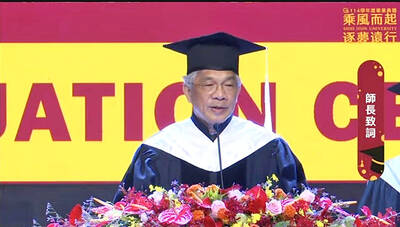
Shih Hsin University President Chen Ching-he (陳清河) yesterday issued a public apology for comments made in his commencement speech last week, stating that he has asked the school to suspend his duties and halt his wages for two months as a show of contrition. At the commencement ceremony on May 30, Chen said, “If you don’t manage your time well, or your own emotions, or your health, then I am telling every one of you — put a quick end to ‘you,’ because the world has no need for ‘you.’” The comments have sparked significant controversy online, and Chen through an open
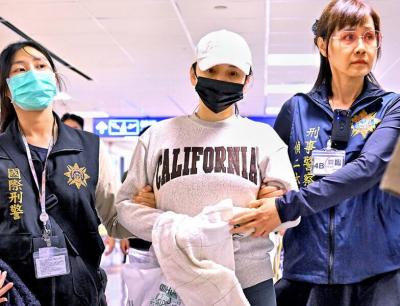
Johanne Liou (劉喬安), a Taiwanese woman who shot to unwanted fame during the Sunflower movement protests in 2014, returned to Taiwan last night after being deported from the US. She is to stand trial in Taiwan for charges involving embezzlement, fraud and drug crimes. The Criminal Investigation Bureau (CIB) said it took her into custody at Taiwan Taoyuan International Airport and would first question her before transferring her to the New Taipei District Prosecutors’ Office. She was arrested upon disembarking a flight from San Francisco that landed shortly before 7pm. Liou absconded to the US in 2019 after jumping bail


 RSS
RSS