


People who have had COVID-19 display signs of a weakened immune system 24 weeks following diagnosis, a doctor said on Wednesday.
The negative effects — including disruption of the normal mix of immune system cell types — can persist after recovery from COVID-19 and are particularly notable in people undergoing therapy for “long COVID,” Chiang Kuan-yu (姜冠宇), a doctor at Taipei City Hospital’s Zhongxing branch, wrote on Facebook, citing an Australian study published in January.
A study published in the US last month found that people experiencing long-term COVID-19 symptoms appear to have undergone changes to gene expression that decreases the potency of their “killer” T-cells, a key mechanism to fight off infections, Chiang said.
Instead of conferring immunity, exposure to COVID-19 might render a person more susceptible to subsequent infections by the virus or other pathogens, he said.
A study by Spain-based researchers published last month found that some people who have recovered from COVID-19 developed chronic inflammation and autoimmune disease, Chiang added.
The studies suggest that COVID-19 reinfections potentially cause progressive and cumulative damage to the immune system, which poses troubling implications for immunocompromised groups if they are accurate, he said.
Citing an article published on Monday in The Conversation — an online research news portal — by Australian epidemiologist Lara Herrero titled “I’ve had COVID and am constantly getting colds. Did COVID harm my immune system? Am I now at risk of other infectious diseases?” Chiang said that the resurgence of monkeypox and polio in some parts of the world might be connected to the pandemic, which might have weakened the immune systems of people who contracted COVID-19.
“Is the pandemic over or is something new emerging in its place?” he wrote. “I can only say that [US] President [Joe] Biden’s declarations [that the pandemic is over] are premature and [Biden’s chief medical adviser] Dr [Anthony] Fauci is right to give his rebuke.”
The medical community has yet to come to grips with minimizing the harm caused by COVID-19 and the governments of the world must be prepared for a long struggle, regardless of their choice to live with the disease or not, he wrote.
“The pathogen exists and it will continue to exist,” he wrote. “The right way of dealing with it depends on what we chose to value.”
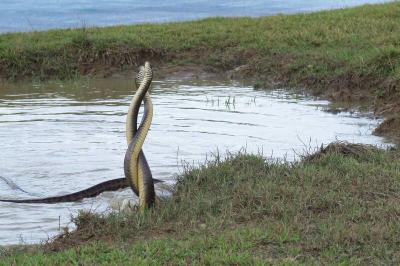
Kenting National Park service technician Yang Jien-fon (楊政峰) won a silver award in World Grand Prix Photography Awards Spring Season for his photograph of two male rat snakes intertwined in combat. Yang’s colleagues at Kenting National Park said he is a master of nature photography who has been held back by his job in civil service. The awards accept entries in all four seasons across six categories: architectural and urban photography, black-and-white and fine art photography, commercial and fashion photography, documentary and people photography, nature and experimental photography, and mobile photography. Awards are ranked according to scores and divided into platinum, gold and

More than half of the bamboo vipers captured in Tainan in the past few years were found in the city’s Sinhua District (新化), while other districts had smaller catches or none at all. Every year, Tainan captures about 6,000 snakes which have made their way into people’s homes. Of the six major venomous snakes in Taiwan, the cobra, the many-banded krait, the brown-spotted pit viper and the bamboo viper are the most frequently captured. The high concentration of bamboo vipers captured in Sinhua District is puzzling. Tainan Agriculture Bureau Forestry and Nature Conservation Division head Chu Chien-ming (朱健明) earlier this week said that the

The Chinese Nationalist Party (KMT) caucus yesterday said it opposes the introduction of migrant workers from India until a mechanism is in place to prevent workers from absconding. Minister of Labor Hung Sun-han (洪申翰) on Thursday told the Legislative Yuan that the first group of migrant workers from India could be introduced as early as this year, as part of a government program. The caucus’ opposition to the policy is based on the assessment that “the risk is too high,” KMT caucus secretary-general Lin Pei-hsiang (林沛祥) said. Taiwan has a serious and long-standing problem of migrant workers absconding from their contracts, indicating that
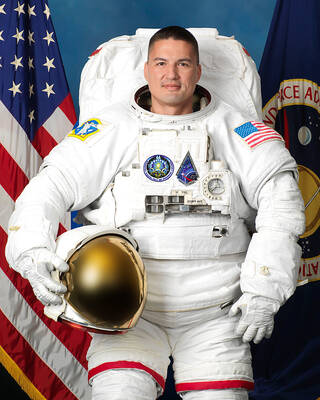
SPACE VETERAN: Kjell N. Lindgren, who helps lead NASA’s human spaceflight missions, has been on two expeditions on the ISS and has spent 311 days in space Taiwan-born US astronaut Kjell N. Lindgren is to visit Taiwan to promote technological partnerships through one of the programs organized by the US for its 250th national anniversary. Lindgren would be in Taiwan from Tuesday to Saturday next week as part of the US Bureau of Educational and Cultural Affairs’ US Speaker Program, organized to celebrate the 250th anniversary of the signing of the Declaration of Independence, the American Institute in Taiwan (AIT) said in a statement yesterday. Lindgren plans to engage with key leaders across the nation “to advance cutting-edge technological partnerships and inspire the next generation of scientists and engineers,”


 RSS
RSS