


Five prominent female mayoral and commissioner candidates for the Nov. 26 local elections unveiled their platforms in the Democratic Progressive Party’s (DPP) “Women Power” campaign video yesterday.
The candidates are looking to bolster their chances of success in Hsinchu City, and Changhua, Nantou, Hualien and Pingtung counties.
In her role as DPP chairperson, President Tsai Ing-wen (蔡英文) presented the candidates in her main address, calling the five women capable “field generals” for their wealth of experience in central and local governments, in addition to their professional accomplishments.

Photo: CNA
The candidates Tsai introduced were: Shen Hui-hung (沈慧虹) for Hsinchu City mayor; Huang Hsiu-fang (黃秀芳) for Changhua County commissioner; Frida Tsai (蔡培慧) for Nantou County commissioner; Kolas Yokata for Hualien County commissioner; and Chou Chun-mi (周春米) for Pingtung County commissioner.
“Together they will connect regions from north to south, east and west, demonstrate strong abilities and experience in office for ‘Women Power,’ with energy and determination to get things done,” Tsai said.
“DPP members at the local level have performed well, and improved programs and policies that stand up to the achievements of other parties,” she said.
Tsai criticized Chinese Nationalist Party (KMT) mayors and commissioners, saying that their administrations have lost touch with the needs of common people.
Shen said that being the only one of three candidates in Hsinchu with experience in government administration, “I can take the heat, since I have worked in the kitchen.”
“Hsinchu residents cannot depend on someone new to the job. It is my mission to continue to stoke the fire, for brilliant light and to bring happiness to Hsinchu,” she said.
Huang said she faces a tough challenge to unseat Changhua County Commissioner Wang Hui-mei (王惠美) of the KMT.
Huang said she would employ communication diligence to change the county for a better future.
“I know how to listen to people and understand the needs of this county, for which I can unite people to upgrade industries for our young generation to start new businesses and create work opportunities,” Huang said.
Frida Tsai in her race for Nantou County said: “This election is not a duel between the pan-green and pan-blue camps, but it is a choice between past and future. The corrupt ‘black gold’ KMT politicians who have colluded with criminal gangs have ruled this area for 17 years. It is time for Nantou County get a new start.”
Kolas Yokata, an Amis media broadcaster formerly with Taiwan Indigenous Television Network and former Executive Yuan spokeswoman, called on Hualien residents to end the 13-year power monopoly by KMT husband and wife Fu Kun-chi (傅?萁) and incumbent Hsu Chen-wei (徐榛蔚), who have alternated as commissioners.
“Hualien is not a fiefdom,” she said. “We need an honest person to head the county, one who is not corrupt and does not abuse her power. I would provide transparency in government and work for the common people,” she said.
A practicing lawyer and a former court judge, Chou has been chosen to succeed DPP Pingtung County Commissioner Pan Men-an (潘孟安) as a candidate, who said she would apply her experience in the justice system to safeguard local people, and elevate the county’s economy and agriculture.
“County commissioner Pan has built up a firm foundation for many programs and good infrastructure. I can continue the work to upgrade transportation and communication networks in Pingtung, and improve on medical services,” she said.

Yangmingshan National Park authorities yesterday urged visitors to respect public spaces and obey the law after a couple was caught on a camera livestream having sex at the park’s Qingtiangang (擎天崗) earlier in the day. The Shilin Police Precinct in Taipei said it has identified a suspect and his vehicle registration number, and would summon him for questioning. The case would be handled in accordance with public indecency charges, it added. The couple entered the park at about 11pm on Thursday and began fooling around by 1am yesterday, the police said, adding that the two were unaware of the park’s all-day live

A former soldier and an active-duty army officer were yesterday indicted for allegedly selling classified military training materials to a Chinese intelligence operative for a total of NT$79,440. The Taipei District Prosecutors’ Office indicted Chen Tai-yin (陳泰尹) and Lee Chun-ta (李俊達) for contravening the National Security Act (國家安全法) and the Anti-Corruption Act (貪污治罪條例). Chen left the military in September 2013 after serving alongside then-staff sergeant Lee, now an army lieutenant, at the 21st Artillery Command of the army’s Sixth Corps from 2011 to 2013, according to the indictment. Chen met a Chinese intelligence operative identified as “Wang” (王) through a friend in November

Minister of Digital Affairs Lin Yi-ching (林宜敬) yesterday cited regulatory issues and national security concerns as an expert said that Taiwan is among the few Asian regions without Starlink. Lin made the remarks on Facebook after funP Innovation Group chief executive officer Nathan Chiu (邱繼弘) on Friday said Taiwan and four other countries in Asia — China, North Korea, Afghanistan and Syria — have no access to Starlink. Starlink has become available in 166 countries worldwide, including Ukraine, Malaysia, the Philippines and Vietnam, in the six years since it became commercial, he said. While China and North Korea block Starlink, Syria is not
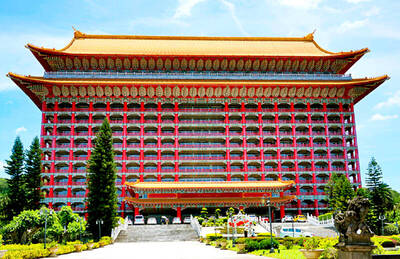
The Grand Hotel Taipei has rejected media reports claiming that the hotel had prevented CBS from broadcasting coverage of the Beijing summit between U.S. President Donald Trump and Chinese President Xi Jinping (習近平) on its premises. Media reports alleging that the hotel owner, dissatisfied with CBS’s coverage, prohibited the network from broadcasting political content on the hotel premises, are not true, the hotel said in a statement issued last night. The reports were “inconsistent with how the hotel actually handled the matter,” it said. The hotel said it received a refund request from a


 RSS
RSS