


A Taiwanese-designed biodegradable bottle cap that hermit crabs can use as their homes won gold at this year’s World Innovation and Invention Competition in South Korea, as Taiwan ranked first overall, according to the results, which were announced yesterday.
The competition attracted 243 entries from 12 countries, including Taiwan, which submitted 51 inventions, as well as Canada, Indonesia, Malaysia, the Philippines, South Korea, Thailand and Turkey.
Chen Chien-chih (陳建志), a lecturer at National Kaohsiung University of Science and Technology’s Center for Innovation and Entrepreneurship Education, led Tseng Yung-ting (曾詠婷), Lee Pin-an (李品諳), Wang Tzu-yuan (王子轅) and Ke Yung-cheng (柯永誠), a team of students from different backgrounds, in creating the biodegradable cap.
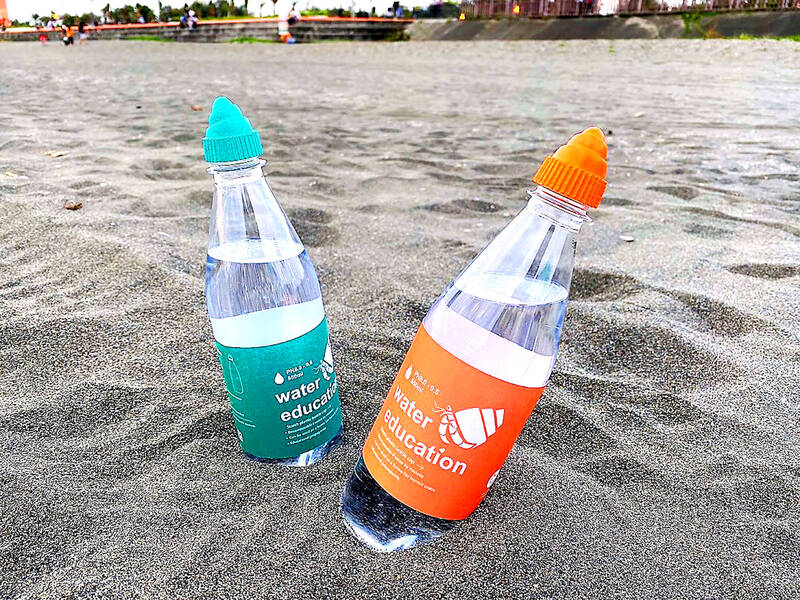
Photo courtesy of the Chinese Innovation and Invention Society
Made of plastarch material — a biodegradable thermoplastic resin that is derived from corn starch — the cap can serve as a home for hermit crabs before it decomposes.
Many hermit crabs are forced to use bottle caps as homes, as people remove the seashells the crustaceans typically use from beaches, Chen said, adding that they can die without suitable shells to live in.
The team designed a waterproof layer in the cap made with edible wax, which would not harm sea birds if ingested by accident.
Chen said he hopes the caps raise awareness about conservation.
The team has already obtained a patent for the cap.
Another gold-winning invention was a method for recycling lithium-ion batteries used in electric vehicles, conceived by Da-Yeh University environmental engineering professor Lee Ching-hwa (李清華) and graduate students Huang Yu-jui (黃于睿) and Shih Chen-hsuan (施辰宣).
The team used hydrometallurgical techniques to recycle valuable metals such as lithium, aluminum, cobalt, nickel, manganese and copper from the batteries of scrapped vehicles to promote a circular economy and curb environmental pollution, they said.
They have filed a patent for the project, which has been awarded a grant from the National Science and Technology Council.
Other gold-winning inventions included an interactive picture book created by a team led by Yen Ying-hung (閆嬰紅) at Asia Eastern University of Science and Technology; a smart pressure testing system for table tennis players devised by Tsai Meng-hsiun (蔡孟勳) and his students at National Chung Hsing University; and a fast decanter invented by Liu Wei-wu (劉緯武) and his students at Hungkuo Delin University of Technology.
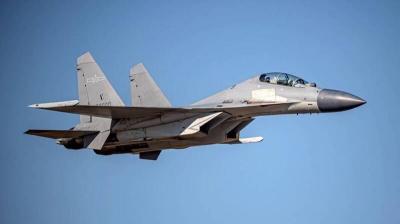
Eight Chinese naval vessels and 24 military aircraft were detected crossing the median line of the Taiwan Strait between 6am yesterday and 6am today, the Ministry of National Defense said this morning. The aircraft entered Taiwan’s northern, central, southwestern and eastern air defense identification zones, the ministry said. The armed forces responded with mission aircraft, naval vessels and shore-based missile systems to closely monitor the situation, it added. Eight naval vessels, one official ship and 36 aircraft sorties were spotted in total, the ministry said.
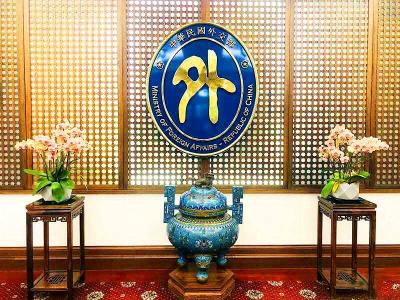
The Ministry of Foreign Affairs (MOFA) today said that if South Korea does not reply appropriately to its request to correct Taiwan’s name on its e-Arrival card system before March 31, it would take corresponding measures to alter how South Korea is labeled on the online Taiwan Arrival Card system. South Korea’s e-Arrival card system lists Taiwan as “China (Taiwan)” in the “point of departure” and “next destination” fields. The ministry said that it changed the nationality for South Koreans on Taiwan’s Alien Resident Certificates from “Korea” to “South Korea” on March 1, in a gesture of goodwill and based on the
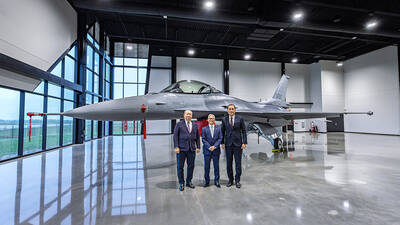
Taiwanese officials were shown the first of 66 F-16V fighter jets purchased by Taiwan from the United States, the Ministry of National Defense said yesterday, adding the aircraft has completed an initial flight test and is expected to be delivered later this year. A delegation led by Deputy Minister of National Defense Hsu Szu-chien (徐斯儉) visited Lockheed Martin’s F-16 C/D Block 70 (also known as F-16V) assembly line in South Carolina on March 16 to view the aircraft. The jet will undergo a final acceptance flight in the US before being delivered to Taiwan, the
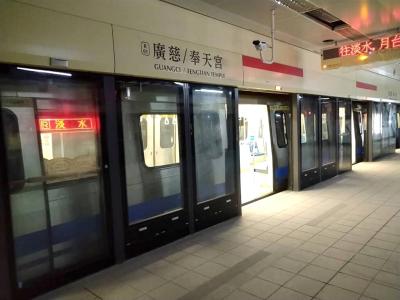
The New Taipei Metro's Sanyin Line and the eastern extension of the Taipei Metro's Tamsui-Xinyi Line (Red Line) are scheduled to begin operations in June, the National Development Council said today. The Red Line, which terminates at Xiangshan Station, would be connected by the 1.4km extension to a new eastern terminal, Guangci/Fengtian Temple Station, while the Sanyin Line would link New Taipei City's Tucheng and Yingge stations via Sanxia District (三峽). The council gave the updates at a council meeting reviewing progress on public construction projects for this year. Taiwan's annual public infrastructure budget would remain at NT$800 billion (US$25.08 billion), with NT$97.3


 RSS
RSS