

The Centers for Disease Control (CDC) on Thursday released genome sequencing results of Taiwan’s first reported monkeypox case, showing that the person had contracted the less fatal B.1 variant of the virus.
The B.1 strain contracted by the Taiwanese man is not the strain from central Africa that has a fatality rate of 10 percent, but rather the one found in monkeypox outbreaks in Europe and the US, which came from west Africa, the CDC said in a statement.
CDC Deputy Director-General Chuang Jen-hsiang (莊人祥) said that the CDC has shared the sequencing results with Germany-based science initiative GISAID, which provides open access to genomic data on influenza viruses and SARS-CoV-2 globally.
Sharing the data with GISAID contributes to international medical studies and research, Chuang said.
On June 24, the CDC reported Taiwan’s first confirmed case of monkeypox in a man who returned from Germany.
The man developed symptoms four days after arriving in Taiwan, including a fever, sore throat, muscle pain, swollen lymph nodes in the groin and a skin rash.
The man is being treated at a hospital.
A monkeypox outbreak started in the UK in the middle of May. As of Thursday, 60 nations had reported a total of 7,373 cases, with three fatalities reported in African nations.
CDC statistics indicate that Europe and the Americas have the most cases, the top five states being the UK with 1,351 cases, Germany with 1,304, Spain with 1,256, the US with 605 and France with 577.
Taiwan, South Korea and Singapore are the only countries to have reported cases in Asia, Chuang said.
However, as neither Singapore nor South Korea have published the genome sequencing results for their cases, no further comparisons on the origins and strains of the virus can be made, he said.
On June 23, the CDC officially designated monkeypox a category 2 communicable disease, citing its global spread.
The designation means that doctors are required to report confirmed or suspected cases of monkeypox to the CDC within 24 hours.
Other category 2 communicable diseases in Taiwan include dengue fever, Zika fever, typhoid fever, measles and Chikungunya.
The global monkeypox outbreak is limited, as it is spread through close contact with an infected animal or person, Chuang added.
In addition to border screening and spreading awareness of the virus, Chuang said the CDC would seek medications such as third-generation smallpox vaccines.
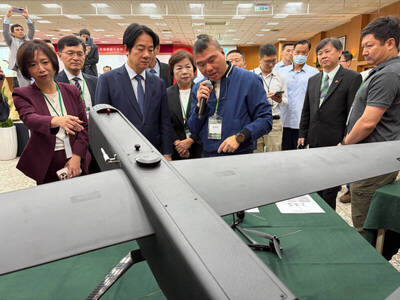
Two executives of drone supplier Jiin Ming Industry Co (錦明實業) have been detained and held incommunicado over the company's alleged use of prohibited China-made chips and camera lenses in drones supplied under recent military contracts, the Taoyuan District Prosecutors' Office said today. In a statement, prosecutors said they raided the offices of Jiin Ming — headquartered in Taoyuan — as well as those of its subsidiaries and its suppliers on Thursday last week. The raids followed a report that the company had breached its procurement contracts by putting the prohibited components into drones delivered to the military. During the raids, prosecutors summoned
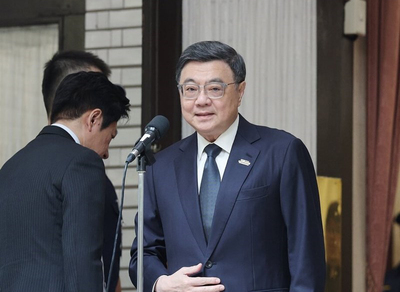
The government would continue monitoring online rumors that a pneumonic plague outbreak has spread from Russia into China and could enhance existing quarantine measures, Premier Cho Jung-tai (卓榮泰) said today. During a legislative meeting, Democratic Progressive Party Legislator Wang Ting-yu (王定宇) said rumors were circulating that the disease had spread across several Chinese provinces. He asked Cho whether the government was prepared to prevent the disease from spreading to Taiwan, given the frequent exchanges between Taiwan and China, and how concerned the government was about the alleged outbreak. The Ministry of Health and Welfare implemented border quarantine measures after briefing the Executive Yuan

South Korean boy band BigBang drew 120,000 fans to three concerts at Taipei Dome from Friday through yesterday, as the band thanked them for their support over their 20-year career. The Taipei Dome concerts were part of BigBang's "2026-2027 World Tour XX: Cosmos." Friday's concert was BigBang's first performance in Taiwan in 11 years. During the encore, group leader G-Dragon (GD) shouted "I love you" in Chinese and said he was especially happy to perform in Taiwan with bandmates Taeyang and Daesung. "Taipei, I'm very grateful to you all," GD said in Chinese, asking fans to wait for the band's return. Daesung thanked

Pulled aside onto the balcony of an empty hotel room by Chinese state security officers, a Taiwanese tourist on a trip to Tibet described facing an unnerving barrage of questions about his military background and political loyalties. The man surnamed Lin (林) reported his experience in a viral post on Threads before accepting an interview with the Central News Agency (CNA) yesterday. Lin, who works as a nurse, told CNA that he knew some Taiwanese had run afoul of Chinese law enforcement, but he thought he would be safe, as he did not post much about his personal political views online. It came


 RSS
RSS