


The administration of former president Ma Ying-jeou (馬英九) exchanged Taiwan’s sovereignty and dignity for an invitation to the World Health Assembly (WHA), Democratic Progressive Party (DPP) Legislator Wang Ting-yu (王定宇) said yesterday, adding that his was far inferior to the administration of President Tsai Ing-wen (蔡英文).
Earlier yesterday, Ma wrote on Facebook that Tsai should consider relaunching cross-strait negotiations, as mutual trust across the Tawain Strait had been the key to his administration being invited to the WHA every year.
Ma’s participation in international affairs is akin to “gouging out your eyes to cure myopia,” Wang said.
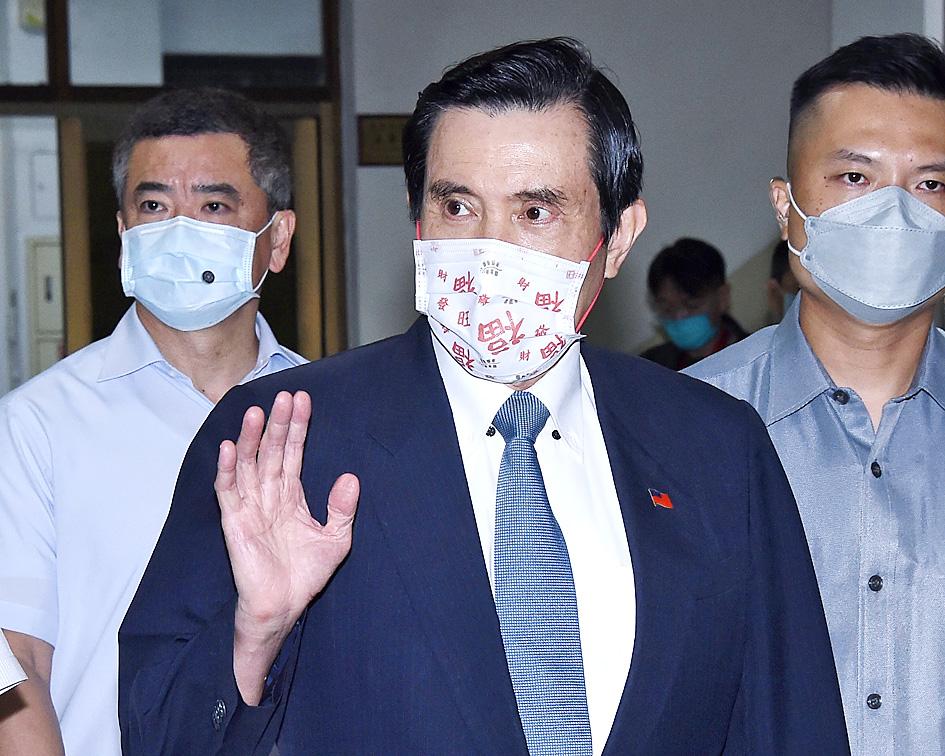
Photo: Tu Chien-jung, Taipei Times
“If we cannot uphold our claims to sovereignty, who would we represent, even if we were to participate in international organizations?” he asked.
Taiwan’s recent interactions with the international community are unprecedented and its visibility on the international stage has grown, he said.
It is a difficult path to insist that Taiwan’s participation in the international community be done without demeaning the nation and being forced to defend its sovereignty, but it is the right path, Wang said.
Taiwanese know whether Ma’s form of international participation — currying favor with China while fearing to defend national sovereignty — was good or bad.
During his eight years of governance, Taiwan’s economy declined and national defense capabilities shrank, Wang said, adding that Ma is Taiwan’s least-liked president.
Wang said that Ma should compare the two administrations in terms of stock market performance and paying national debt.
The Ma administration would lag in every department, he said.
DPP Legislator Hsu Chih-chieh (許智傑) cited a 2011 incident in which WikiLeaks uncovered American Institute in Taiwan documents showing that China and the WHO in 2005 signed a secret memorandum of understanding that said Taiwan would be referred to as “Taiwan, China.”
Former WHO director-general Margaret Chan’s (陳馮富珍) office in September 2010 issued an internal memo to all member states listing Taiwan as a province of China, Hsu said.
Taiwan’s participation in the WHA as a “province of China” is not what Taiwanese want, he said.

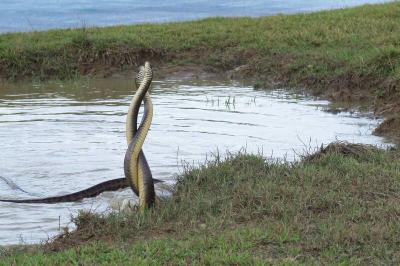
Kenting National Park service technician Yang Jien-fon (楊政峰) won a silver award in World Grand Prix Photography Awards Spring Season for his photograph of two male rat snakes intertwined in combat. Yang’s colleagues at Kenting National Park said he is a master of nature photography who has been held back by his job in civil service. The awards accept entries in all four seasons across six categories: architectural and urban photography, black-and-white and fine art photography, commercial and fashion photography, documentary and people photography, nature and experimental photography, and mobile photography. Awards are ranked according to scores and divided into platinum, gold and
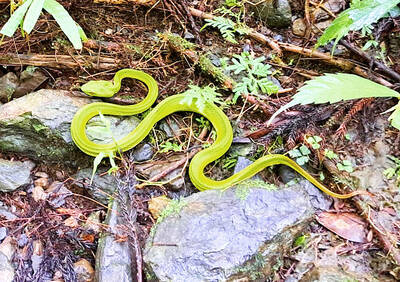
More than half of the bamboo vipers captured in Tainan in the past few years were found in the city’s Sinhua District (新化), while other districts had smaller catches or none at all. Every year, Tainan captures about 6,000 snakes which have made their way into people’s homes. Of the six major venomous snakes in Taiwan, the cobra, the many-banded krait, the brown-spotted pit viper and the bamboo viper are the most frequently captured. The high concentration of bamboo vipers captured in Sinhua District is puzzling. Tainan Agriculture Bureau Forestry and Nature Conservation Division head Chu Chien-ming (朱健明) earlier this week said that the
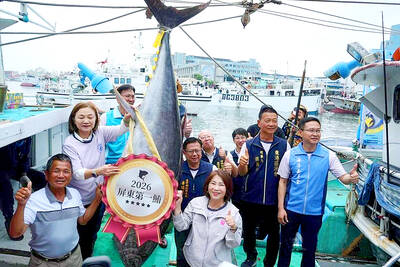
The first bluefin tuna of the season, brought to shore in Pingtung County and weighing 190kg, was yesterday auctioned for NT$10,600 (US$333.5) per kilogram, setting a record high for the local market. The auction was held at the fish market in Donggang Fishing Harbor, where the Siaoliouciou Island-registered fishing vessel Fu Yu Ching No. 2 delivered the “Pingtung First Tuna” it had caught for bidding. Bidding was intense, and the tuna was ultimately jointly purchased by a local restaurant and a local company for NT$10,600 per kilogram — NT$300 ,more than last year — for a total of NT$2.014 million. The 67-year-old skipper
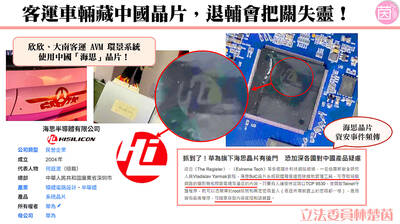
BREACH OF CONTRACT: The bus operators would seek compensation and have demanded that the manufacturer replace the chips with ones that meet regulations Two bus operators found to be using buses with China-made chips are to demand that the original manufacturers replace the systems and provide compensation for breach of contract, the Veterans Affairs Council said yesterday. Democratic Progressive Party Legislator Michelle Lin (林楚茵) yesterday said that Da Nan Bus Co and Shin-Shin Bus Co Ltd have fielded a total of 82 buses that are using Chinese chips. The bus models were made by Tron-E, while the systems provider was CYE Electronics, Lin said. Lin alleged that the buses were using chips manufactured by Huawei subsidiary HiSilicon Co, which presents a national security risk if the


 RSS
RSS