

The Mainland Affairs Council (MAC) is to investigate whether Xiamen Star TV (廈門衛視) contravened regulations by setting up a studio in Taiwan and producing political talk shows, the agency said.
On two of the station’s political talk shows — Across the Strait (兩岸直航) and Cross-Strait Cloud Living Room (兩岸雲客廳) — Xiamen, China-based hosts discussed cross-strait issues with well-known Taiwanese political pundits Chang Yu-hua (張友驊), Nice Tse-hsun (鈕則勳) and Hsieh Han-tung (謝寒冰), who were filmed in a studio in Taiwan.
The council on Monday said its investigation would seek to determine whether the station’s staff in Taiwan were involved in the program.
Photo: Chung Li-hua, Taipei Times
Since 2016, the government has allowed journalists from China to report from Taiwan in the interest of maintaining a pluralistic society, the MAC said.
Nearly 650 reporters from 10 Chinese broadcasters have reported from Taiwan, including those from Xinhua news agency, China National Radio, China Central Television and others, it said.
Southeast Television reporters were in 2020 expelled from Taiwan after they were found to have been “illegally producing political programs,” the council said.
Later that same year, Southeast Television began producing Diverse Voices From the Taiwan Strait (台海百家說), inviting members of the pan-blue camp to China to speak on the program, including former Chinese Nationalist Party (KMT) chairwoman Hung Hsiu-chu (洪秀柱) and New Party spokesman Wang Ping-chung (王炳忠).
Sources said that Chinese reporters in Taiwan do not attend MAC and Ministry of Foreign Affairs news conferences and do not include comments from Taiwanese officials in their reporting, prompting suspicions that they are engaging in “united front” tactics aimed at influencing public opinion and sowing division in Taiwan.
Democratic Progressive Party Legislator Michelle Lin (林楚茵) said that all broadcast media in China is under the control of the Publicity Department of the Central Committee of the Communist Party of China.
If Chinese reporters in Taiwan are found engaging in activities unrelated to the work permitted by their visas, it warrants investigation, and if they are found to have engaged in such behavior, their permits should be revoked for contravening cross-strait regulations, she said.
The government should devise a mechanism for investigating reports of Chinese journalists engaged in the dissemination of propaganda or disinformation, so that they are denied working permits, she added.
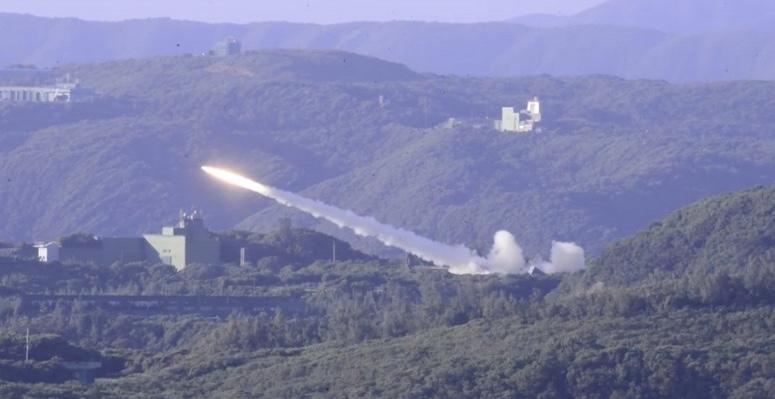
A Chinese military drone was spotted conducting reconnaissance off Taitung County as President William Lai (賴清德) visited Pingtung County this morning to inspect a drill of the armed forces’ precision-strike capabilities, prompting the military to closely monitor its actions. Today was the final day of a three-day military exercise at Jioupeng Base (九鵬基地) to test the joint combat capabilities of the armed forces and coast guard. The exercise began on Wednesday simulating air defense interception and yesterday tested long-range strike capabilities and new air defense weapons. This morning, the military conducted a final exercise involving air defense, anti-ship and drone operations. Military sources said

OCT. 31: The antiviral drugs Tamiflu and Eraflu have been distributed to about 4,000 medical facilities nationwide for people in seven groups who develop flu-like symptoms As the domestic influenza epidemic enters its peak season and continues to escalate, the Centers for Disease Control (CDC) yesterday announced that publicly funded influenza antiviral drugs for seven eligible groups have been extended to Oct. 31, allowing those who develop flu-like symptoms to receive the medication without undergoing a rapid influenza test. The CDC has extended the expanded use of flu antiviral drugs to seven groups: healthcare and influenza-prevention personnel; residents and staff at nursing homes, long-term care facilities and similar institutions; kindergarten and daycare workers and home-based caregivers; students from kindergarten through high school, vocational high school and the
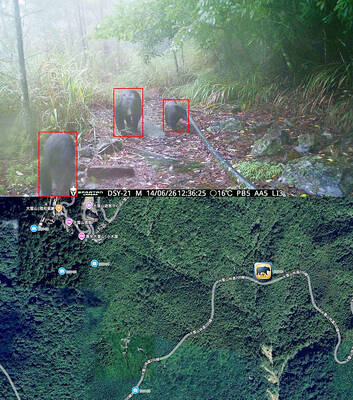
RARE PEEK: The footage released showed one of the bears staying in a cave for as long as 70 days, providing the first record of Formosan black bear’s overwintering The Forestry and Nature Conservation Agency yesterday released tracking records of released Formosan black bears for the first time, showing that they get much closer to human settlements than previously thought. The agency said it had captured two bears, Da Qu-ali (達古阿里) and Aziman (阿里曼), in indigenous villages in Hualien County and began to track them with a camera-mounted satellite collar after releasing them back into the wild. The results confirmed that the bears have moved from deep mountain areas into lowland hills closer to human communities, leading to an increase in human-bear conflicts, it said. The agency has introduced artificial intelligence-assisted early

DIPLOMATIC TOUR: Chinese President Xi Jinping began a series of overseas visits last month to Kyrgyzstan, Egypt and India, aimed at securing leverage, an official said Recent Chinese diplomatic and military moves are aimed at creating pressure ahead of a planned meeting between Chinese President Xi Jinping (習近平) and US President Donald Trump, National Security Council adviser Huang Chung-yen (黃重諺) said. Trump when visiting China in May extended an invitation to Xi to visit Washington on Sept. 24. China is yet to officially announce plans for Xi’s visit to the US. In an interview with the Liberty Times (sister paper of the Taipei Times) on Thursday, Huang said Xi’s overseas visits, China’s “gray zone” activities along the First Island Chain and efforts to expand its trade surplus with the


 RSS
RSS