


The Ministry of Foreign Affairs (MOFA) yesterday reiterated its pledge to assist with sales of Lithuanian goods following pressure from China after the Taiwanese Representative Office in Lithuania opened in Vilnius last year.
China has downgraded diplomatic ties with Lithuania over the decision and has instituted measures making it difficult for Lithuanian goods to enter China.
Beijing is also attempting to exert its influence on other nations to stop importing Lithuanian products.
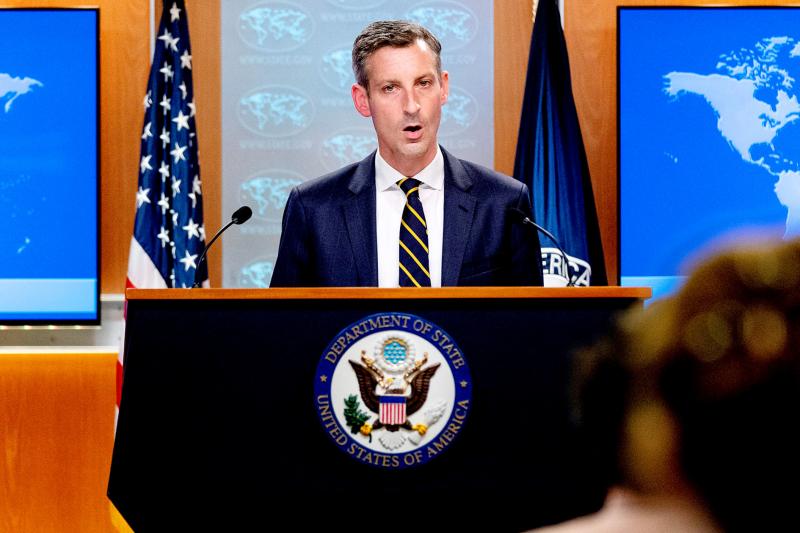
Photo: Reuters
The Taiwanese government and businesses have reached out to assist, with a recent example being Taiwan Tobacco and Liquor Corp’s purchase of 20,000 bottles of Lithuanian rum that had been expected to be denied passage through Chinese customs.
Ministry spokeswoman Joanne Ou (歐江安) said that Taiwan is familiar with acts of Chinese oppression, and the government and public are in full support of Lithuania.
Based on Taiwan’s internal needs, the government would continue to push for purchases of Lithuanian goods, while stepping up efforts to establish channels of distribution within Taiwan, Ou said.
The ministry is not at liberty to name companies’ goods that might be imported, but the ministry is certain that quality goods from Lithuania will be widely accepted by Taiwanese, she said.
Chinese Ministry of Foreign Affairs spokesman Wang Wenbin (汪文斌) on Monday again urged Lithuania to “correct its mistakes,” while criticizing the US for encouraging Vilnius to disregard Beijing’s “one China” policy.
The US support for Lithuania is part of Washington’s political strategy to counter China using Taiwan, Wang said, adding that the US would find that it is playing with fire.
US Department of State spokesman Ned Price said that Washington always welcomed the deepening of Taiwanese-Lithuanian collaboration, including the establishment of representative offices in their respective capitals.
The US feels that the decision to allow the office in Vilnius to use “Taiwanese” in its name was a significant step to expand Taiwan’s meaningful participation in the international community.

Considering that most countries issue more than five denominations of banknotes, the central bank has decided to redesign all five denominations, the bank said as it prepares for the first major overhaul of the banknotes in more than 24 years. Central bank Governor Yang Chin-lung (楊金龍) is expected to report to the Legislative Yuan today on the bank’s operations and the redesign’s progress. The bank in a report sent to the legislature ahead of today’s meeting said it had commissioned a survey on the public’s preferences. Survey results showed that NT$100 and NT$1,000 banknotes are the most commonly used, while NT$200 and NT$2,000

The Centers for Disease Control (CDC) yesterday reported the first case of a new COVID-19 subvariant — BA.3.2 — in a 10-year-old Singaporean girl who had a fever upon arrival in Taiwan and tested positive for the disease. The girl left Taiwan on March 20 and the case did not have a direct impact on the local community, it said. The WHO added the BA.3.2 strain to its list of Variants Under Monitoring in December last year, but this was the first imported case of the COVID-19 variant in Taiwan, CDC Deputy Director-General Lin Ming-cheng (林明誠) said. The girl arrived in Taiwan on

South Korea is planning to revise its controversial electronic arrival card, a step Taiwanese officials said prompted them to hold off on planned retaliatory measures, a South Korean media report said yesterday. A Yonhap News Agency report said that the South Korean Ministry of Foreign Affairs is planning to remove the “previous departure place” and “next destination” fields from its e-arrival card system. The plan, reached after interagency consultations, is under review and aims to simplify entry procedures and align the electronic form with the paper version, a South Korean ministry official said. The fields — which appeared only on the electronic form

The Ministry of Foreign Affairs (MOFA) is suspending retaliation measures against South Korea that were set to take effect tomorrow, after Seoul said it is updating its e-arrival system, MOFA said today. The measures were to be a new round of retaliation after Taiwan on March 1 changed South Korea's designation on government-issued alien resident certificates held by South Korean nationals to "South Korea” from the "Republic of Korea," the country’s official name. The move came after months of protests to Seoul over its listing of Taiwan as "China (Taiwan)" in dropdown menus on its new online immigration entry system. MOFA last week


 RSS
RSS