


Taipei needs to continue to promote itself as a Muslim-friendly city so that it can be ready to welcome Muslim visitors when international tourism resumes, Taipei Deputy Mayor Tsai Ping-kun (蔡炳坤) told a news conference yesterday.
“Once our borders open for tourists, we need to have sufficient facilities for Muslim tourists,” Tsai said. “Even though we do not have many Muslim friends here at the moment, we are committed to building a foundation.”
If efforts to develop a Muslim-friendly city stop because of the COVID-19 pandemic, Taipei would not be ready when borders open for tourism, he said, adding that he understands the pandemic has heavily affected the tourism industry.
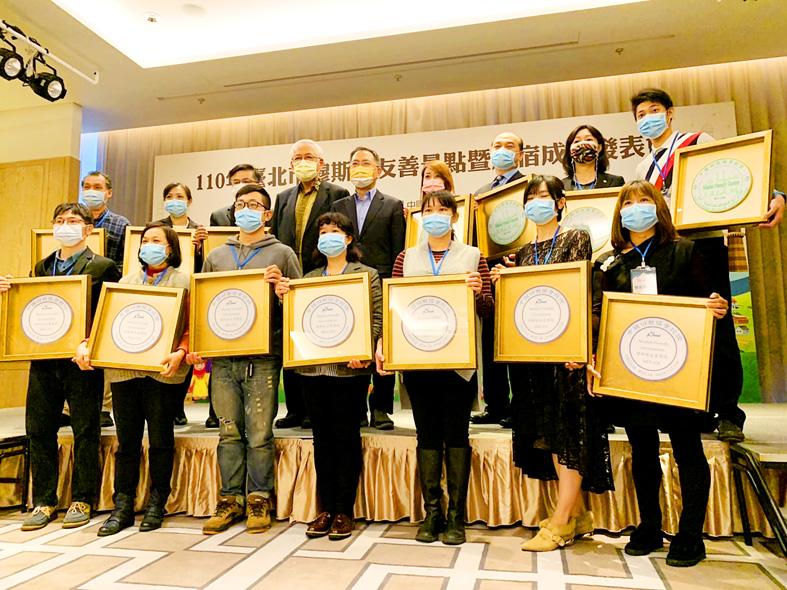
Photo courtesy of the Taipei City Government Department of Information and Tourism
Despite the lack of tourists, efforts have not gone to waste, he said.
Taiwan this year was ranked the second most attractive nation among those that are not Organization of Islamic Cooperation (OIC) destinations for Muslim travelers as listed by the Global Muslim Travel Index, Tsai said.
The index, which was released in July, showed Taiwan and the UK tied for second among the top non-OIC destinations for Muslims, with a score of 57, trailing Singapore’s 69.
“We want to compete with Singapore for the No. 1 spot, especially as almost every visitor to Taiwan visits the capital,” Tsai said.
Taipei has been working with the Chinese Muslim Association for the past three years on the accreditation of Muslim-friendly places or tourist sites, he said.
Forty-nine hotels in Taipei have been certified, as have 16 sights in the city, he said.
“Taipei Mayor Ko Wen-je (柯文哲) hopes to make Taipei the world’s most Muslim-friendly tourist spot, and we are approaching that goal step by step,” Tsai said.
Separately, Chinese Muslim Association vice president Salahuding Ma (馬超彥) told reporters that he has noticed the efforts of Taipei to make itself Muslim-friendly, commending Taiwan’s friendly environment for making it possible.
“Taiwan is a very safe, very friendly and convenient place,” Ma said.
Ma said that a Muslim told him that while traveling in Taiwan, he was allowed to pray in convenience stores, which was not possible in some Western countries.
“Taiwan touches hearts, which visitors tell others when they return home,” Ma said.
The association provides advice and evaluates premises, such as making sure hotels signify the kiblah — the direction of Kaaba in Mecca, Saudi Arabia, toward which Muslims pray — in prayer rooms and that alcoholic beverages are not provided in minibars.
Novi Irmania, a 31-year-old Indonesian doctoral student who has lived in Taiwan for seven years, said that Taipei is her second home, because it has many Muslim-friendly facilities.
“In many of the prayer rooms, they have kiblah for Muslims and also provide prayer mats, schedules and other items,” she said. “It is really touching.”
Malaysian Mohamad bin Mos, who has lived in Taiwan for five years and has cycled around Taiwan twice, said he is impressed with Taipei’s efforts to become a Muslim-friendly city.
It is convenient and safe to find a place to pray, while halal food is plentiful in Taipei, he said. “It is very safe, you can perform your prayers and rituals without any difficulties.”


China has reserved offshore airspace in the Yellow Sea and East China Sea from March 27 to May 6, issuing alerts usually used to warn of military exercises, although no such exercises have been announced, the Wall Street Journal (WSJ) reported yesterday. Reserving such a large area for 40 days without explanation is an “unusual step,” as military exercises normally only last a few days, the paper said. These alerts, known as Notice to Air Missions (Notams), “are intended to inform pilots and aviation authorities of temporary airspace hazards or restrictions,” the article said. The airspace reserved in the alert is
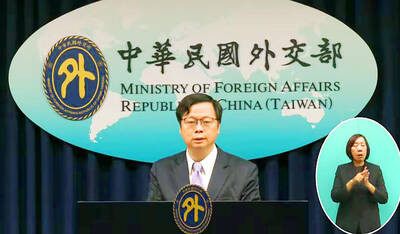
NAMING SPAT: The foreign ministry called on Denmark to propose an acceptable solution to the erroneous nationality used for Taiwanese on residence permits Taiwan has revoked some privileges for Danish diplomatic staff over a Danish permit that lists “Taiwan” as “China,” Eric Huang (黃鈞耀), head of the Ministry of Foreign Affairs’ Department of European Affairs, told a news conference in Taipei yesterday. Reporters asked Huang whether the Danish government had responded to the ministry’s request that it correct the nationality on Danish residence permits of Taiwanese, which has been listed as “China” since 2024. Taiwan’s representative office in Denmark continues to communicate with the Danish government, and the ministry has revoked some privileges previously granted to Danish representatives in Taiwan and would continue to review

More than 6,000 Taiwanese students have participated in exchange programs in China over the past two years, despite the Mainland Affairs Council’s (MAC) “orange light” travel advisory, government records showed. The MAC’s publicly available registry showed that Taiwanese college and university students who went on exchange programs across the Strait numbered 3,592 and 2,966 people respectively. The National Immigration Agency data revealed that 2,296 and 2,551 Chinese students visited Taiwan for study in the same two years. A review of the Web sites of publicly-run universities and colleges showed that Taiwanese higher education institutions continued to recruit students for Chinese educational programs without
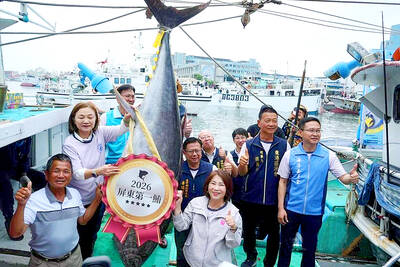
The first bluefin tuna of the season, brought to shore in Pingtung County and weighing 190kg, was yesterday auctioned for NT$10,600 (US$333.5) per kilogram, setting a record high for the local market. The auction was held at the fish market in Donggang Fishing Harbor, where the Siaoliouciou Island-registered fishing vessel Fu Yu Ching No. 2 delivered the “Pingtung First Tuna” it had caught for bidding. Bidding was intense, and the tuna was ultimately jointly purchased by a local restaurant and a local company for NT$10,600 per kilogram — NT$300 ,more than last year — for a total of NT$2.014 million. The 67-year-old skipper


 RSS
RSS