


Whether Taiwan reopens its borders would depend on the nation’s vaccination coverage rate and the COVID-19 situation in other countries, Deputy Minister of Health and Welfare Shih Chung-liang (石崇良) said yesterday.
The Ministry of Health and Welfare is aiming for a 70 percent first-dose vaccination coverage and 30 percent two-dose coverage as part of its consideration, Shih told a media briefing following the weekly Cabinet meeting.
In spite of a relatively stable COVID-19 situation in Taiwan, and calls from foreign missions and businesses in the country to allow more international travelers, the government is maintaining strict border control measures.
Since March last year, Taiwan has banned most arrivals except for citizens and foreign residents, and required those who do enter the country to undergo a stringent 14-day quarantine.
The government further tightened its border restrictions in May in the wake of a surge in domestic COVID-19 infections.
Exceptions to the visitor ban can only be made in emergencies or for humanitarian reasons, but travelers have to apply in advance to the Central Epidemic Command Center (CECC) for permission to enter the country.
As of yesterday, about 5.69 million people, or 24.3 percent of the population, had been fully vaccinated, with 15.2 million people, or 65 percent of the population, having received one dose, CECC data showed.
MIXING VACCINES
Separately yesterday, Minister of Health and Welfare Chen Shih-chung (陳時中), who heads the center, said that mixing certain brands for first and second doses would be allowed for all age groups after the 13th round of COVID-19 vaccinations, depending on the availability of vaccine supplies.
The ministry’s report, submitted to the Legislative Yuan, said that its Advisory Committee on Immunization Practices had decided in July that people in categories 1 to 3 of its vaccination priority list who were inoculated with the AstraZeneca vaccine for their dose could receive an mRNA vaccine — Pfizer BioNTech or Moderna — for their second dose.
The report said that in the 13th round, the BioNTech vaccine could be provided as a second dose to those who had received the AstraZeneca vaccine more than 10 weeks ago, to increase the nation’s vaccination coverage rate.
Chen said that the Moderna vaccine would only be available for mixed vaccination for those in the first category, while BioNTech could be available to all age groups if deliveries are steady and supply is adequate.
The nation yesterday reported two new imported COVID-19 cases and zero local infections or deaths from the disease.
One of the imported cases was a Taiwanese in her 20s who returned on Oct. 6 from the US, and the other was a Taiwanese man in his 60s, a resident of Myanmar, who arrived on Sept. 24.
To date, Taiwan has confirmed a total of 16,349 COVID-19 cases since the pandemic began in early last year, of which 14,585 were domestic infections.
Additional reporting by CNA

LOUD AND PROUD Taiwan might have taken a drubbing against Australia and Japan, but you might not know it from the enthusiasm and numbers of the fans Taiwan might not be expected to win the World Baseball Classic (WBC) but their fans are making their presence felt in Tokyo, with tens of thousands decked out in the team’s blue, blowing horns and singing songs. Taiwanese fans have packed out the Tokyo Dome for all three of their games so far and even threatened to drown out home team supporters when their team played Japan on Friday. They blew trumpets, chanted for their favorite players and had their own cheerleading squad who dance on a stage during the game. The team struggled to match that exuberance on the field, with
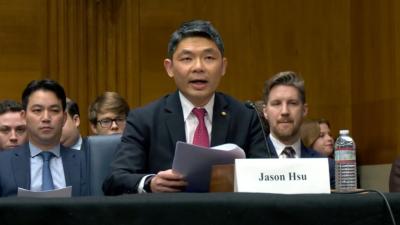
If China chose to invade Taiwan tomorrow, it would only have to sever three undersea fiber-optic cable clusters to cause a data blackout, Jason Hsu (許毓仁), a senior fellow at the Hudson Institute and former Chinese Nationalist Party (KMT) legislator, told a US security panel yesterday. In a Taiwan contingency, cable disruption would be one of the earliest preinvasion actions and the signal that escalation had begun, he said, adding that Taiwan’s current cable repair capabilities are insufficient. The US-China Economic and Security Review Commission (USCC) yesterday held a hearing on US-China Competition Under the Sea, with Hsu speaking on
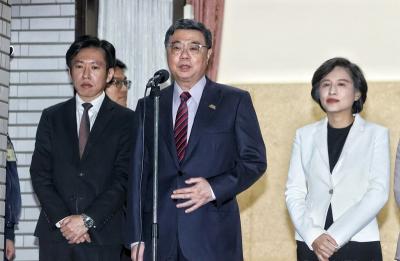
Taiwan is awaiting official notification from the US regarding the status of the Agreement on Reciprocal Trade (ART) after the US Supreme Court ruled US President Donald Trump's global tariffs unconstitutional. Speaking to reporters before a legislative hearing today, Premier Cho Jung-tai (卓榮泰) said that Taiwan's negotiation team remains focused on ensuring that the bilateral trade deal remains intact despite the legal challenge to Trump's tariff policy. "The US has pledged to notify its trade partners once the subsequent administrative and legal processes are finalized, and that certainly includes Taiwan," Cho said when asked about opposition parties’ doubts that the ART was
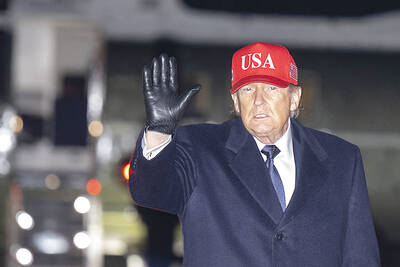
The US’ joint strikes with Israel on Iran dismantled a key pillar of China’s regional strategy, removing an important piece in Beijing’s potential Taiwan Strait scenario, said Zineb Riboua, a senior researcher at the Hudson Institute’s Center for Middle East Peace and Security. In an article titled: “The Iran Question Is All About China,” Riboua said that understanding the Iran issue in the context of China’s “grand strategy” is essential to fully grasp the complexity of the situation. Beijing has spent billions of dollars over the years turning Iran into a “structural strategic asset,” diverting US military resources in the


 RSS
RSS