


A study coauthored by Taiwanese economist Lin Ming-jen (林明仁) that examines long-term care needs and women in the workplace has won this year’s APEC Healthy Women, Healthy Economies Research Prize.
The winner was announced during a virtual Women and the Economy Forum on Friday last week.
The study, titled “How Much Do Long-Term Care Needs Affect Female Labor Supply?”, has yet to be formally published, Lin told the Taipei Times by telephone yesterday.
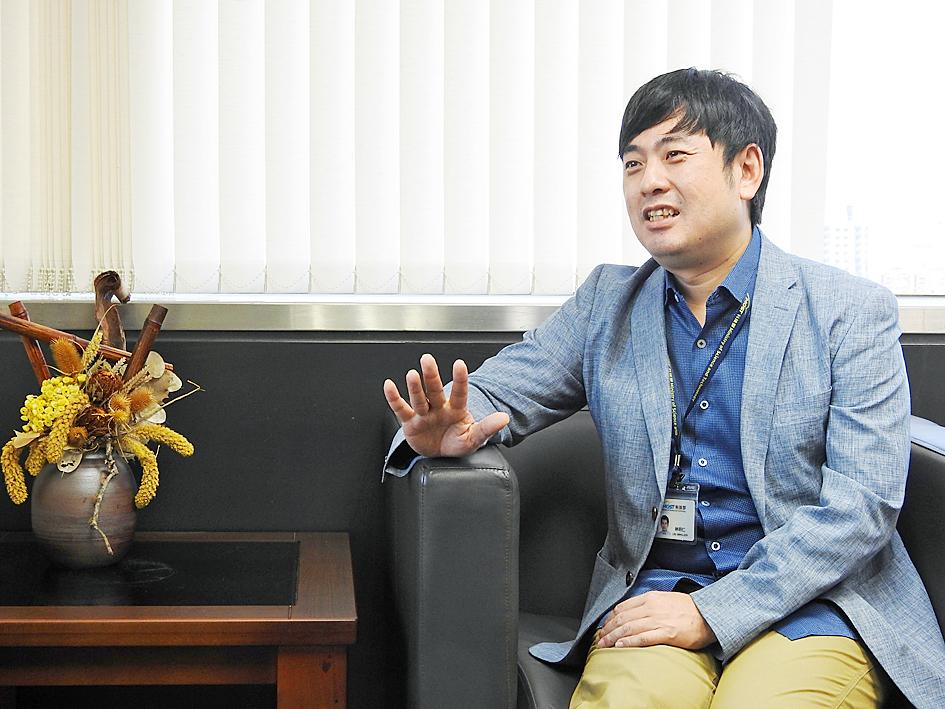
Photo courtesy of the Ministry of Science and Technology
The researchers used regression analysis and event study methods to analyze government data from 2008 to 2019 on taxes, labor insurance, disability insurance and foreign caregiver applications, he said.
Married daughters are 15 percent less likely to participate in the labor market than married sons when parents have long-term care needs, Lin said.
Daughters, not sons, are typically the major caregivers for sick or aging parents, he said, adding that this is the perpetuation of a common stereotype in Asian countries, where men are thought to be superior to women.
To care for a sick parent, many women leave the workplace or choose a less challenging job, and they usually have difficulty returning to the workplace, even after the parent dies and their caregiving responsibilities are finished, Lin said.
Men and women aged 25 to 30 have similar workforce participation rates, but the gap widens after age 30, the research showed.
The study was commissioned in late 2019 by the Executive Yuan’s Department of Gender Equality, Lin said, expressing the hope that it would lead to an evidence-based evaluation of labor policy in Taiwan.
In January last year, Lin left his post as a professor in National Taiwan University’s Department of Economics to begin a three-year term as director-general of the Ministry of Science and Technology’s Department of Humanities and Social Sciences.
The study’s other authors were Lin’s students. Chen Kuan-ming (陳冠銘) is a post-doctoral fellow at the US’ National Bureau of Economic Research and Hsiang Chen-wei (項振緯) is a doctoral student at University College London.
“Unpaid care work, which disproportionately falls on women’s shoulders, is vital for societies to function,” Renee Graham, chair of APEC’s Policy Partnership on Women and the Economy, said in the news release announcing the winning study yesterday.
“If we are to build back better and build back more inclusively, we must find ways to support the women who perform the majority of this labor — often without recognition or full appreciation for the important work they are doing,” she said.
The research prize winner was awarded US$20,000, while the two runners-up — from China and Singapore — received US$5,000 each, APEC said.

Considering that most countries issue more than five denominations of banknotes, the central bank has decided to redesign all five denominations, the bank said as it prepares for the first major overhaul of the banknotes in more than 24 years. Central bank Governor Yang Chin-lung (楊金龍) is expected to report to the Legislative Yuan today on the bank’s operations and the redesign’s progress. The bank in a report sent to the legislature ahead of today’s meeting said it had commissioned a survey on the public’s preferences. Survey results showed that NT$100 and NT$1,000 banknotes are the most commonly used, while NT$200 and NT$2,000

The Centers for Disease Control (CDC) yesterday reported the first case of a new COVID-19 subvariant — BA.3.2 — in a 10-year-old Singaporean girl who had a fever upon arrival in Taiwan and tested positive for the disease. The girl left Taiwan on March 20 and the case did not have a direct impact on the local community, it said. The WHO added the BA.3.2 strain to its list of Variants Under Monitoring in December last year, but this was the first imported case of the COVID-19 variant in Taiwan, CDC Deputy Director-General Lin Ming-cheng (林明誠) said. The girl arrived in Taiwan on

South Korea is planning to revise its controversial electronic arrival card, a step Taiwanese officials said prompted them to hold off on planned retaliatory measures, a South Korean media report said yesterday. A Yonhap News Agency report said that the South Korean Ministry of Foreign Affairs is planning to remove the “previous departure place” and “next destination” fields from its e-arrival card system. The plan, reached after interagency consultations, is under review and aims to simplify entry procedures and align the electronic form with the paper version, a South Korean ministry official said. The fields — which appeared only on the electronic form

The Ministry of Foreign Affairs (MOFA) is suspending retaliation measures against South Korea that were set to take effect tomorrow, after Seoul said it is updating its e-arrival system, MOFA said today. The measures were to be a new round of retaliation after Taiwan on March 1 changed South Korea's designation on government-issued alien resident certificates held by South Korean nationals to "South Korea” from the "Republic of Korea," the country’s official name. The move came after months of protests to Seoul over its listing of Taiwan as "China (Taiwan)" in dropdown menus on its new online immigration entry system. MOFA last week


 RSS
RSS