


Pet dogs on Sunday were permitted into the Kaohsiung Public Library for the first time, marking what the organizers called an important step toward a more animal-friendly society.
Illustrator Lee Chin-lun (李瑾倫), known for her depictions of and advocacy for animals, and others collectively brought 14 dogs to a lecture, where they discussed their experiences raising pets as members of the family.
Attendees said that the lecture felt like a family reunion or therapy.

Photo: Huang Hsu-lei, Taipei Times
Since 2016, the Mitaka City Library in Tokyo has offered reading therapy dogs, a service inspired by efforts in the US, Kaohsiung Public Library director Lin Yi-cheng (林奕成) said.
The program is designed to help children who find it difficult to speak or read directly to others by training dogs to listen while they read out loud, Lin said.
It has since expanded to several libraries across Japan, he said.
People in Taiwan are looking for connection and therapeutic outlets, especially in the four months since COVID-19 alerts began, Lee said, adding that picture books are a way to elevate feelings of companionship between people and animals.
It was the first time pets were allowed into the Kaohsiung library, offering readers a novel experience and representing an important step toward realizing a society more friendly to animals, Lin said.
However, the library said that it does not mark a change in policy, as animals are generally still not allowed in the building.
An attendee also surnamed Lee (李) said that they were thrilled to bring their dog into a library.
Hearing Lee Chin-lun speak helped them better understand the deep connection between dogs and humans, they said, adding that hopefully the library would admit dogs again.

The Centers for Disease Control (CDC) yesterday reported the first case of a new COVID-19 subvariant — BA.3.2 — in a 10-year-old Singaporean girl who had a fever upon arrival in Taiwan and tested positive for the disease. The girl left Taiwan on March 20 and the case did not have a direct impact on the local community, it said. The WHO added the BA.3.2 strain to its list of Variants Under Monitoring in December last year, but this was the first imported case of the COVID-19 variant in Taiwan, CDC Deputy Director-General Lin Ming-cheng (林明誠) said. The girl arrived in Taiwan on

South Korea is planning to revise its controversial electronic arrival card, a step Taiwanese officials said prompted them to hold off on planned retaliatory measures, a South Korean media report said yesterday. A Yonhap News Agency report said that the South Korean Ministry of Foreign Affairs is planning to remove the “previous departure place” and “next destination” fields from its e-arrival card system. The plan, reached after interagency consultations, is under review and aims to simplify entry procedures and align the electronic form with the paper version, a South Korean ministry official said. The fields — which appeared only on the electronic form

The Ministry of Foreign Affairs (MOFA) is suspending retaliation measures against South Korea that were set to take effect tomorrow, after Seoul said it is updating its e-arrival system, MOFA said today. The measures were to be a new round of retaliation after Taiwan on March 1 changed South Korea's designation on government-issued alien resident certificates held by South Korean nationals to "South Korea” from the "Republic of Korea," the country’s official name. The move came after months of protests to Seoul over its listing of Taiwan as "China (Taiwan)" in dropdown menus on its new online immigration entry system. MOFA last week
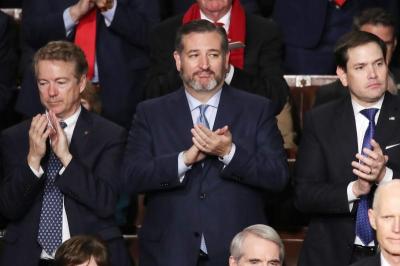
A bipartisan group of US senators has introduced a bill to enhance cooperation with Taiwan on drone development and to reduce reliance on supply chains linked to China. The proposed Blue Skies for Taiwan Act of 2026 was introduced by Republican US senators Ted Cruz and John Curtis, and Democratic US senators Jeff Merkley and Andy Kim. The legislation seeks to ease constraints on Taiwan-US cooperation in uncrewed aerial systems (UAS), including dependence on China-sourced components, limited access to capital and regulatory barriers under US export controls, a news release issued by Cruz on Wednesday said. The bill would establish a "Blue UAS


 RSS
RSS