


The military should redefine its understanding of victory, which under the current circumstances is not so much winning battles, but preventing the enemy from occupying the nation, former chief of the general staff admiral Lee Hsi-ming (李喜明) said.
The former deputy minister of national defense made the remarks at a seminar hosted by the Academia Sinica’s Institute of Sociology in Taipei on Friday.
The event was titled: “Challenges for the Taiwanese military’s relationship with society under the overall defense concept.”
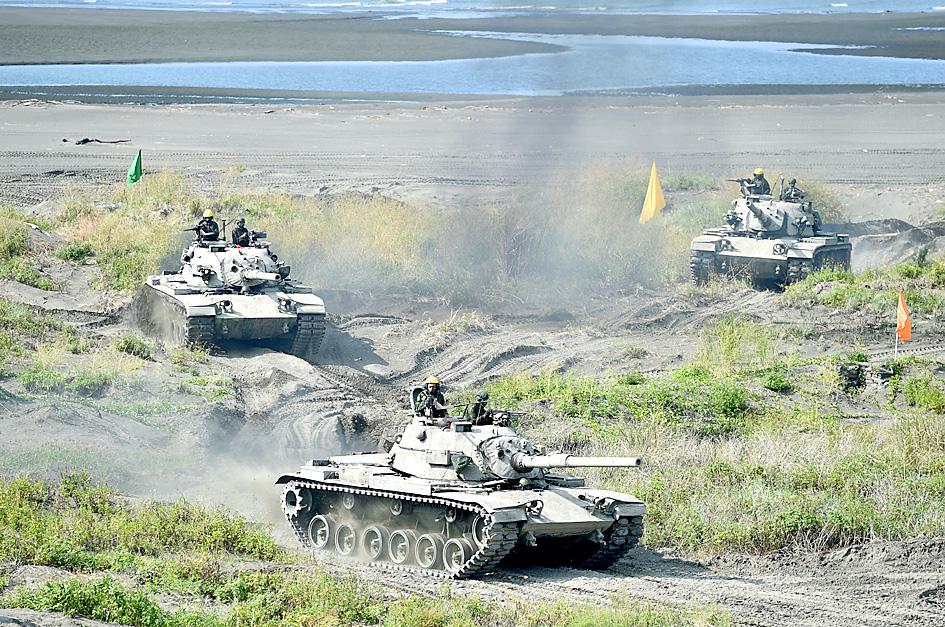
Photo: Peter Lo, Taipei Times
Lee said that last month’s events in Afghanistan had proven that the US had been unable to control the country, despite having won every major battle of the 20-year war.
In light of the US’ defeat in Afghanistan, the military should understand that victory means preventing the enemy from imposing its political will on the nation, he said.
Chinese President Xi Jinping (習近平) has repeatedly said that the so-called “reunification” with Taiwan is crucial to his ambition of a glorious national revival, he added.
This means that Xi might start a cross-strait war in reaction to internal pressure or as a means to “secure his place in history,” Lee said.
Taiwan should ready itself to counter a Chinese aggression and boost its military strength to deter China from attacking, Lee said.
Should China make an attempt to force unification, Taiwan needs a military that is strong enough to fight off the attack, he said.
However, as China’s annual military spending is about US$200 billion — compared with Taiwan’s NT$12 billion (US$432.7 million) — and its naval forces have overtaken the US in strength, deterring or defending against an attack might not be possible, he said.
Therefore, the government’s focus on acquiring advanced jets and warships is unwise, he said.
Foreign defense experts assume that a Chinese attack with standoff missiles would destroy most of the military’s aircraft and ships, or render the nation’s military bases inoperable, he said.
Taiwan should instead focus on boosting its reserve units and harness the power of its society, he said.
The goal should be resisting occupation, as outlined in the nation’s defense concepts, he said.
Should Taiwan fail to implement a viable civil defense program, it would have no deterrence against communist aggression, he said.
The government must implement a civil defense strategy that makes full use of civilian assets, such as firefighters and the coast guard personnel, he added.

The Centers for Disease Control (CDC) yesterday reported the first case of a new COVID-19 subvariant — BA.3.2 — in a 10-year-old Singaporean girl who had a fever upon arrival in Taiwan and tested positive for the disease. The girl left Taiwan on March 20 and the case did not have a direct impact on the local community, it said. The WHO added the BA.3.2 strain to its list of Variants Under Monitoring in December last year, but this was the first imported case of the COVID-19 variant in Taiwan, CDC Deputy Director-General Lin Ming-cheng (林明誠) said. The girl arrived in Taiwan on

South Korea is planning to revise its controversial electronic arrival card, a step Taiwanese officials said prompted them to hold off on planned retaliatory measures, a South Korean media report said yesterday. A Yonhap News Agency report said that the South Korean Ministry of Foreign Affairs is planning to remove the “previous departure place” and “next destination” fields from its e-arrival card system. The plan, reached after interagency consultations, is under review and aims to simplify entry procedures and align the electronic form with the paper version, a South Korean ministry official said. The fields — which appeared only on the electronic form

The Ministry of Foreign Affairs (MOFA) is suspending retaliation measures against South Korea that were set to take effect tomorrow, after Seoul said it is updating its e-arrival system, MOFA said today. The measures were to be a new round of retaliation after Taiwan on March 1 changed South Korea's designation on government-issued alien resident certificates held by South Korean nationals to "South Korea” from the "Republic of Korea," the country’s official name. The move came after months of protests to Seoul over its listing of Taiwan as "China (Taiwan)" in dropdown menus on its new online immigration entry system. MOFA last week
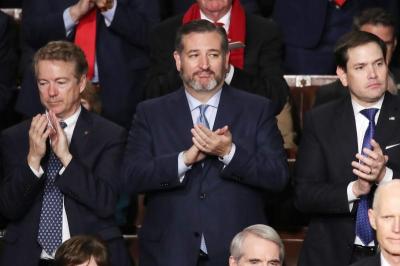
A bipartisan group of US senators has introduced a bill to enhance cooperation with Taiwan on drone development and to reduce reliance on supply chains linked to China. The proposed Blue Skies for Taiwan Act of 2026 was introduced by Republican US senators Ted Cruz and John Curtis, and Democratic US senators Jeff Merkley and Andy Kim. The legislation seeks to ease constraints on Taiwan-US cooperation in uncrewed aerial systems (UAS), including dependence on China-sourced components, limited access to capital and regulatory barriers under US export controls, a news release issued by Cruz on Wednesday said. The bill would establish a "Blue UAS


 RSS
RSS