


The Democratic Progressive Party (DPP) yesterday welcomed a report that Japan’s ruling Liberal Democratic Party (LDP) is planning to hold security talks with the DPP soon, possibly this month.
The talks, to be held at the LDP’s request, would be attended by LDP Foreign Affairs Division Director Masahisa Sato and National Defense Division Director Taku Otsuka, the English-language Japan Times reported on Wednesday, citing anonymous sources.
The talks are regarded as a “two-plus-two” security dialogue between the ruling parties of Taiwan and Japan, while participants from Taiwan have not been decided, it reported.
In light of growing tension between Taiwan and China, the LDP established a project team under its Foreign Affairs Division in February to discuss relations between Taiwan and Japan, it reported.
Ministry of Foreign Affairs spokeswoman Joanne Ou (歐江安) told an online news briefing in Taipei that the ministry is glad to see Taiwanese lawmakers deepen relations with their counterparts and major politicians in like-minded countries.
However, the ministry, in compliance with administrative neutrality, could not provide any comment on planned meetings among political parties, she said.
If the Japan Times report is accurate, the talks would signal a major leap in relations, DPP Legislator Wang Ting-yu (王定宇) said.
The LDP taking this step indicates that Japan is significantly adjusting its diplomatic and regional security policies, which could be interpreted in Taiwan as a meaningful development, he said.
Wang also shared a screen capture on Facebook of his video talk with Japanese State Minister of Defence Yasuhide Nakayama, the country’s No. 2 defence official. The talk was arranged with the help of some friends, Wang said.
“We are not friends of Taiwan, we are brothers,” Nakayama said when speaking about the transformation of Japan’s security strategy during an online event hosted by US think tank the Hudson Institute on June 28.
DPP spokeswoman Hsieh Pei-fen (謝佩芬) said that the DPP has been promoting party-to-party diplomacy, and its interactions with foreign parties are not impeded by the COVID-19 pandemic.
Regarding the planned meeting reported by the Japan Times, Hsieh said that the DPP cannot confirm it presently, but would offer details at a later time.

Yangmingshan National Park authorities yesterday urged visitors to respect public spaces and obey the law after a couple was caught on a camera livestream having sex at the park’s Qingtiangang (擎天崗) earlier in the day. The Shilin Police Precinct in Taipei said it has identified a suspect and his vehicle registration number, and would summon him for questioning. The case would be handled in accordance with public indecency charges, it added. The couple entered the park at about 11pm on Thursday and began fooling around by 1am yesterday, the police said, adding that the two were unaware of the park’s all-day live

A former soldier and an active-duty army officer were yesterday indicted for allegedly selling classified military training materials to a Chinese intelligence operative for a total of NT$79,440. The Taipei District Prosecutors’ Office indicted Chen Tai-yin (陳泰尹) and Lee Chun-ta (李俊達) for contravening the National Security Act (國家安全法) and the Anti-Corruption Act (貪污治罪條例). Chen left the military in September 2013 after serving alongside then-staff sergeant Lee, now an army lieutenant, at the 21st Artillery Command of the army’s Sixth Corps from 2011 to 2013, according to the indictment. Chen met a Chinese intelligence operative identified as “Wang” (王) through a friend in November

Minister of Digital Affairs Lin Yi-ching (林宜敬) yesterday cited regulatory issues and national security concerns as an expert said that Taiwan is among the few Asian regions without Starlink. Lin made the remarks on Facebook after funP Innovation Group chief executive officer Nathan Chiu (邱繼弘) on Friday said Taiwan and four other countries in Asia — China, North Korea, Afghanistan and Syria — have no access to Starlink. Starlink has become available in 166 countries worldwide, including Ukraine, Malaysia, the Philippines and Vietnam, in the six years since it became commercial, he said. While China and North Korea block Starlink, Syria is not
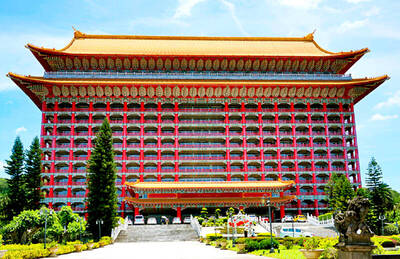
The Grand Hotel Taipei has rejected media reports claiming that the hotel had prevented CBS from broadcasting coverage of the Beijing summit between U.S. President Donald Trump and Chinese President Xi Jinping (習近平) on its premises. Media reports alleging that the hotel owner, dissatisfied with CBS’s coverage, prohibited the network from broadcasting political content on the hotel premises, are not true, the hotel said in a statement issued last night. The reports were “inconsistent with how the hotel actually handled the matter,” it said. The hotel said it received a refund request from a


 RSS
RSS