


The Council of Indigenous Peoples yesterday celebrated Aboriginal Olympic athletes at an event to mark Indigenous Peoples’ Day.
During the event, which also commemorates the 27th anniversary of the rectification of the official collective designation for Aborigines in Taiwan, Aboriginal athletes at the Tokyo Olympics said by video that they were “proud to be indigenous peoples.”
Tsou weightlifter Fang Wan-ling (方菀靈), Paiwan judo silver medalist Yang Yung-wei (楊勇緯) and Amis weightlifting gold medalist Kuo Hsing-chun (郭婞淳) all said they were proud of their Aboriginal identities.
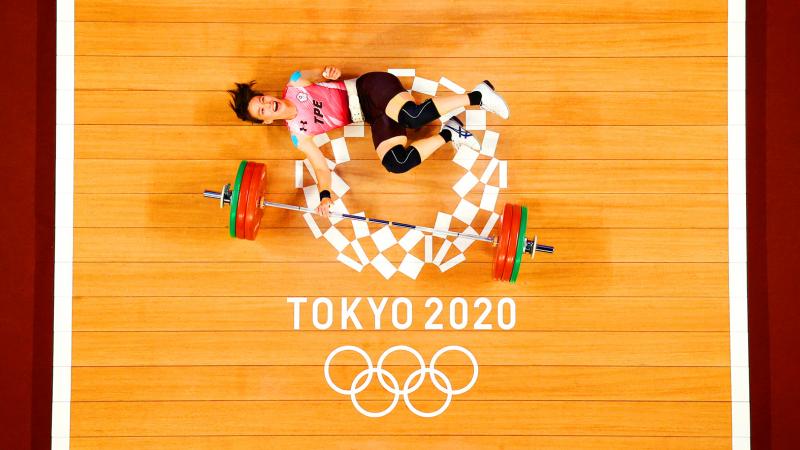
Photo: Reuters
President Tsai Ing-wen (蔡英文) said in a video that she hoped that as Taiwanese “cheer on our athletes from Aboriginal communities, we should also learn about their history and culture, and appreciate the contributions that indigenous peoples make across society.”
Tsai highlighted the Olympic wins of boxer Chen Nien-chin (陳念琴), who said she was proud to be “a child of the Amis” community.
“Aborigines participated in and contributed to Taiwan’s transition to democracy, and have also achieved great things in government, industry, national defense and on the front line of our [COVID-19] pandemic response,” Tsai said. “These accomplishments should all be recognized and valued.”
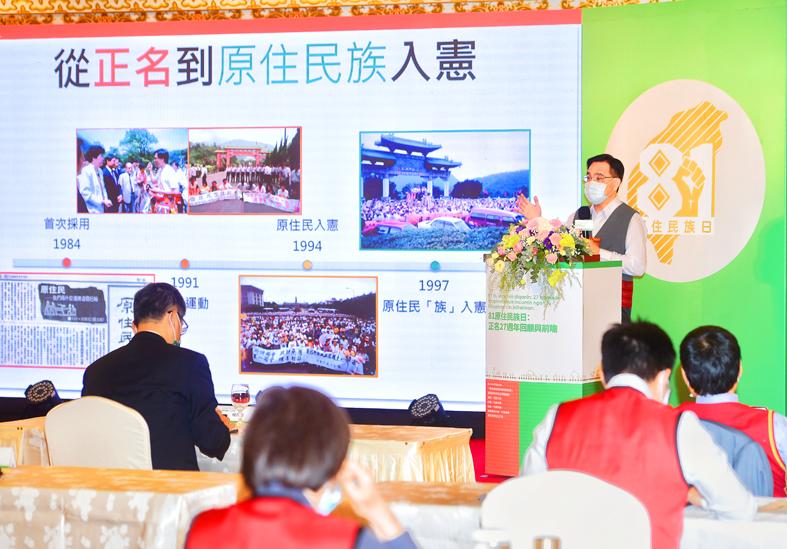
Photo: Fang Pin-chao, Taipei Times
After its founding in 1984, the council fought for official recognition of the term “indigenous peoples,” which it achieved on April 10, 1994, when then-president Lee Teng-hui (李登輝) used the term at a meeting on indigenous peoples’ cultures held in Pingtung County, the council said.
The Constitution was amended to include the term on Aug. 1 that year, it said, adding that prior to that the Constitution had used the term shanbao (山胞, “mountain compatriots”), which had racist connotations.
The Constitution was then amended once more on July 18, 1997, to recognize the collective rights of Aborigines, it said.
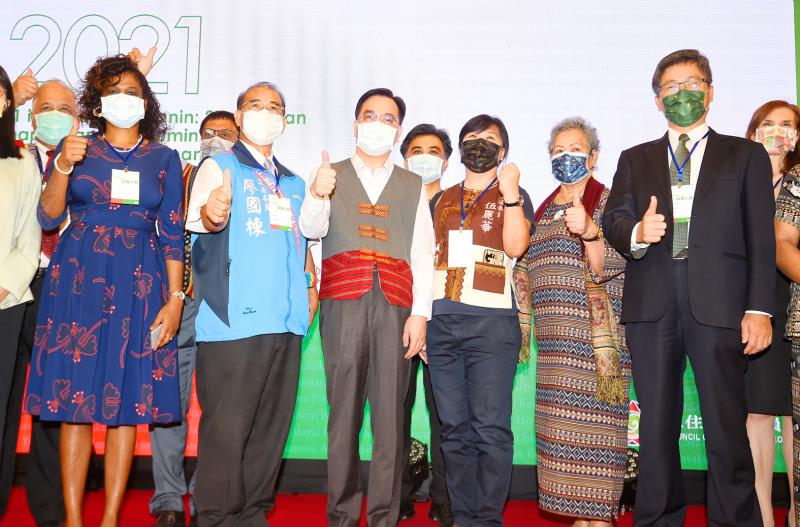
Photo: Fang Pin-chao, Taipei Times
“The recognition put an end to 400 years of discriminatory terms used to refer to Taiwan’s indigenous peoples,” Council of Indigenous Peoples Minister Icyang Parod said.
It was followed by the enactment of the Indigenous Peoples Basic Act (原住民族基本法) in 2005, and by Tsai’s apology in 2016 to Aborigines for historical injustices, he added.
There has since been progress on issues such as recognition of Aboriginal languages, land rights and education, he said.
“I invite Taiwanese to join us on this Indigenous Peoples’ Day in reflecting on these hard-won achievements, and in looking toward the next milestones,” he added.
Chinese Nationalist Party (KMT) Chairman Johnny Chiang (江啟臣) said in a statement that Aboriginal athletes’ Olympic wins have made Taiwan’s Aboriginal communities proud, and have brought a shared sense of glory and honor to all Taiwanese.
Chiang added that the Tsai administration had not made progress on legislation that would bring greater autonomy, as well as land and sea rights, to Aborigines.
The governments of former presidents Chen Shui-bian (陳水扁) and Ma Ying-jeou (馬英九) sent bills on Aboriginal rights to the legislature during their terms, Chiang said.
Additional reporting by Lin Liang-sheng


UPGRADE: The Kang Ding-class frigate is replacing its Chaparall missiles with Tien Chien II and Hua Yang VLS, which would provide it with long-range, 360° air defense Taiwan plans to produce 1,200 to 1,376 Hai Chien II missiles (海劍二, Sea Sword II) — also known as TC-2N — to serve as the standard air defense system of the navy’s surface combatant fleet, a source said yesterday. Last week, the Hai Chien II, the naval version of the Tien Kung II missile (天劍二, Sky Sword II), completed a live-fire test in waters off the National Chungshan Institute of Science and Technology’s Jiupeng facility (九鵬) in Pingtung County’s Manjhou Township (滿州). The MIM72 Chaparral and other dated air defense missiles that currently arm Taiwanese ships have inadequate range to combat Chinese

REASONS FOR TRAVEL: An assistant professor said that proposed amendments to penalize drivers if they used drugs overseas would not deter people from traveling People who operate a motor vehicle under the influence of marijuana would have their driver’s license revoked, even if they used the substance while overseas, the Ministry of Transportation and Communications said yesterday, citing proposed amendments to the Road Traffic Management and Penalty Act (道路交通管理處罰條例). The amendments would also authorize the government to revoke the licenses of people determined to have used Category 1 or Category 2 narcotics, even if they were not operating a vehicle while under the influence of drugs, as well as ban them from taking the license test for three years, the ministry said. People aged 18 or
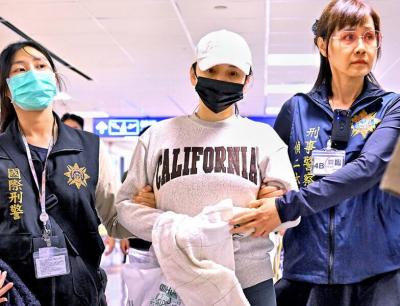
Johanne Liou (劉喬安), a Taiwanese woman who shot to unwanted fame during the Sunflower movement protests in 2014, returned to Taiwan last night after being deported from the US. She is to stand trial in Taiwan for charges involving embezzlement, fraud and drug crimes. The Criminal Investigation Bureau (CIB) said it took her into custody at Taiwan Taoyuan International Airport and would first question her before transferring her to the New Taipei District Prosecutors’ Office. She was arrested upon disembarking a flight from San Francisco that landed shortly before 7pm. Liou absconded to the US in 2019 after jumping bail
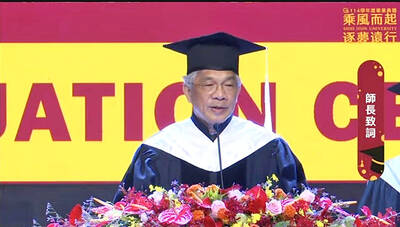
Shih Hsin University President Chen Ching-he (陳清河) yesterday issued a public apology for comments made in his commencement speech last week, stating that he has asked the school to suspend his duties and halt his wages for two months as a show of contrition. At the commencement ceremony on May 30, Chen said, “If you don’t manage your time well, or your own emotions, or your health, then I am telling every one of you — put a quick end to ‘you,’ because the world has no need for ‘you.’” The comments have sparked significant controversy online, and Chen through an open


 RSS
RSS