


The Chinese Nationalist Party (KMT) maintains that universal cash payments would be the “most effective” form of COVID-19 relief, KMT Chairman Johnny Chiang (江啟臣) said yesterday, following news reports that government plans for another stimulus voucher program are in the works.
Since last month, the KMT has on multiple occasions urged the government to provide a universal relief payment of NT$10,000.
The Executive Yuan is in the middle of planning a COVID-19 stimulus program, with a meeting expected to be held this week to discuss the scheme, a report published yesterday by the Chinese-language United Daily News said.

Photo: CNA
The Executive Yuan intends to issue another round of stimulus vouchers this year, while the likelihood that it would make cash payments to all Taiwanese is relatively low, the report cited an anonymous government official as saying.
Asked to comment, Chiang said: “We have always believed that universal cash payments would be the most effective.”
“Besides, this year’s COVID-19 situation is completely different,” he said on the sidelines of an event organized by the KMT’s Taipei chapter to donate 1,000 boxes of food, masks and other supplies to people struggling amid the COVID-19 outbreak.
Unlike last year, Taiwan has been under a nationwide level 3 COVID-19 alert for two months and restaurants have been banned from offering dine-in services, he said.
Given the differences from last year’s situation, the government should not “copy and paste” its Triple Stimulus Voucher scheme to address this year’s situation, he said, warning of a potential public backlash if the government were to reintroduce the same program.
The Triple Stimulus Voucher program, which was launched in July last year, allowed people to purchase NT$3,000 worth of vouchers for NT$1,000, which they could use until Dec. 31 last year.
Earlier in the event yesterday, Chiang brought up his party’s proposal for universal cash relief payments, describing it as the “simplest, fastest and most effective” relief measure, which has proven effective in other countries.
Chiang also repeated his party’s calls for the government to impose a price freeze on fuel and electricity as part of COVID-19 relief.
Although the government last month suspended the implementation of higher summer electricity rates, which are applied annually from June to September, the KMT has urged the government to cancel this year’s seasonal rate increase altogether.
Many people are still struggling, despite a partial relaxation on Tuesday last week of COVID-19 restrictions, Chiang said.
The government should consider the public’s perspective, he added.

The Centers for Disease Control (CDC) yesterday reported the first case of a new COVID-19 subvariant — BA.3.2 — in a 10-year-old Singaporean girl who had a fever upon arrival in Taiwan and tested positive for the disease. The girl left Taiwan on March 20 and the case did not have a direct impact on the local community, it said. The WHO added the BA.3.2 strain to its list of Variants Under Monitoring in December last year, but this was the first imported case of the COVID-19 variant in Taiwan, CDC Deputy Director-General Lin Ming-cheng (林明誠) said. The girl arrived in Taiwan on

South Korea is planning to revise its controversial electronic arrival card, a step Taiwanese officials said prompted them to hold off on planned retaliatory measures, a South Korean media report said yesterday. A Yonhap News Agency report said that the South Korean Ministry of Foreign Affairs is planning to remove the “previous departure place” and “next destination” fields from its e-arrival card system. The plan, reached after interagency consultations, is under review and aims to simplify entry procedures and align the electronic form with the paper version, a South Korean ministry official said. The fields — which appeared only on the electronic form
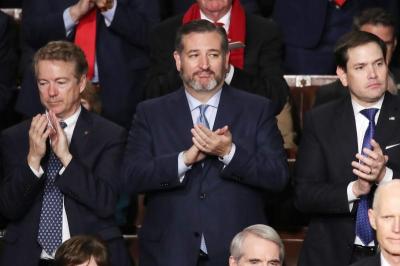
A bipartisan group of US senators has introduced a bill to enhance cooperation with Taiwan on drone development and to reduce reliance on supply chains linked to China. The proposed Blue Skies for Taiwan Act of 2026 was introduced by Republican US senators Ted Cruz and John Curtis, and Democratic US senators Jeff Merkley and Andy Kim. The legislation seeks to ease constraints on Taiwan-US cooperation in uncrewed aerial systems (UAS), including dependence on China-sourced components, limited access to capital and regulatory barriers under US export controls, a news release issued by Cruz on Wednesday said. The bill would establish a "Blue UAS

The Ministry of Foreign Affairs (MOFA) is suspending retaliation measures against South Korea that were set to take effect tomorrow, after Seoul said it is updating its e-arrival system, MOFA said today. The measures were to be a new round of retaliation after Taiwan on March 1 changed South Korea's designation on government-issued alien resident certificates held by South Korean nationals to "South Korea” from the "Republic of Korea," the country’s official name. The move came after months of protests to Seoul over its listing of Taiwan as "China (Taiwan)" in dropdown menus on its new online immigration entry system. MOFA last week


 RSS
RSS