


Several ambulances are parked outside a factory in Taichung’s Dali District (大里), but the neighborhood is quiet without any sense of emergency.
Instead, a man wearing glasses is overseeing the installation of an airtight isolation booth in an ambulance’s patient compartment.
The man, Johnson Yang (楊冠威), is an entrepreneur and head of Taichung-based SYT Technology Co, which produces items made of plastic and other materials.
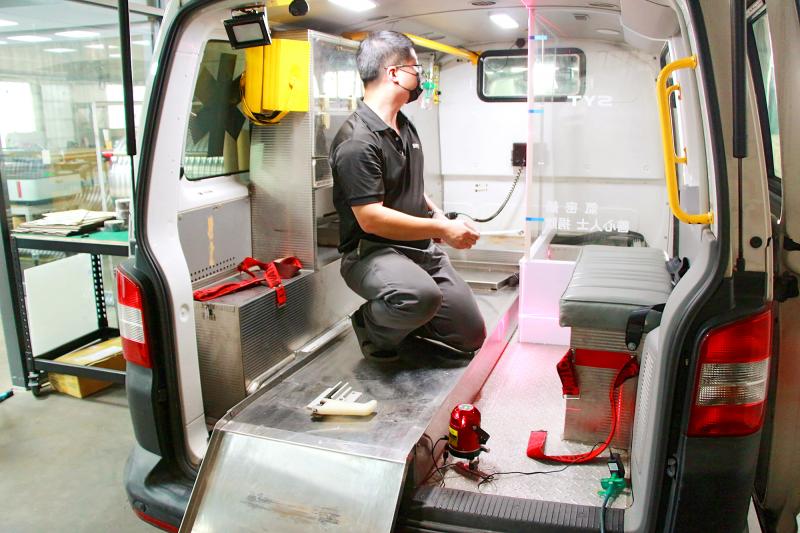
Photo: CNA
He designed a booth made of transparent acrylic and other materials after the Taichung City Fire Bureau, which also provides emergency medical services, came to him for help last month.
With COVID-19 cases on the rise, emergency responders were putting their lives at risk by transporting people infected with the virus.
Without any way to isolate patients in its ambulances, the bureau was relying on rather crude methods to keep its emergency responders safe, he said.
It used curing tape to try to seal off the vehicle’s driver compartment, while medical staff riding in the patient compartment felt less protected, even with a mask and other personal protective equipment. The bureau also needed about two hours to disinfect its ambulances after transporting each patient.
To address these problems, Yang designed an isolation booth that separates a person suspected of having COVID-19 from the paramedics, but which would still allow them to monitor the patient’s condition.
He said that finding a workable solution was much more challenging than he had imagined.
It took four days for Yang to develop a prototype for the booth and run tests to make sure it worked. Customization was needed because ambulances’ interiors vary, Yang said.
Smoke was pumped into the booth to see if there were any leaks and make sure that viruses could not escape, he said.
The booths not only prevent viruses from spreading in an ambulance, but also make disinfecting the vehicle much easier, he said.
With the isolation booth installed in the ambulance, it now takes Fire Bureau staff only about 10 minutes to disinfect the booth after each trip, he said.
However, people can only sit in the booth, so it is not suitable for people who need to lie down on a cot and be attended to by medical staff.
Still, the booths can be useful, and Yang has so far built nearly 20 of them, all free of charge, for ambulances managed by the fire bureaus of Taichung, as well as Miaoli and Nantou counties.
Yang, who has been a member of Taichung’s Volunteer Fire Brigade for a decade, said he wanted to contribute to the country’s disease prevention efforts.
He said he has volunteered less in the past few years because of his busy work schedule, but his passion for helping firefighters and paramedics has not faded, as can be seen by the row of miniature ambulance models displayed in his office.
“People who are involved in fire bureau services are like a family,” he said.
Yang did not disclose how much it cost to build an isolation booth, but said he had received some donations from friends and strangers who appreciated his work.
The donations have “made my hard work worthwhile and warmed my heart,” Yang said, adding that he hopes Taiwan will soon overcome the COVID-19 challenge with everyone helping in any way they can.
FUKUOKA SITUATION: Japanese media reported that the pathogen is expected to be identified by the summer, while the CDC downplayed the idea that it was hMPV A “mysterious cold-like illness” reported in Japan’s Fukuoka Prefecture does not seem to be a new disease, but Japanese authorities have been asked about the situation, the Centers for Disease Control (CDC) said yesterday. The Fukuoka Prefectural Medical Association on Wednesday told a news conference that a “mystery cold” that has become a hot topic on social media is “highly likely to be caused by some kind of viral infection,” Japan’s KBC News reported. “Many people are experiencing symptoms starting with a sore throat, followed by a runny nose, phlegm and a severe cough,” KBC News reported, citing association officials. Health authorities are

Nvidia Corp CEO Jensen Huang (黃仁勳) arrived in Taiwan yesterday ahead of upcoming AI and technology events, saying he plans to meet with clients and Taiwan Semiconductor Manufacturing Co Chairman C.C. Wei (魏哲家) during his visit. After landing at Taipei Songshan Airport, Huang posed for photos with fans and handed out Yakult drinks to reporters and supporters waiting at the scene, saying he has “a lot to do” during the trip. Asked about reports that Nvidia’s planned headquarters site in Taipei’s Beitou Shilin Technology Park could break ground on May 27, Huang said that if the company holds an event, he would
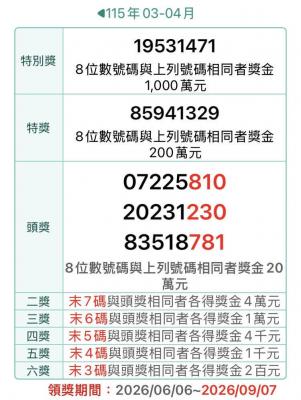
The Ministry of Finance this afternoon announced the winning numbers for the March-April uniform invoice lottery. The winning number for the NT$10 million (US$318,060) special prize is 19531471, and the winning number for the NT$2 million grand prize is 85941329. Three numbers were drawn for the NT$200,000 first prize: 07225810, 20231230 and 83518781. Those with receipts matching the last seven digits of any of the first-prize numbers will win the NT$40,000 second prize, while those matching the last six digits will win the NT$10,000 third prize. Those whose receipts match the last five digits of the first-prize numbers can claim the NT$4,000 fourth prize,
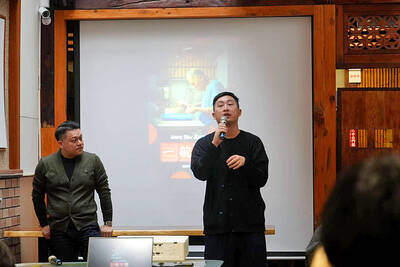
Taiwan Travelogue (臺灣漫遊錄), which earlier this week became the first Taiwanese novel to win the International Booker Prize, is to be adapted into a television series through a Taiwan-Japan coproduction, producer Chang Chen-yu (張辰漁) said yesterday. Chang, a producer at World Softest Production Film Co, wrote on Facebook that the company had been searching for projects with international appeal that retain a strong Taiwanese identity after colleagues and Japanese partners strongly recommended the novel. After reading the book, Chang said he immediately decided to pursue the screen rights. “A great story has the power to transcend time and borders, and connect countless people,”


 RSS
RSS