


Taipei police yesterday apprehended a COVID-19 patient after he allegedly escaped from a hospital isolation ward following a scuffle with officers.
The man, surnamed Chen (陳), 71, was arrested at his residence in Wanhua District (萬華) hours after his flight from the hospital, a Taipei Police Department spokesman said.
Chen, a confirmed COVID-19 case who was supposed to be undergoing quarantine, at about half past midnight yesterday allegedly visited the emergency room of Taipei City Hospital’s Renai branch complaining of a headache and insomnia, the spokesman said.
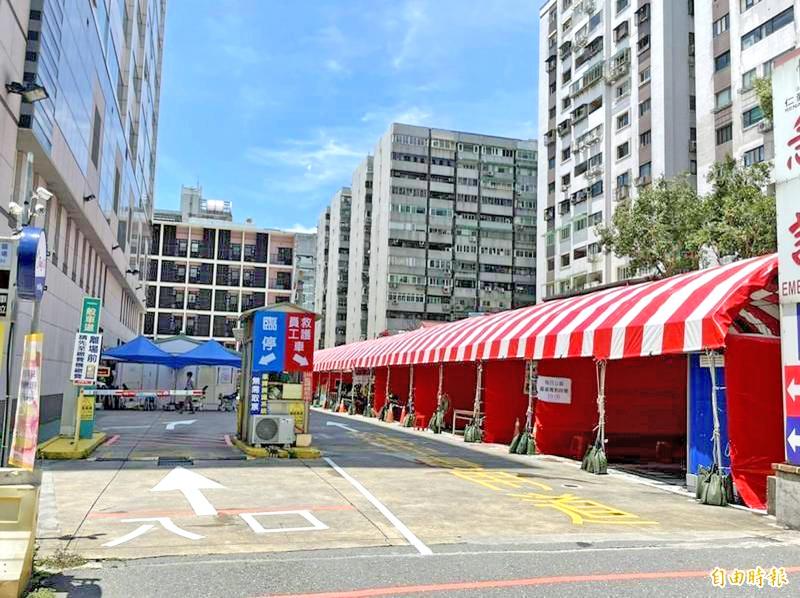
Photo: Chiu Chun-fu, Taipei Times
As Chen was known to be infected with COVID-19, doctors placed him in a modular patient unit outside the hospital complex to await medical attention, he said.
At about 3:30am, Chen became agitated and asked for sleeping pills, then beat the unit’s glass divider with a wooden stick, the spokesman said.
The hospital called the police and the responding officers subdued Chen after a short struggle, he said.
Medical personnel then administered a tranquilizer to put Chen to sleep, the spokesman said.
The Taipei District Prosecutors’ Office had issued an arrest warrant for Chen in connection to an unrelated assault that occurred last month, he said.
The responding officers found out about the arrest warrant, but could not take Chen into custody, as they lacked protective equipment and facilities to deal with an infected person, he added.
Later in the morning, Chen woke up in the unit and fled via the back door, avoiding the medical staff watching the area, the spokesman said.
Chen took the MRT to Longshan Temple before returning home on foot, he said, adding that police went to his apartment to arrest him a few hours later.
First responders then returned Chen to quarantine at a medical facility, he added.
The Taipei Department of Health said in a statement that leaving quarantine without permission is a contravention of the Special Act for Prevention, Relief and Revitalization Measures for Severe Pneumonia with Novel Pathogens (嚴重特殊傳染性肺炎防治及紓困振興特別條例).
Offenders can face two years in prison or a fine of NT$200,000 to NT$2 million (US$7,215 to US$72,150), it said.


South Korea is planning to revise its controversial electronic arrival card, a step Taiwanese officials said prompted them to hold off on planned retaliatory measures, a South Korean media report said yesterday. A Yonhap News Agency report said that the South Korean Ministry of Foreign Affairs is planning to remove the “previous departure place” and “next destination” fields from its e-arrival card system. The plan, reached after interagency consultations, is under review and aims to simplify entry procedures and align the electronic form with the paper version, a South Korean ministry official said. The fields — which appeared only on the electronic form
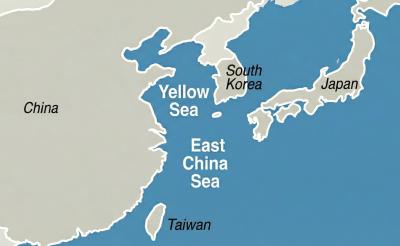
China has reserved offshore airspace in the Yellow Sea and East China Sea from March 27 to May 6, issuing alerts usually used to warn of military exercises, although no such exercises have been announced, the Wall Street Journal (WSJ) reported yesterday. Reserving such a large area for 40 days without explanation is an “unusual step,” as military exercises normally only last a few days, the paper said. These alerts, known as Notice to Air Missions (Notams), “are intended to inform pilots and aviation authorities of temporary airspace hazards or restrictions,” the article said. The airspace reserved in the alert is

A bipartisan group of US senators has introduced a bill to enhance cooperation with Taiwan on drone development and to reduce reliance on supply chains linked to China. The proposed Blue Skies for Taiwan Act of 2026 was introduced by Republican US senators Ted Cruz and John Curtis, and Democratic US senators Jeff Merkley and Andy Kim. The legislation seeks to ease constraints on Taiwan-US cooperation in uncrewed aerial systems (UAS), including dependence on China-sourced components, limited access to capital and regulatory barriers under US export controls, a news release issued by Cruz on Wednesday said. The bill would establish a "Blue UAS
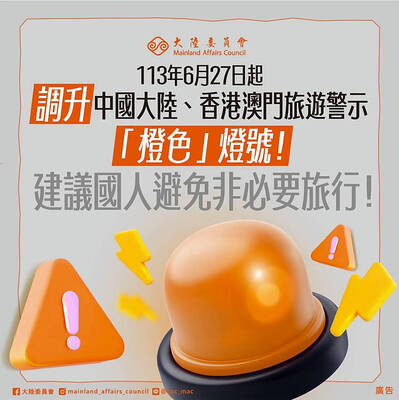
More than 6,000 Taiwanese students have participated in exchange programs in China over the past two years, despite the Mainland Affairs Council’s (MAC) “orange light” travel advisory, government records showed. The MAC’s publicly available registry showed that Taiwanese college and university students who went on exchange programs across the Strait numbered 3,592 and 2,966 people respectively. The National Immigration Agency data revealed that 2,296 and 2,551 Chinese students visited Taiwan for study in the same two years. A review of the Web sites of publicly-run universities and colleges showed that Taiwanese higher education institutions continued to recruit students for Chinese educational programs without


 RSS
RSS